
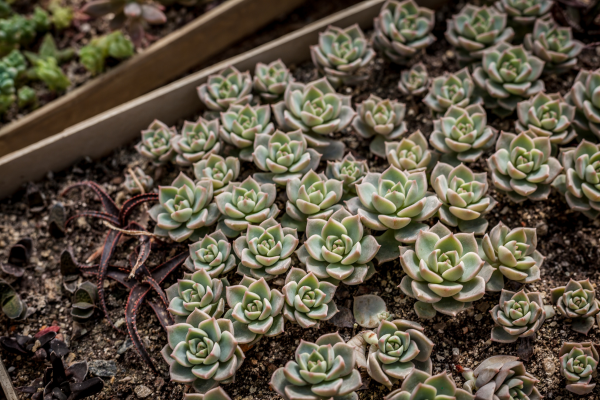
I still remember the sinking feeling of watching a leaf I’d taken from a genuinely expensive Echeveria simply shrivel up and turn black over the course of two weeks, having done everything I thought was right. It took some honest reflection, and a fair amount of reading afterward, to realize that propagating rare succulents isn’t really the same skill as propagating the hardy, forgiving varieties most beginner guides are written around. The margin for error is smaller, the stakes are higher, and a lot of the casual advice that circulates online simply doesn’t hold up once you’re working with slow-growing, genetically delicate specimens.
Why Rare Succulents Propagate Differently
Common succulents used in most propagation tutorials tend to root readily from almost any healthy leaf or cutting, tolerate a range of humidity and light conditions during the rooting process, and grow quickly enough that mistakes become apparent and correctable within days rather than weeks. Rare species often break every part of that pattern. Many grow slowly enough that a failing propagation attempt doesn’t show clear signs of trouble for weeks, by which point the window for correction has often already closed. Others, like the variegated specimens we discussed in Variegated Succulents Explained: Why They’re So Expensive, carry genetic instability that makes even a technically well-executed propagation attempt inherently uncertain in its outcome.
This means propagation with rare species calls for more patience, more careful technique, and considerably more tolerance for a lower overall success rate than what beginner-friendly propagation content tends to suggest.
Choosing the Right Propagation Method for the Species
Not every rare succulent propagates well through the same method, and using the wrong approach for a given species is one of the more common reasons attempts fail before they even really begin. Leaf propagation, where an individual leaf is removed and allowed to grow roots and eventually a new rosette, works reasonably well for many Echeveria and Sedum varieties, but performs poorly or not at all for species like Haworthia and Gasteria, where individual leaves generally lack the ability to develop into a full new plant on their own.
For these species, and for many others including most rare cacti, propagation through offsets, the small plantlets many succulents naturally produce around their base, or through stem cuttings for trailing or columnar species, tends to be far more reliable than attempting leaf propagation simply because that’s the method most beginner content defaults to. Taking the time to research the specific propagation method known to work for a given species, rather than assuming a universal approach will succeed, meaningfully improves your odds before you’ve even made a single cut.
Timing Matters More Than Most Beginners Realize
Propagation attempts timed to coincide with a plant’s active growing season, discussed in more detail in Seasonal Care Guide: Rare Succulents in Winter vs. Summer, tend to succeed considerably more often than attempts made during a plant’s natural dormant period. This makes intuitive sense once you consider that rooting and new growth require active metabolic processes that slow dramatically or stop entirely during dormancy, meaning a cutting taken during the wrong season is essentially being asked to grow at a time when the plant’s biology isn’t oriented toward growth at all.
For species with pronounced, well-documented dormancy periods, timing a propagation attempt just as the plant is beginning to emerge into active growth, rather than during peak dormancy or even right at the very end of active growth, tends to produce the most reliable results, giving the new cutting or offset the longest possible stretch of favorable conditions to establish itself before facing a slowdown.
The Callusing Step Nobody Should Skip
Whether you’re taking a leaf, a cutting, or separating an offset, allowing the wound to dry and callus over before any exposure to soil or moisture is one of the most important steps in the entire process, and it’s also one of the steps most often rushed by impatient beginners. Freshly cut or removed succulent tissue is vulnerable to rot and infection if it comes into contact with moist soil before the wound has had a chance to seal itself with a dry, protective callus layer.
For most standard succulent propagation, this callusing period runs somewhere between a few days and a week, but rare, slow-growing species with thicker, more substantial tissue, particularly caudiciform plants and certain cacti, often benefit from a longer callusing period, sometimes extending to two weeks or more, before any soil contact begins. Rushing this step to speed up the overall propagation timeline is a common mistake that introduces exactly the kind of rot risk that patient callusing is meant to prevent.
Creating the Right Rooting Environment
Once callused, most cuttings and leaves root best when placed on top of, rather than buried into, a well-draining propagation mix similar in composition to what we described in How to Create the Perfect Soil Mix for Delicate Succulents, though often with an even higher mineral content to further reduce rot risk during this particularly vulnerable stage. Light misting, just enough to slightly dampen the surface without saturating it, tends to work better than regular watering during the early rooting phase, since the developing root system isn’t yet established enough to take up water efficiently, and excess moisture sitting around an unrooted cutting significantly increases rot risk.
Bright, indirect light rather than direct sun suits most cuttings and leaves during the rooting process, since the goal at this stage is supporting root development rather than pushing the kind of vigorous top growth that strong direct light typically encourages, and a stressed, unrooted cutting is more vulnerable to sunburn than an established plant would be under the same light conditions.
Patience With Slow-Rooting Species
This is where propagating rare species genuinely tests a grower’s patience most directly. While a common Echeveria leaf might show visible root development within one to two weeks, many rare species take considerably longer, sometimes a month or more, before any visible sign of rooting appears at all. During this extended waiting period, it’s tempting to intervene, whether by increasing watering out of concern the cutting is drying out, or by giving up on a cutting that simply hasn’t shown progress within a “normal” timeframe borrowed from faster-rooting species.
Resisting both of these impulses, and instead maintaining a consistent, patient, low-intervention routine for however long a specific rare species typically takes, tends to produce better outcomes than either anxious overwatering or premature abandonment. This is particularly relevant for the kind of slow-growing caudiciform and cactus species we discussed in How Long Does It Take to Grow a Rare Succulent From Seed?, where the entire concept of “normal” propagation timelines needs recalibrating compared to faster-growing, more commonly propagated succulents.
Accepting a Lower Success Rate
Perhaps the hardest adjustment for growers coming from experience with common, forgiving succulents is accepting that even a well-executed propagation attempt on a genuinely rare, delicate species may simply fail more often than it succeeds. This isn’t necessarily a sign of poor technique so much as an honest reflection of how much more challenging these species are to propagate compared to the hardy varieties most propagation confidence gets built on.
Taking multiple cuttings or leaves when possible, rather than betting everything on a single attempt, improves your overall odds of at least one success, though this needs to be balanced against not wanting to over-harvest material from a rare parent plant in a way that stresses it excessively. Finding that balance, taking enough material to reasonably improve your odds without compromising the health of an already scarce parent specimen, is a judgment call that becomes easier with experience on a particular species.
Learning From Failed Attempts
When a propagation attempt does fail, and with rare species it eventually will, there’s real value in examining what happened rather than simply discarding the failed cutting and moving on. A cutting that rotted quickly might point toward insufficient callusing time or excess moisture during the rooting stage. A cutting that simply shriveled without ever developing roots might suggest inadequate humidity or a rooting environment that dried out too aggressively for that particular species’ needs.
Keeping some informal notes on what conditions and timing you used for each propagation attempt, and comparing successful attempts against failed ones over time, builds exactly the kind of species-specific knowledge that eventually makes propagating even genuinely challenging rare succulents feel less like a gamble and more like a skill you’ve deliberately developed, one patient, carefully observed attempt at a time.
