
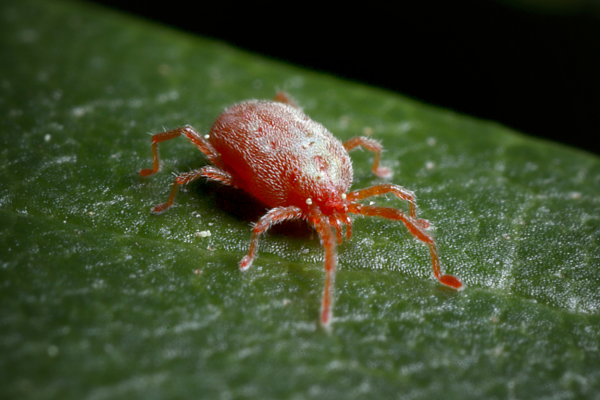
I lost most of an Echeveria’s fresh growth before I even realized spider mites were the cause. What I actually noticed first was a faint, dusty discoloration on the newer leaves, subtle enough that I initially dismissed it as normal mineral buildup from tap water, the kind of thing I’d seen plenty of times before without consequence. By the time I finally looked closely enough, with a magnifying glass, to catch the almost invisible mites themselves and the faint webbing tucked between leaves, the infestation had already spread to two neighboring plants on the same shelf. What frustrates me most looking back isn’t that I got spider mites, they’re common enough that almost every collector deals with them eventually, it’s that the early signs were there for weeks before I recognized them for what they actually were.
Spider mites are, in my experience, the single most commonly missed pest problem among succulent collectors, precisely because the damage they cause looks so easy to mistake for something else, environmental stress, mineral deposits, minor cosmetic imperfection. Catching an infestation in its earliest stages, before it spreads across a collection, depends almost entirely on knowing exactly what to look for and where, since by the time mites are obvious to the naked eye without any magnification, the infestation is usually already well established.
Why Spider Mites Are So Easy to Miss Early On
Spider mites are genuinely tiny, often under a millimeter in size, and their coloring, ranging from translucent to pale yellow or reddish depending on species and life stage, doesn’t stand out visually against most succulent foliage the way larger, darker pests do. Unlike mealybugs or scale, which create visible clusters or waxy coatings that catch the eye relatively quickly, spider mites operate at a scale that essentially requires you to already suspect their presence before you’ll spot them without magnification.
This is compounded by where they tend to establish first. Spider mites gravitate toward the newest, softest growth and the undersides of leaves or the tightly packed inner portions of a rosette, exactly the areas that get the least direct visual inspection during casual daily care. A quick glance at a plant’s overall appearance from a normal viewing distance simply doesn’t reveal what’s happening in these hidden, low-visibility areas until the population has grown large enough to cause damage visible from further away.
The Actual Early Warning Signs
The earliest reliable sign is a subtle, stippled or dusty discoloration on leaf surfaces, tiny pale or bronze-toned speckling that results from mites piercing individual plant cells to feed. This pattern is genuinely easy to confuse with the kind of mineral deposits discussed when comparing terracotta and plastic pot materials, since both can leave a faintly dusty or discolored appearance on nearby leaf surfaces. The distinguishing factor is texture and pattern, mineral deposits tend to sit on the surface as a removable residue with an irregular, water-line pattern, while mite stippling reflects actual cellular damage beneath the surface and won’t wipe away, and tends to cluster in a fine, uniform speckled pattern rather than following where water droplets happened to sit.
Fine webbing is the more definitive sign, though it typically appears somewhat later than the initial stippling, once a population has grown large enough to require the structural support webbing provides. Look specifically in the tight spaces between leaves, in the crevices of a rosette’s center, and along stem joints, rather than expecting webbing to be obviously draped across open leaf surfaces the way it might be pictured in generic pest identification photos.
A slightly bronzed or dulled overall leaf color, distinct from the sharper, more acute discoloration patterns associated with sunburn or nutrient issues, can also signal an active but still-developing infestation. This kind of subtle color shift is worth cross-referencing against what you already know about a plant’s normal appearance under its current light conditions, since ruling out lighting as the cause, the kind of consideration relevant when reviewing proper light requirements for rare succulent species, helps narrow down whether an unusual color shift is actually pest-related.
Where and How to Actually Check
Given how easily spider mites hide in low-visibility areas, a deliberate, periodic inspection routine catches infestations far earlier than casual observation ever will. Gently turning leaves to examine their undersides, particularly on new growth, and using a magnifying glass or even a smartphone camera’s zoom function to inspect tightly packed rosette centers, reveals mites and early stippling long before either becomes visible at normal viewing distance.
The paper test is a simple, reliable method worth incorporating into regular checks, especially for a collection that includes genuinely valuable specimens. Holding a plain white sheet of paper beneath a leaf and gently tapping or brushing the foliage dislodges any mites present onto the paper’s surface, where their movement, even at their tiny size, becomes visible against the plain white background in a way it wouldn’t against green foliage.
Why Catching Mites Early Matters So Much
Spider mite populations grow exponentially once established, capable of completing an entire life cycle in as little as a week or two under warm, dry conditions, the exact environment many succulent collections maintain intentionally for the plants’ own benefit. This rapid reproduction is exactly why early detection matters disproportionately with this particular pest compared to slower-reproducing problems. An infestation caught at the earliest stippling stage can often be resolved with a simple, targeted treatment applied to a single plant. The same infestation left unchecked for a few additional weeks can spread across an entire shelf or collection, turning a minor, contained issue into a considerably larger and more time-consuming problem to fully eliminate.
Isolating any plant showing early signs immediately, before confirming or treating the infestation, is worth doing as a first reflexive step given how quickly mites can spread to neighboring plants sitting in close proximity, similar to the isolation logic behind quarantining newly acquired succulents before introducing them to an established collection. Treating a suspected infestation as contagious first, and confirming the specifics second, costs very little and prevents the kind of collection-wide spread that turned my own missed early signs into a considerably bigger cleanup than it needed to be.
