
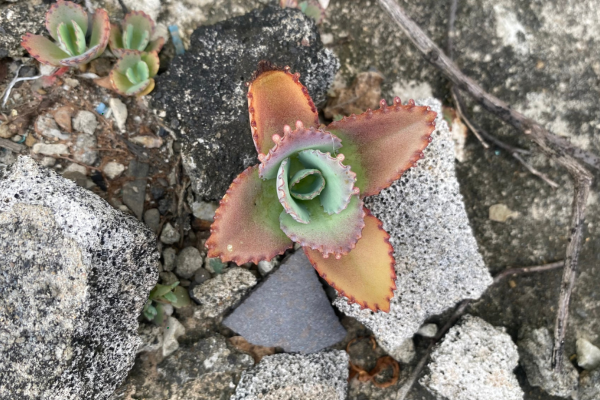
I introduced a fungal infection into a healthy, established Conophytum using the exact same blade I’d used minutes earlier to trim a rotting root off a completely different plant. At the time, it genuinely didn’t occur to me that a quick wipe on my jeans counted as adequate cleaning between cuts. Within about two weeks, the previously healthy plant started showing the same soft, discolored tissue I’d just cut away from the infected one, and it took losing that plant to understand just how directly tool hygiene connects to disease spread, something I’d always treated as a minor afterthought compared to watering and light.
Tool hygiene is one of the more overlooked aspects of succulent care, largely because its consequences aren’t immediate or obvious the way a watering mistake is. A contaminated blade doesn’t announce itself the way overwatered, mushy tissue does. It quietly transfers pathogens from one plant to another, and the resulting infection often doesn’t show up until well after the actual moment of contamination, making the connection between cause and effect far less obvious than it should be.
Why Tools Are Such an Effective Disease Vector
Any tool that comes into direct contact with plant tissue, blades used for cutting, trimming, or dividing, and even less obvious items like the tips of tweezers used to handle small cuttings or offsets, can carry fungal spores, bacteria, and viral particles from one plant to the next. This risk is particularly acute whenever a cut is involved, since fresh wound tissue is exactly the kind of vulnerable entry point pathogens need to establish an infection, considerably more vulnerable than intact, healthy plant surfaces.
This connects directly to something worth understanding about wound vulnerability generally, the same recovery period discussed when writing about repotting rare succulents without triggering transplant shock, where freshly cut or damaged tissue needs time to callus and heal before it’s reasonably protected against infection. Introducing pathogens directly onto that exact tissue, at the exact moment it’s most vulnerable, through a contaminated tool, essentially guarantees the infection a foothold it might never have gotten through normal environmental exposure alone.
The risk compounds considerably in a collection where the same tools get used across many plants in a single session, propagating cuttings, trimming dead leaves, dividing offsets, moving from plant to plant without any cleaning step in between. A single infected or even just contaminated plant early in that session can end up spreading its problem across a substantial portion of a collection before the session is even over, all through a tool that looked perfectly clean the entire time.
Proper Disinfection Methods
Isopropyl alcohol, at a concentration of at least 70 percent, remains one of the most practical, accessible disinfection options for succulent tools, effective against a broad range of fungal and bacterial pathogens while evaporating quickly enough not to leave residue that could affect subsequent cuts. Dipping a blade fully in alcohol, or thoroughly wiping all cutting surfaces with an alcohol-soaked cloth, between every single plant, not just between sessions, is the level of consistency that actually prevents cross-contamination rather than merely reducing it.
Flame sterilization, briefly passing a metal blade through an open flame until it glows slightly, offers a more thorough level of disinfection than alcohol alone and is particularly worth considering when working with a plant you already suspect might be dealing with a fungal or bacterial issue, where extra caution before moving on to other plants is warranted. This method requires letting the blade cool before it touches plant tissue again, since a still-hot blade will damage tissue in its own way, but it’s a fast, effective option for collectors working through a lot of cuttings and divisions in a single sitting.
Bleach solutions, typically diluted to around a ten percent concentration, are effective as well, particularly for tools that have come into contact with a confirmed infection, though they require more careful rinsing afterward than alcohol does, since bleach residue left on a blade can itself damage subsequent plant tissue if not adequately removed before the next cut.
Building Disinfection Into Your Actual Workflow
The biggest gap between knowing tool hygiene matters and actually preventing disease spread comes down to consistency, disinfecting once at the start of a session isn’t nearly sufficient if that same tool then gets used across a dozen different plants without any cleaning in between. Disinfecting between every individual plant, not just between obviously different tasks, is the standard that actually interrupts pathogen transfer, even though it feels excessive compared to how most people naturally handle tool cleaning.
This is especially critical whenever working with a plant of uncertain health status, something recently acquired and not yet fully assessed, similar to the caution behind quarantining new succulents before adding them to an established collection. Treating any unfamiliar or recently acquired plant as a potential contamination risk, and disinfecting tools immediately after working with it regardless of whether any visible problem is apparent, closes exactly the kind of gap that let my own mistake happen, since the infected plant I cut first hadn’t shown any obvious symptoms of the fungal issue at the time I made that initial cut.
It’s also worth extending this same thinking to situations involving a plant you already know or suspect is dealing with something serious. Working with confirmed problem plants last in a session, after everything else has already been handled, and disinfecting thoroughly immediately afterward before those tools touch anything else, adds a useful extra layer of separation between your healthiest specimens and anything actively dealing with an infection.
Beyond Blades: Other Contamination Points Worth Considering
While cutting tools represent the most direct risk, other points of contact deserve some of the same consideration, though generally with less urgency. Hands themselves can carry pathogens between plants, particularly after handling anything showing signs of rot or fungal issues, and a quick wash or hand sanitizer application between handling a suspect plant and moving on to healthy ones is a reasonable, low-effort precaution. Pots and trays being reused between plants, particularly ones that previously held a plant that experienced rot or fungal problems, are worth cleaning thoroughly, ideally with the same disinfection approach used for tools, before being reused for a different, healthy plant.
Why This Small Habit Matters So Much
Tool disinfection is genuinely one of the lowest-effort, highest-impact habits available to a succulent collector, requiring little more than a bottle of alcohol and the discipline to actually use it consistently rather than treating it as optional. Given how much time, money, and patience goes into building a rare succulent collection, the relatively small effort of proper tool hygiene is a disproportionately effective way to protect that investment from the kind of entirely preventable, self-inflicted disease spread that cost me a plant I never should have lost.
