
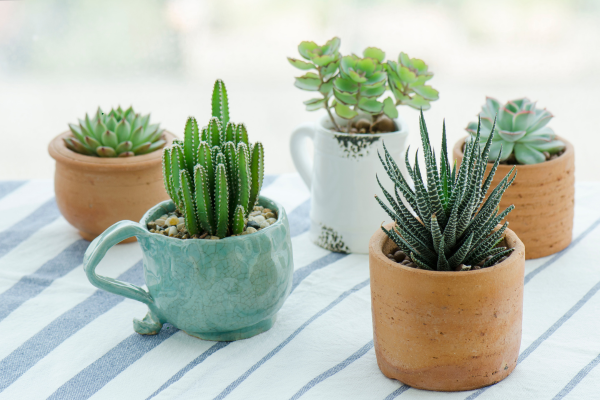
I once watched a beautifully variegated Echeveria I’d been growing for over a year slowly revert, one leaf at a time, back to plain green, as if the plant were quietly erasing the exact trait I’d paid a premium for. My first instinct was that I’d done something wrong, too much fertilizer, wrong light, some care mistake that was somehow punishing the plant’s coloration specifically. It took research into how variegation actually works at a cellular level to understand that I hadn’t done anything wrong at all. The plant was a chimera, and reversion like this is simply one of the ways chimeral tissue behaves, sometimes with no clear external trigger whatsoever.
Chimeral variegation is one of the more genuinely confusing concepts in succulent collecting, partly because “variegation” gets used as a blanket term covering several very different underlying mechanisms, only some of which behave predictably. Understanding what a chimera actually is, and why its instability isn’t a flaw so much as an inherent characteristic, changes how you approach caring for, propagating, and valuing these plants.
What a Chimera Actually Is at the Cellular Level
A chimeral plant contains two or more genetically distinct sets of cells growing together within the same tissue, rather than a single uniform genetic makeup throughout. In variegated succulents, this typically means the plant has layers of cells, one lacking normal chlorophyll production, appearing white, cream, or yellow, growing alongside layers of normal, chlorophyll-producing green tissue. The visual variegation pattern collectors prize is essentially a physical manifestation of these different cell populations existing in close, layered proximity within the same leaf or stem structure.
This is fundamentally different from variegation caused by stable genetic mutation affecting an entire plant’s cells uniformly, which is comparatively rare in succulents, or from cosmetic color variation caused by environmental factors like light stress, which isn’t variegation in the genetic sense at all, just pigment response. Chimeral variegation sits in its own distinct category, genetically real, but structurally unstable in a way that neither of those other categories is.
Why Chimeras Are Inherently Unstable
The instability comes directly from the fact that these different genetic cell layers are, in a sense, competing with each other for space as the plant grows. Because the non-chlorophyll-producing tissue can’t photosynthesize, it depends entirely on the surrounding green tissue for the energy the whole plant needs to survive. This creates an ongoing internal balancing act: too much white or pale tissue relative to green tissue, and the plant can struggle for energy; too little, and the variegation the plant is valued for essentially disappears.
As the plant grows, produces new leaves, or is propagated, the proportion and arrangement of these two cell types isn’t fixed or guaranteed to replicate exactly. Growing points can shift which cell layer dominates in new growth, which is why a chimeral plant can revert partially or fully to solid green, as mine did, or occasionally shift toward more variegation than it started with, sometimes to the point of producing tissue with so little chlorophyll that it can’t sustain itself at all.
This connects directly to something worth understanding about propagation more broadly, the reason distinguishing cultivar names from species names matters so much for chimeral plants specifically. A chimeral cultivar’s defining trait, its variegation, cannot be reliably passed on through seed, since seed-grown offspring won’t necessarily inherit the same layered cellular arrangement present in the parent plant. This is precisely why chimeral cultivars are propagated vegetatively, through cuttings and division, rather than from seed, and why maintaining a stable variegated line requires deliberate, careful propagation choices generation after generation.
Practical Implications for Growing Chimeral Plants
Understanding chimeral instability changes what counts as reasonable expectations when growing one of these plants. Reversion to solid green, or occasional shifts in variegation pattern between different growth points on the same plant, isn’t a sign of poor care in most cases, it’s simply how chimeral tissue sometimes behaves, and it can happen even under textbook-ideal growing conditions.
That said, growing conditions do play some role in encouraging a plant to maintain more balanced variegation over time, even if they can’t guarantee stability outright. Because the chlorophyll-lacking tissue depends entirely on the green tissue for energy, ensuring the plant overall gets adequate light, the kind of attention to proper light requirements for rare succulent species covered elsewhere, supports the green tissue’s ability to sustain the whole plant, variegated portions included, without forcing the plant toward reverting to solid green purely as a survival strategy under insufficient light.
When propagating a chimeral plant intentionally, selecting cuttings specifically from growth points that show the desired, balanced variegation pattern, rather than assuming any cutting from the plant will replicate that pattern reliably, meaningfully improves the odds of producing offspring with consistent, attractive variegation. This is part of why experienced propagators of chimeral cultivars pay close attention to exactly where on a plant they take cuttings from, since different growth points on the same specimen can carry noticeably different proportions of the two cell layers.
What to Do When Reversion Happens
If a chimeral plant does begin reverting toward solid green, some growers choose to prune away the reverting green growth points as soon as they’re noticed, on the theory that removing solid green growth encourages the plant’s remaining growth points, ones still carrying the variegated cell layers, to become dominant instead. This approach has reasonable logic behind it and does work in some cases, though it isn’t guaranteed, and it requires accepting that pruning itself is a form of ongoing maintenance a chimeral plant may need indefinitely rather than a one-time fix.
Other growers simply accept reversion as part of owning a chimeral plant, treating the variegated period as something to appreciate while it lasts rather than fight indefinitely, especially for plants where the reverted, solid-green form is still an attractive, healthy plant in its own right rather than a disappointing downgrade.
Why This Understanding Changes How You Value These Plants
Recognizing chimeral variegation as an inherently unstable, ongoing biological process, rather than a fixed trait a plant either has or doesn’t, reframes a lot of what can otherwise feel like disappointing or confusing behavior. It’s part of why chimeral cultivars command the prices they do, not just because the pattern is visually striking, but because maintaining and propagating that pattern reliably takes real skill and attention, and why a certain amount of instability should be expected and planned for rather than treated as a sign that something has gone wrong.
