
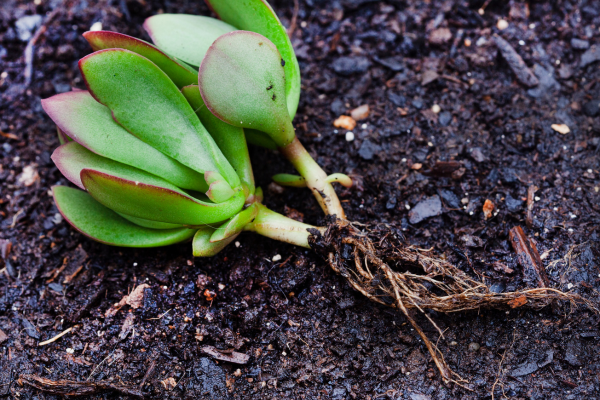
There’s a particular kind of anxiety that sets in during the first few weeks after taking a cutting from a genuinely rare, hard-to-replace plant, checking almost daily for some sign that the process is actually working. I understand that impulse well, because I’ve felt it plenty of times myself, hovering over a tray of leaves or cuttings looking for any hint of progress. The frustrating truth is that rooting often happens quietly, without any dramatic visible sign above the soil line, which means learning to read the more subtle indicators matters a lot more than waiting for something obvious to happen.
Why Visual Confirmation Alone Isn’t Reliable
The most tempting way to check for rooting, simply lifting a cutting to look at its base, is also one of the more counterproductive habits a grower can develop, particularly with rare, delicate species. Early roots are often extremely fine and fragile, easily damaged or broken by the disturbance of lifting a cutting out of its growing medium, even briefly, which means frequent visual checks can actually set back the very rooting process you’re trying to monitor.
This is exactly the concern raised in Common Propagation Mistakes That Kill Rare Cuttings, where disturbing cuttings too frequently ranks among the more common, preventable causes of propagation failure. Understanding that visible confirmation isn’t the most reliable or safest signal reframes the whole question: rather than asking “how do I see the roots,” the more useful question becomes “how do I recognize rooting without needing to look directly at it.”
The Gentle Tug Test
The most widely used, lower-risk method for checking root development involves a very gentle, minimal tug on the cutting or leaf, just enough to feel whether there’s resistance suggesting the base has anchored into the growing medium. A cutting that hasn’t rooted yet will lift or shift freely with minimal resistance, while one that’s begun developing roots will feel noticeably anchored, resisting that same gentle pull even though you can’t see the roots themselves.
This test works best done infrequently, perhaps once a week rather than daily, and with genuinely minimal force, just enough to detect resistance rather than an actual attempt to lift or move the cutting entirely. Overdoing this check, or applying more than the lightest possible pressure, risks the same root disturbance that a full visual inspection would cause, so it’s worth treating even this gentler method with some restraint.
Changes in Leaf or Cutting Firmness
Beyond the tug test, changes in the overall firmness and appearance of the cutting or leaf itself often provide useful indirect evidence of rooting progress. A cutting that’s successfully establishing roots typically maintains, or sometimes even slightly improves, its firmness over the following weeks, since it’s beginning to take up moisture and nutrients through its new root system rather than relying solely on the stored resources it had at the time it was separated from the parent plant.
Conversely, a cutting that continues losing firmness, becoming progressively softer or more shriveled over an extended period without any improvement, is often a sign that rooting either hasn’t begun successfully or has failed entirely, and the cutting is simply running down its remaining stored resources without the benefit of new root development to sustain it going forward. This pattern connects directly to the water balance concepts discussed in Signs of Overwatering vs. Underwatering in Rare Species, where a plant’s ability to maintain firmness depends heavily on whether it has a functioning system for taking up available moisture.
New Growth as a Confirming Sign
The clearest, most reassuring sign that a cutting or leaf has successfully rooted is the eventual appearance of new growth: a tiny new rosette forming at the base of a leaf, new leaves emerging from a stem cutting, or visible growth extending from a separated offset. This kind of new growth essentially confirms that root development has progressed enough to actively support the plant’s continued growth, moving well beyond the uncertain early stage where rooting may or may not be underway.
The timeline for this visible new growth to appear varies enormously depending on species, following the same slow, sometimes months-long timelines discussed in How Long Does It Take to Grow a Rare Succulent From Seed? for genuinely rare, slow-growing plants. This is exactly why relying on new growth as your only confirmation signal can feel discouraging for slower species, since it might be the last sign to appear rather than an early, reassuring checkpoint, making the more subtle signals like firmness and gentle resistance considerably more useful during those earlier, more uncertain weeks.
Distinguishing Rooting From Simple Survival
It’s worth drawing a distinction between a cutting that’s simply surviving on its remaining stored resources without actually rooting, and one that’s genuinely establishing new roots and beginning to grow independently. A cutting can sometimes maintain a reasonably healthy appearance for weeks purely on stored moisture and energy, without any actual root development occurring, which can create a misleading impression of success if firmness and general appearance are the only signals being tracked.
This is part of why combining multiple indicators, gentle resistance from the tug test, sustained or improving firmness over an extended period rather than just the first couple of weeks, and eventually new growth, provides a more reliable overall picture than relying on any single signal in isolation. A cutting that shows consistent, gentle anchoring resistance over several consecutive weekly checks, combined with stable or improving firmness, is showing considerably stronger evidence of genuine rooting than one that merely hasn’t visibly declined yet.
What to Do If Rooting Doesn’t Seem to Be Progressing
If several weeks have passed, well beyond the typical rooting timeline for a given species, without any positive signals, whether firmness improvement, tug resistance, or new growth, it’s worth considering whether something in the propagation setup needs adjusting rather than simply continuing to wait indefinitely. This might mean reassessing moisture levels in the propagation medium, checking that light exposure is appropriate rather than too intense or too dim, or considering whether the original cutting or leaf removal technique, discussed in How to Propagate Rare Succulents Without Killing Them, may not have preserved the growth point needed for successful rooting in the first place.
Sometimes, despite doing everything reasonably correctly, a cutting simply fails to root, and recognizing this reasonably promptly, rather than holding onto false hope for months beyond what’s typical for a given species, allows you to redirect your attention and propagation efforts toward other, more promising material rather than continuing to invest care and space in an attempt that’s unlikely to succeed.
Building Confidence Through Species-Specific Experience
Like most of the more nuanced propagation skills discussed throughout this series, learning to read these subtle rooting signals accurately improves considerably with direct, repeated experience on specific species rather than through any universal rule that applies identically across every rare succulent you might propagate. Keeping simple notes on typical rooting timelines and signals for species you’ve successfully propagated before builds a genuinely useful personal reference, one that tends to be more accurate for your specific growing conditions than generic timelines pulled from general propagation guides.
Over time, this kind of accumulated, species-specific experience turns what initially feels like an anxious guessing game into a much more confident, informed sense of what’s actually happening beneath the soil surface, even without ever needing to disturb a cutting to directly confirm it. That confidence, more than any single technique, is usually what allows experienced growers to remain patient through the genuinely long, quiet waiting period that rare succulent propagation so often requires.
