
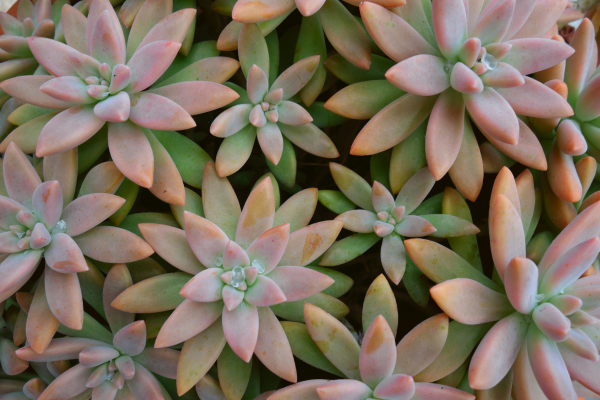
I’ll admit my first attempt at hand-pollinating succulents felt a little absurd, crouched over a tray of Echeverias with a small paintbrush, dabbing at flowers that seemed almost too small for the task. It didn’t work, not that first year anyway. But watching a genuinely successful cross develop months later, from that first careful transfer of pollen to an actual seed pod forming, turned out to be one of the more satisfying experiences this hobby has offered me. It’s slow, it’s uncertain, and it teaches you a lot about patience in a way that regular propagation doesn’t quite match.
Why Growers Hand-Pollinate Succulents
Left alone, succulent flowers rely on natural pollinators, typically bees, and to some extent wind, to transfer pollen and produce seed. In a controlled home growing environment, especially indoors, these natural pollinators usually aren’t present, which means flowering succulents left to their own devices often simply don’t set seed at all, regardless of how many flowers they produce.
Hand-pollination solves this practical problem, but it also opens up a much more interesting possibility: deliberately controlling which two plants contribute pollen to a cross, rather than leaving that entirely to chance. This is exactly how deliberate hybrids, similar in concept to the String of Dolphins cross we discussed in String of Pearls vs. String of Dolphins: A Complete Comparison, come into existence in the first place, even though that particular hybrid’s exact origin wasn’t as carefully documented as a dedicated breeding program might aim for today.
Understanding Succulent Flower Anatomy
Before attempting any hand-pollination, it helps to understand the basic structure you’re working with. Most succulent flowers contain both male parts, the stamens, which produce pollen, and a female part, the pistil, which needs to receive that pollen to eventually develop seed. In many succulent species, individual flowers are capable of self-pollinating, meaning pollen from a flower’s own stamens can fertilize its own pistil, which is worth understanding because if your goal is creating a deliberate cross between two different parent plants rather than simply producing seed from a single plant, you generally need to prevent this self-pollination from happening first.
This typically means removing a flower’s own stamens before its pollen matures, a process sometimes called emasculation, ensuring that any seed produced afterward genuinely resulted from the pollen you deliberately introduced from the other parent plant, rather than the flower simply fertilizing itself.
Timing Your Pollination Attempt
Succulent flowers are typically only receptive to pollination for a relatively narrow window, often just a few days after opening, and pollen itself is often only viable for a similarly limited period after the anthers mature and release it. This means successful hand-pollination requires paying close attention to your plants’ flowering schedule, checking regularly for flowers approaching the right stage of maturity on both the intended pollen parent and the intended seed parent.
For growers attempting a cross between two different species or varieties, timing becomes even more critical, since the two parent plants need to be flowering close enough together in time that fresh, viable pollen from one is available right when the other’s flower is receptive. This sometimes requires manipulating light or temperature conditions slightly to encourage flowering to align between two plants that might not naturally bloom at exactly the same time.
The Actual Pollination Process
Once you’ve identified a receptive flower on your intended seed parent, and viable, freshly opened pollen on your intended pollen parent, the actual transfer is fairly straightforward, even if it requires a steady hand and reasonable patience given how small most succulent flower parts are. A small, clean brush, or sometimes just a fine-tipped tool, is used to gently collect pollen from the mature stamens of the pollen parent and then carefully transfer and deposit that pollen directly onto the receptive pistil of the seed parent’s flower.
Some growers prefer removing an entire stamen from the pollen parent and using it directly to dab pollen onto the seed parent’s pistil, rather than using a brush, since this reduces the risk of accidentally cross-contaminating pollen from multiple plants if you’re working on several different crosses in the same session. Whichever tool you use, working carefully and cleaning it between different crosses helps ensure you actually know which specific cross produced whatever seed eventually develops, rather than ending up with an uncertain, mixed-parentage result.
After Pollination: Waiting for Seed Development
Once pollination is successful, it typically takes several weeks for a visible seed pod to develop and mature, though this timeline varies considerably between species. During this period, the plant generally needs continued attentive care, following the seasonal and watering guidance we’ve covered throughout this series, since a stressed, poorly cared for plant is less likely to successfully bring a developing seed pod to full maturity.
Patience matters enormously here, since it’s often difficult to tell in the early weeks whether a pollination attempt actually succeeded or whether the flower will simply wither without producing seed, which happens fairly often even with careful technique, particularly for growers still building experience with a specific species’ particular flowering and fertilization patterns.
Growing Seedlings From Your Cross
Once a seed pod matures and seed becomes available, the process shifts into the considerably longer timeline of growing succulents from seed, something we discuss in more general terms in How Long Does It Take to Grow a Rare Succulent From Seed?. It’s worth noting that hybrid seedlings from a deliberate cross often show meaningful variation from each other, even though they share the same two parents, since each seedling represents a different, essentially random combination of genetic traits from both parent plants.
This means a single successful pollination attempt, resulting in a seed pod with potentially dozens of individual seeds, can produce a genuinely diverse batch of seedlings, some more visually interesting or desirable than others, and part of the ongoing work of hybridizing involves selecting which resulting seedlings show the traits you were hoping to combine and continuing to grow and evaluate those specific plants over time.
Realistic Expectations for Beginners
It’s worth being honest that hand-pollination, and hybridizing more broadly, has a genuinely steep learning curve, and early attempts frequently fail for reasons that aren’t always obvious, whether that’s poor timing, non-viable pollen, or simply a biological incompatibility between the two parent plants that prevents successful fertilization regardless of technique. Some species and genera cross relatively easily with related plants, while others resist hybridization much more strongly, and there’s often no way to know in advance which category a specific pairing falls into without simply attempting it.
Starting with more common, forgiving succulents to practice the basic technique, rather than immediately attempting a cross between two genuinely rare, valuable specimens, gives you room to build confidence and troubleshoot your approach without risking material from plants that would be genuinely costly to lose flowers or energy from unnecessarily.
Why This Slow Process Appeals to Serious Collectors
There’s something genuinely different about growing a plant from a cross you deliberately created yourself, compared to acquiring an already-established rare specimen, however special that specimen might be. It connects you to the plant’s entire developmental history in a way that simply buying a finished plant doesn’t, and it offers the possibility, however small the odds on any individual attempt, of producing something genuinely new: a combination of traits that didn’t exist in quite that form before your specific cross brought two parent plants together.
That slow, uncertain, deeply patient process is exactly why hybridizing has such a dedicated following among serious succulent collectors, even knowing that most individual attempts won’t produce anything particularly remarkable. The rare successes, the crosses that do produce something genuinely striking or novel, tend to feel earned in a way that few other aspects of this hobby quite match.
