
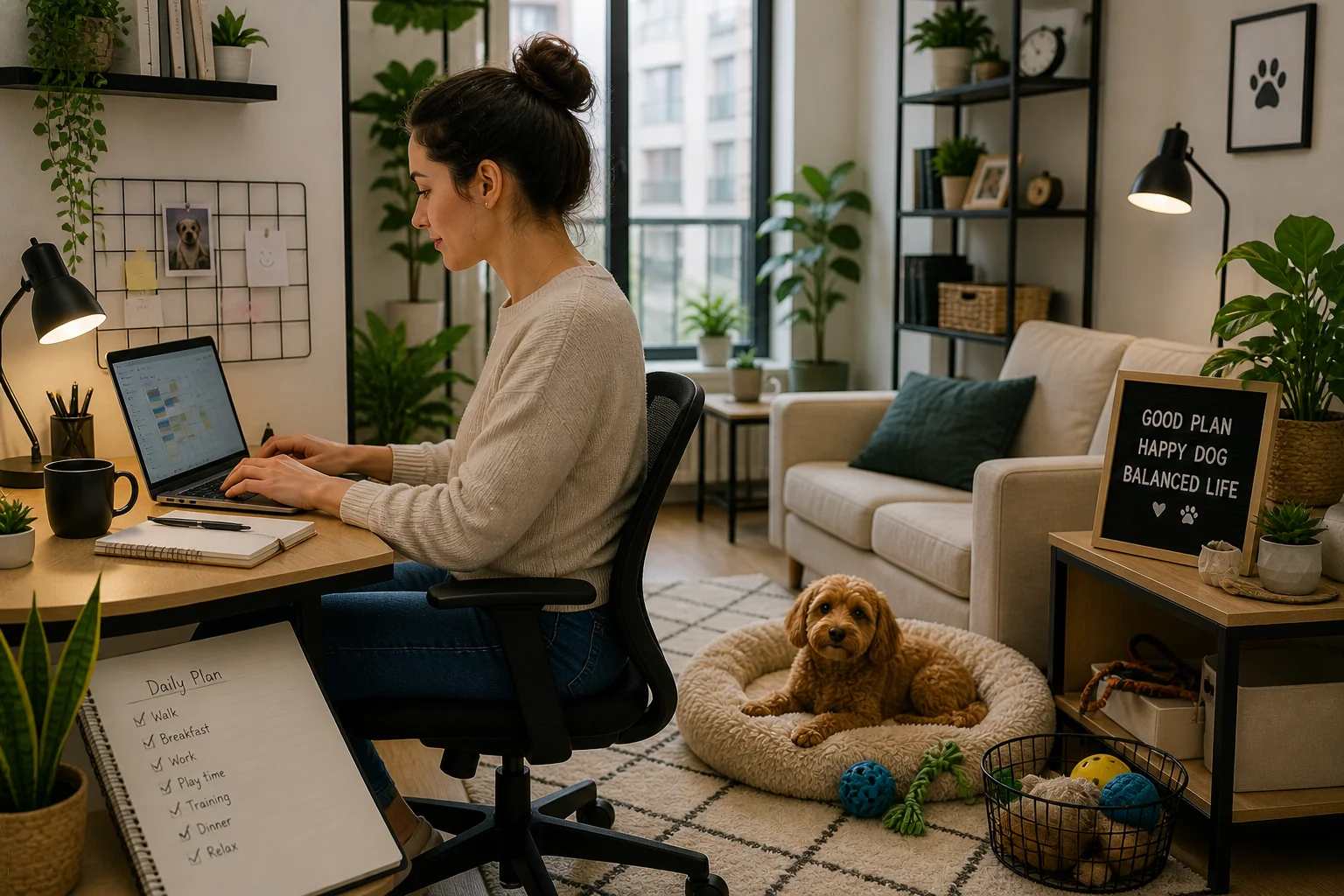
Balancing work responsibilities with dog care can be challenging, especially when living in a small apartment. Unlike larger homes where dogs may have more freedom and space to entertain themselves, apartment dogs rely heavily on their owners for structure, stimulation, and companionship. When combined with a busy work schedule, this can create stress for both the owner and the dog.
Many dog owners struggle with guilt, worrying that they are not giving enough attention or care during long workdays. At the same time, dogs that are left without proper stimulation or routine may develop behavioral issues such as barking, anxiety, or destructive habits.
The key to success is not spending every moment with your dog, but creating a balanced system that meets its physical, mental, and emotional needs while allowing you to maintain your work responsibilities.
In this article, you will learn how to effectively balance work and dog care in small spaces, create a structured routine, and ensure your dog remains happy, healthy, and well-adjusted.
Understanding Your Dog’s Needs
Before creating a balanced routine, it is important to understand what your dog truly needs.
Physical Exercise
Dogs need regular physical activity to maintain health and release energy. Without it, they may become restless or develop behavioral issues.
Mental Stimulation
Mental engagement is essential for preventing boredom and anxiety, especially when your dog spends time alone.
Social Interaction
Dogs are social animals that require interaction and companionship to feel secure.
Rest and Comfort
A comfortable environment allows your dog to relax and recharge during the day.
Creating a Structured Daily Routine
A well-structured routine is the foundation of balancing work and dog care.
Morning Routine
Start the day with intentional care.
Morning Walk
Taking your dog for a walk before work helps release energy and sets a positive tone for the day.
Feeding
Feed your dog at a consistent time each morning to establish routine.
Short Interaction
Spend a few minutes playing or training your dog to provide mental stimulation.
Managing Your Dog While You Work
When you are working, especially from home or away, your dog needs to remain engaged and calm.
If You Work From Home
Working from home presents unique opportunities and challenges.
Set Boundaries
Create a designated workspace and teach your dog to stay calm while you work.
Schedule Breaks
Take short breaks to interact with your dog. This helps maintain engagement without disrupting your workflow.
Use Independent Activities
Provide toys or puzzles that your dog can use independently.
If You Work Outside the Home
Leaving your dog alone requires careful planning.
Provide Mental Stimulation
Leave interactive toys or treat-dispensing games to keep your dog occupied.
Ensure Comfort
Create a comfortable and safe environment with a bed, water, and familiar items.
Consider Assistance
If possible, hire a dog walker or ask someone to check on your dog during the day.
Making the Most of Limited Space
Small apartments require creative solutions.
Designate Zones
Create specific areas for sleeping, playing, and feeding to provide structure.
Keep the Space Organized
An organized environment reduces stress and allows your dog to move comfortably.
Use Vertical Space
Incorporate elements such as shelves or elevated beds to maximize space.
Incorporating Exercise Into a Busy Schedule
Even with a busy routine, exercise should not be neglected.
Short but Effective Walks
Multiple short walks can be just as effective as one long walk.
Indoor Activities
Engage your dog with indoor exercises when outdoor time is limited.
Combine Activities
Use playtime as both exercise and bonding time.
Maintaining Mental Stimulation During Work Hours
Keeping your dog mentally engaged while you work is essential.
Puzzle Toys
These toys challenge your dog and keep it occupied.
Rotation of Activities
Switch toys regularly to maintain interest.
Background Stimulation
Leaving soft music or ambient sounds can provide additional comfort.
Reducing Separation Anxiety
Balancing work and dog care often involves leaving your dog alone.
Gradual Independence Training
Teach your dog to be comfortable alone by gradually increasing separation time.
Avoid Emotional Departures
Keep departures and arrivals calm to reduce anxiety.
Provide Comfort Items
Items with your scent can help your dog feel secure.
Evening Routine and Quality Time
After work, it is important to reconnect with your dog.
Evening Walk
A longer walk helps release accumulated energy.
Play and Interaction
Spend quality time playing or training your dog.
Relaxation Time
Allow your dog to wind down and relax before bedtime.
Common Mistakes to Avoid
Avoiding these mistakes can improve balance and reduce stress.
Ignoring Routine
Inconsistent schedules can confuse your dog and lead to behavioral issues.
Lack of Stimulation
Dogs left without activities may become bored and destructive.
Overcompensating
Trying to make up for lost time with excessive activity can overwhelm your dog.
Neglecting Rest
Dogs need rest just as much as activity.
Signs Your Dog Is Well Balanced
Your dog’s behavior can indicate whether your routine is working.
Calm Behavior
A balanced dog is calm and relaxed indoors.
Healthy Energy Levels
Your dog should be active during playtime but able to settle afterward.
Consistent Habits
Regular eating, sleeping, and bathroom patterns indicate stability.
Adapting to Different Work Lifestyles
Every owner has a different schedule, and flexibility is key.
Full-Time Workers
Focus on morning and evening routines, with support during the day if needed.
Remote Workers
Balance interaction with independence training.
Flexible Schedules
Use available time to increase engagement and activity.
Building a Sustainable Routine
A successful routine should be realistic and maintainable.
Start Simple
Focus on essential elements such as walks, feeding, and basic stimulation.
Adjust as Needed
Monitor your dog’s behavior and make changes accordingly.
Stay Consistent
Consistency is the foundation of long-term success.
Final Thoughts
Balancing work and dog care in small spaces may seem challenging, but it is entirely achievable with the right approach. The key is creating a structured routine that meets your dog’s needs while fitting into your daily life.
By combining physical exercise, mental stimulation, consistent schedules, and quality interaction, you can ensure your dog remains happy, healthy, and well-adjusted—even in a small apartment.
With planning, patience, and consistency, you can create a lifestyle that benefits both you and your dog, turning your apartment into a space where both work and companionship thrive.
