
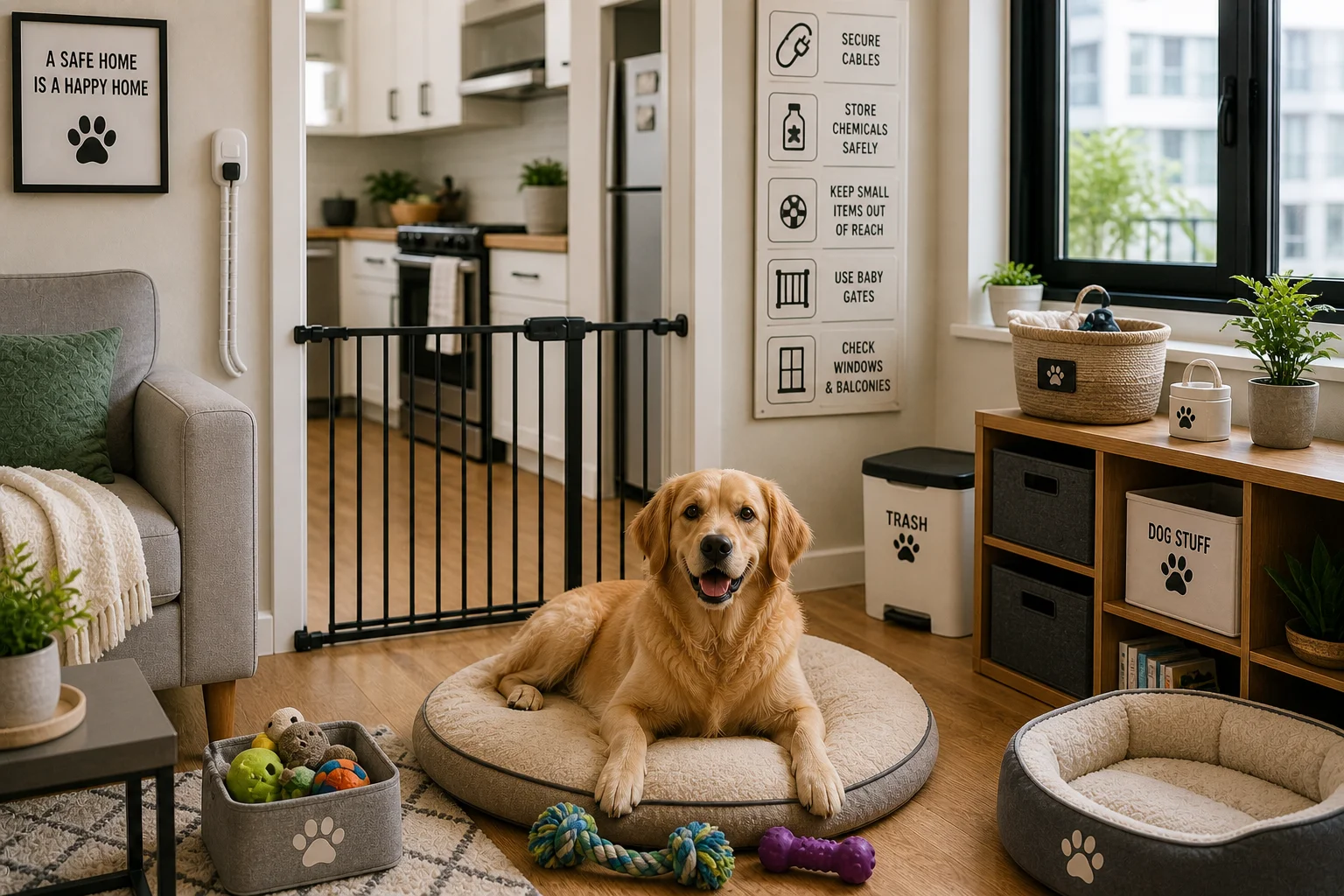
Living with a dog in a small apartment requires more than just providing food, walks, and affection—it requires creating a safe environment where your dog can move freely without risk. Dog-proofing your apartment is essential not only to protect your pet but also to prevent damage to your home and reduce daily stress.
Unlike larger homes, apartments concentrate everything into a smaller space. This means that potential hazards—such as cables, furniture, cleaning products, and small objects—are always within reach. Without proper preparation, your dog may be exposed to risks that can lead to injuries, health issues, or destructive behavior.
The good news is that dog-proofing does not require major renovations. With a strategic approach and a few adjustments, you can transform your apartment into a safe, controlled, and comfortable environment for your dog.
In this article, you will learn how to dog-proof a small apartment effectively, identify common hazards, and implement practical solutions that make everyday life safer and easier.
Why Dog-Proofing Is Essential
Dog-proofing is not just about avoiding accidents—it is about creating a structured and secure environment.
Prevents Injuries
Removing hazards reduces the risk of cuts, falls, and other accidents.
Protects Your Belongings
Dog-proofing helps prevent chewing, scratching, and damage to furniture.
Reduces Stress
A safe environment allows your dog to relax without constant supervision.
Supports Training
A controlled space makes it easier to reinforce positive behavior.
Identifying Common Hazards in Apartments
Understanding potential risks is the first step in dog-proofing.
Electrical Cables
Dogs, especially puppies, may chew on exposed wires, which can be dangerous.
Small Objects
Items such as coins, toys, or household objects can be swallowed.
Cleaning Products
Chemicals can be harmful if ingested or inhaled.
Furniture Edges
Sharp corners can cause injuries during play or movement.
Open Windows and Balconies
These pose serious safety risks if not properly secured.
Securing Electrical and Cables
Cables are one of the most common hazards in apartments.
Use Cable Covers
Protect wires with covers or tubing to prevent chewing.
Hide Cables
Keep cables behind furniture or out of reach whenever possible.
Unplug Unused Devices
Reduce exposure by unplugging devices that are not in use.
Managing Small Objects and Clutter
Clutter increases the risk of accidents.
Keep Floors Clear
Avoid leaving small items on the floor.
Use Storage Solutions
Store items in closed containers or cabinets.
Regular Checks
Inspect your apartment daily for potential hazards.
Safe Storage of Chemicals and Food
Toxic substances should always be secured.
Use High Cabinets
Store cleaning products and chemicals out of reach.
Secure Trash Bins
Use bins with lids to prevent access.
Avoid Leaving Food Out
Certain foods can be harmful to dogs.
Protecting Furniture and Surfaces
Furniture can be both a hazard and a target for damage.
Use Corner Protectors
Soft protectors can reduce the risk of injury.
Cover Furniture
Use washable covers to protect against scratches and hair.
Choose Durable Materials
Pet-friendly materials are easier to maintain.
Securing Doors, Windows, and Balconies
Openings can be dangerous if not properly managed.
Install Screens
Use secure screens on windows to prevent falls.
Use Baby Gates
Limit access to certain areas when needed.
Check Locks Regularly
Ensure doors and windows are properly secured.
Creating Safe Zones for Your Dog
A designated safe space helps your dog feel secure.
Sleeping Area
Provide a comfortable and quiet place for rest.
Play Area
Create a safe space for play with minimal hazards.
Feeding Area
Keep food and water in a consistent and clean location.
Managing Floors and Surfaces
Flooring can impact your dog’s safety.
Avoid Slippery Surfaces
Use rugs or mats to provide traction.
Clean Regularly
Remove dirt and debris that may cause slipping.
Check for Hazards
Inspect floors for sharp objects or spills.
Dog-Proofing the Kitchen and Bathroom
These areas often contain the most hazards.
Kitchen Safety
Keep food, sharp objects, and appliances out of reach.
Bathroom Safety
Secure medications, cleaning products, and small items.
Close Doors When Necessary
Restrict access to high-risk areas.
Preventing Chewing and Destructive Behavior
Chewing is natural but can be harmful.
Provide Appropriate Toys
Offer safe alternatives for chewing.
Remove Temptations
Keep valuable or dangerous items out of reach.
Train Boundaries
Teach your dog what is acceptable to chew.
Adapting Dog-Proofing for Puppies vs Adult Dogs
Different life stages require different approaches.
Puppies
Puppies require more extensive dog-proofing due to curiosity and lack of training.
Adult Dogs
Adult dogs may need fewer restrictions but still require a safe environment.
Senior Dogs
Older dogs may need adjustments for comfort and mobility.
Common Mistakes to Avoid
Avoiding these mistakes improves safety.
Ignoring Small Hazards
Even minor risks can lead to serious problems.
Inconsistent Setup
Changing rules or layout can confuse your dog.
Lack of Supervision
Dog-proofing reduces risk but does not replace supervision.
Overcrowding the Space
Too many objects can increase hazards.
Signs Your Apartment Is Properly Dog-Proofed
You can tell your setup is working when:
Safe Movement
Your dog moves freely without obstacles or risks.
Reduced Accidents
Fewer incidents of chewing, injuries, or damage.
Calm Behavior
A safe environment promotes relaxation.
Organized Space
Your apartment remains tidy and functional.
Maintaining a Dog-Proof Environment
Dog-proofing is not a one-time task.
Regular Inspections
Check your apartment frequently for new hazards.
Adjust as Needed
Update your setup as your dog grows or changes behavior.
Stay Consistent
Consistency ensures long-term safety.
Final Thoughts
Dog-proofing a small apartment is one of the most important steps in creating a safe and comfortable home for your pet. By identifying potential hazards, organizing your space, and maintaining consistent routines, you can significantly reduce risks and improve your dog’s quality of life.
A well-prepared apartment allows your dog to explore, play, and relax without constant restriction, while also giving you peace of mind. With the right approach, dog-proofing becomes a natural part of your daily routine—simple, effective, and essential for a safe and happy living environment.
