
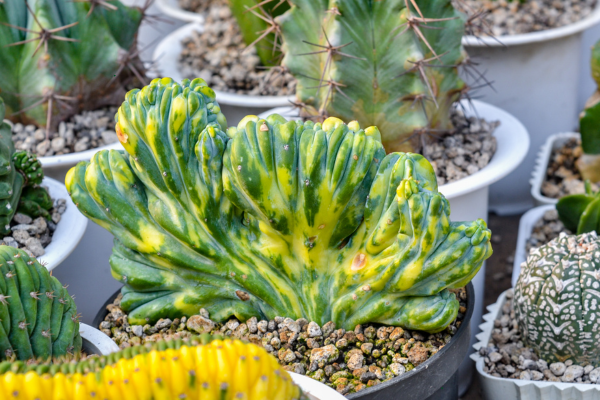
I mentioned earlier in this series how heartbreaking it can be to watch a variegated succulent slowly revert to solid green, and propagation is really where that heartbreak most often begins. It’s one thing to grow a stable, established variegated plant carefully enough to preserve its pattern. It’s a considerably trickier thing to take that plant apart, in a sense, and try to create new plants that carry the same variegation forward. Having gone through more failed attempts at this than I’d like to admit, I’ve come to think of variegated propagation as its own distinct skill, built on top of the general propagation knowledge covered throughout this series but requiring several additional layers of care.
Why Variegated Propagation Breaks the Usual Rules
Standard leaf and offset propagation, discussed in Leaf Propagation vs. Offset Propagation: Which Is Safer for Rare Types?, generally works on the assumption that any healthy piece of plant tissue carries the genetic information needed to grow into a complete, representative new plant. Variegated tissue complicates this assumption significantly, since, as we covered in Variegated Succulents Explained: Why They’re So Expensive, variegation typically results from a chimeral pattern where a plant is essentially composed of two genetically distinct tissue types growing together, one producing chlorophyll normally and one that doesn’t.
This means the specific piece of tissue you choose to propagate from matters enormously, and in a way that simply doesn’t apply to propagating a normal, solid-colored succulent. A leaf or cutting taken from purely white, non-chlorophyll-producing tissue may lack the energy reserves needed to successfully root at all, since that tissue can’t photosynthesize to generate the resources propagation requires. A leaf taken from purely green tissue will likely root just fine, but produces a plant with no variegation whatsoever, defeating the entire purpose of propagating from a variegated parent in the first place.
Selecting the Right Material
The general goal, though achieving it consistently remains genuinely difficult even for experienced growers, involves choosing propagation material from sections of the plant showing a balanced mix of variegated and green tissue, ideally including at least some of the plant’s central growing point or a portion close to it, since that’s where the chimeral pattern responsible for ongoing variegated growth is most concentrated. Offsets, when available, particularly those emerging from a section of the parent plant that’s already displaying stable, balanced variegation, tend to offer better odds of producing a new plant that continues that variegation pattern compared to a leaf taken more or less at random from wherever variegation happens to be visible.
This is part of why offset propagation, when a variegated plant is producing offsets at all, is generally considered more reliable than leaf propagation for maintaining variegation, echoing the broader offset advantages discussed in our earlier comparison of these two methods, but with even more weight given to the added uncertainty variegation introduces into leaf propagation specifically.
Managing Reduced Vigor During Rooting
Because variegated tissue has less chlorophyll-producing capacity than solid green tissue of the same size, variegated cuttings and leaves generally root more slowly and with a somewhat lower overall success rate than their non-variegated counterparts, even when using otherwise ideal technique. This means the callusing period discussed in How to Propagate Rare Succulents Without Killing Them often benefits from extending slightly longer than usual, giving the reduced-vigor tissue extra time to properly seal before facing any moisture exposure, and the patience required during the rooting stage itself, covered in our discussion of recognizing successful rooting, needs to be even more generous than what non-variegated propagation typically demands.
Light conditions during rooting also deserve particular attention with variegated material. While bright, indirect light generally suits most rooting cuttings, variegated tissue’s reduced chlorophyll makes it more vulnerable to light stress than fully green tissue would experience under the same conditions, meaning slightly gentler light during this vulnerable early stage tends to serve variegated propagation material better than the light levels that would be entirely appropriate for a non-variegated cutting of the same species.
Watching New Growth Closely
Once a variegated cutting or offset does successfully root and begin producing new growth, ongoing attention matters considerably more than it would with a non-variegated propagation attempt, since this is exactly the stage where reversion, new growth emerging fully green rather than continuing the variegated pattern, tends to first become apparent. Catching this early and removing fully reverted growth points promptly, before they have a chance to dominate the young plant’s overall growth, gives the remaining variegated sections a better chance of continuing to develop as the plant’s primary growth pattern going forward.
This ongoing vigilance doesn’t really have an endpoint, since reversion can occur at any point in a variegated plant’s life, not just during the early propagation and establishment period, meaning growers maintaining variegated propagations need to build this kind of periodic checking into their long-term care routine rather than treating it as a concern limited to just the first few months after a successful propagation attempt.
Realistic Expectations for Success Rates
It’s worth being honest that even skilled, experienced growers accept meaningfully lower success rates when propagating variegated material compared to standard propagation attempts on the same species in its non-variegated form. A batch of variegated leaf cuttings might see only a fraction successfully root and develop into stable, well-variegated new plants, with some failing to root at all, others rooting but reverting to solid green, and only a portion actually achieving the combination of successful rooting and preserved variegation that represents a genuine propagation success.
This lower success rate is part of the broader explanation for why variegated succulents command the premium pricing discussed in our earlier article on this topic, and understanding it going in helps set realistic expectations rather than treating a failed variegated propagation attempt as evidence of poor technique, when in reality it often reflects the genuine biological challenge inherent to propagating this kind of unstable, chimeral tissue in the first place.
Taking Multiple Attempts When Possible
Given these realistic success rate expectations, taking multiple leaves or cuttings when a healthy variegated parent plant can reasonably spare the material tends to improve your overall odds of ending up with at least a few successful, stably variegated new plants, following the same reasoning discussed regarding rare cutting propagation more broadly. This needs to be balanced, as always, against not over-harvesting from a parent plant in a way that compromises its own health and continued growth, a consideration that applies with particular weight to variegated parents, since their reduced overall vigor compared to solid green plants means they may have less surplus capacity to spare material without meaningful stress than a fully green, vigorous plant of the same species would.
Why This Extra Effort Remains Worthwhile
Propagating variegated succulents successfully, even accounting for the lower success rates and additional care this process demands, remains one of the more rewarding challenges within the broader succulent propagation skill set, precisely because success feels genuinely earned given how much can go wrong along the way. Each stably variegated new plant that results from a careful, patient propagation attempt represents a small victory against real biological odds, and building the specific skills and observational habits this process demands tends to make a grower noticeably more capable across their entire propagation practice, not just with variegated material specifically. It’s a genuinely good area to develop real expertise in, both for the practical value of successfully multiplying valuable variegated specimens and for the deeper understanding of succulent biology that the process inevitably teaches along the way.
