
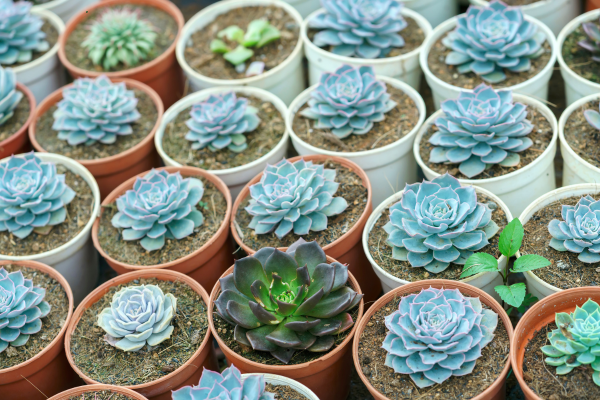
A cold snap caught me off guard a few winters ago. I’d left a small group of rare Echeverias on a windowsill that had been perfectly fine all season, not realizing that a sudden overnight temperature drop, combined with the plants sitting close to the glass, had exposed them to conditions considerably colder than the rest of the room. The damage wasn’t dramatic at first glance, just a slight translucence at the leaf edges, but it never fully resolved. That experience taught me that temperature deserves the same careful attention most growers reserve for light and water, especially with rare species that don’t have the buffer of generations of cultivation-driven resilience behind them.
Why Temperature Gets Overlooked
Compared to watering mistakes, which tend to show dramatic, unmistakable symptoms, or light problems, which we’ve covered extensively throughout this category, temperature stress often produces subtler, slower-developing damage that’s easy to misattribute to something else entirely. A plant slowly declining after a period of temperature stress might get blamed on watering or pests, when the actual root cause was a temperature swing that happened days or weeks earlier and simply took time to manifest visibly.
This is compounded by the fact that most general succulent care advice focuses heavily on light and water while treating temperature as a secondary concern, assuming that if a space is comfortable for a person, it’s probably fine for a succulent too. That assumption holds up reasonably well for hardy, common species, but breaks down considerably for rare plants adapted to very specific native temperature ranges, sometimes including daily fluctuations that a stable, climate-controlled home simply doesn’t replicate.
Understanding Natural Temperature Patterns in Habitat
Many rare succulents come from environments with significant daily temperature swings, hot during the day and considerably cooler at night, a pattern that’s actually built into how these plants function biologically. Species like Echeveria ‘Black Prince’ and ‘Black Knight’, discussed earlier in this series, develop their signature dark coloration partly in response to cooler nighttime temperatures combined with strong daytime light, meaning a home environment that stays uniformly warm around the clock can prevent these plants from ever developing the coloration they’re capable of, even with otherwise excellent light and water management.
Other species, particularly those from higher-altitude habitats, may have even more specific cold tolerance built into their biology, sometimes handling temperatures that would seriously damage lower-altitude species from the same general region. This variation means a single “safe temperature range” doesn’t really apply universally across a diverse rare succulent collection, and understanding where a specific species originates provides real, practical guidance about what temperature conditions it’s likely built to handle well versus what would represent genuine stress.
Cold Damage: What It Looks Like and Why It Happens
Succulents store significant water within their leaf tissue, and that stored water becomes a liability in genuinely cold conditions, since the expansion that occurs when water freezes can rupture cell walls, causing visible damage even in species with some general cold tolerance. This is why frost represents a much more serious threat than simply cool temperatures, and why very few succulents, regardless of how cold-hardy their reputation, tolerate actual freezing conditions well.
Cold damage that stops short of a hard freeze often appears as a translucent, water-soaked look to leaf tissue, sometimes followed by a mushy texture similar in some ways to the rot symptoms we discussed in our overwatering guide, though the underlying cause here is temperature rather than moisture. Unlike some other stress types, cold damage to leaf tissue is generally permanent once it occurs; damaged sections won’t heal or return to their previous appearance, even once temperatures return to a comfortable range.
Plants positioned near windows during cold weather face a particular risk, since glass conducts cold considerably more efficiently than a home’s insulated walls, meaning a plant sitting directly against or very close to window glass can experience temperatures noticeably colder than what a thermometer elsewhere in the room might suggest, especially overnight when outdoor temperatures typically drop to their lowest point.
Heat Stress and Its Own Set of Risks
While cold damage tends to get more attention, excessive heat poses genuine risks as well, particularly for species from cooler, higher-altitude habitats that aren’t built to handle prolonged, intense heat despite their general succulent classification. Heat stress often shows up as a kind of wilting or softening that can look similar to underwatering, sometimes accompanied by a faded or bleached appearance in the most exposed leaves, distinct from the more localized, directional sunburn patterns we discussed regarding light exposure.
Heat stress becomes a particular concern in growing setups that combine grow lights, discussed in [LINK: Using Grow Lights for Succulents With No Natural Sunlight], positioned too close to plants without adequate ventilation, since the heat generated by lighting equipment can accumulate in an enclosed growing space and push temperatures well beyond what’s comfortable for genuinely heat-sensitive species, even when the light intensity itself is entirely appropriate.
Temperature’s Relationship With Watering Needs
Temperature and watering needs are closely linked in ways that make isolated adjustment to just one factor somewhat incomplete. Higher temperatures generally increase a plant’s water use and cause soil to dry out faster, meaning the watering schedules discussed in [LINK: Watering Schedules for Slow-Growing Rare Varieties] genuinely need adjusting not just seasonally, but in response to any sustained temperature shift, whether that’s a summer heat wave or an unusually warm stretch during an otherwise cool season.
Conversely, cooler temperatures typically slow a plant’s metabolic processes and water use considerably, which is part of why maintaining a summer watering routine into a cold snap or an early winter cold spell can create the same overwatering risk we discussed regarding seasonal dormancy, even outside a plant’s typical dormant period, simply because the temperature drop has independently reduced how much water the plant is currently able to use.
Practical Temperature Management for Indoor Growers
For most home growers, maintaining reasonably stable indoor temperatures, generally somewhere in a comfortable human range, works fine for the majority of rare succulents, provided a few specific precautions are taken. Moving plants away from window glass during particularly cold nights, or adding a layer of insulation like a curtain drawn behind the plants overnight, can meaningfully reduce the risk of the kind of cold exposure that caught me off guard with those Echeverias.
For growers wanting to replicate the beneficial daily temperature fluctuation that many rare species are adapted to, particularly for color development in species like the darker Echeveria varieties, a dedicated growing space with some degree of temperature control, allowing for a genuine daytime warm-up and nighttime cool-down, tends to produce noticeably better results than a uniformly climate-controlled room that never varies.
Recognizing Temperature Stress Before It Becomes Severe
Because temperature damage, once it occurs, tends to be permanent rather than something a plant simply recovers from, prevention matters considerably more than correction here compared to some other care mistakes. Paying attention to weather forecasts during seasonal transitions, particularly unexpected cold snaps in fall or unusually early heat waves in spring, and proactively moving sensitive rare specimens away from risk, whether that means pulling plants back from a cold window or providing temporary shade during an unexpected heat spike, prevents the kind of damage that otherwise shows up days later without an obvious immediate cause.
This kind of proactive attention, checking weather patterns and adjusting plant positioning before an extreme temperature event rather than reacting after visible damage appears, rounds out the environmental awareness that rare succulent growing really demands. Light, water, humidity, and temperature all interact continuously, and understanding how they affect each other, rather than managing each factor in isolation, tends to be what ultimately separates a collection that merely survives from one that genuinely thrives across every season of the year.
