
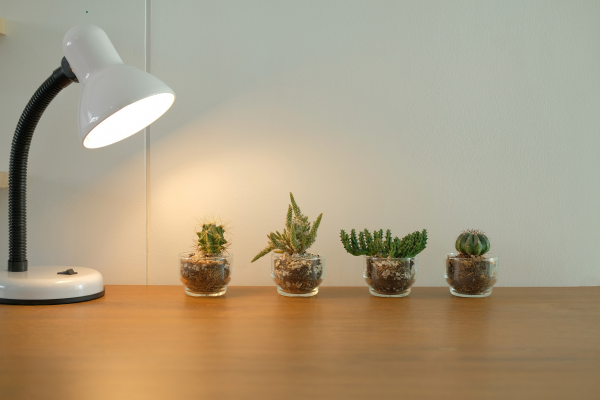
For years I resisted buying grow lights, mostly out of some vague sense that a “real” succulent collection should rely on natural sunlight alone. Then I moved into a space with a single north-facing window that let in what could generously be called ambient daylight, and every rare specimen I owned started stretching within weeks. That stubbornness cost me more plants than I’d like to admit before I finally accepted that artificial lighting isn’t a compromise or a shortcut. For a lot of growing situations, it’s genuinely the only way to keep sensitive, light-hungry rare succulents healthy at all.
Why Natural Light Often Falls Short Indoors
Even a window that seems bright to human eyes typically delivers a fraction of the light intensity that direct outdoor sun provides, and that gap widens considerably depending on window orientation, obstructions like nearby buildings or trees, and how far into the room a plant in The Ideal Light Requirements for Rare Succulent Species, where even a genuinely good window position during summer can become inadequate once the sun’s angle drops and days shorten in fall and winter.
Rare succulents adapted to intense, high-altitude, or fully exposed desert habitats tend to need light levels that very few indoor windows can consistently provide year-round, which is exactly why so many otherwise well-cared-for rare specimens slowly stretch and fade indoors despite sitting in what seems like the “best” available spot in a home.
Understanding Grow Light Types
Not all grow lights perform equally, and the differences matter more than the marketing on most product packaging suggests. Full-spectrum LED grow lights have become the standard recommendation for succulents in recent years, offering a broad range of wavelengths that support healthy growth without the excessive heat output that older technologies like high-intensity discharge lighting tend to produce. That heat consideration matters specifically for succulents, since positioning a heat-generating light too close to sensitive, farina-coated, or fuzzy specimens can cause its own kind of damage independent of light intensity.
Look for grow lights that specify their output in PAR or PPFD measurements rather than simply watts, since wattage alone doesn’t reliably indicate how much usable light a plant actually receives. For succulents specifically, particularly those needing intense light comparable to direct sun exposure, higher PPFD values in the range typically recommended for high-light plants are generally more appropriate than lights marketed for low-light foliage plants, which usually don’t provide nearly enough intensity for genuinely light-hungry species like many Echeverias or Lithops.
Positioning and Distance
Grow light effectiveness drops off considerably with distance, more sharply than most people expect, which means a light positioned too far above a plant may provide dramatically less usable intensity than the same light positioned closer, even if the difference in distance seems minor. Most succulent-appropriate LED grow lights work best positioned somewhere between six and twelve inches above the plant canopy, though this varies by specific light model and its stated intensity, making it worth checking manufacturer guidance rather than guessing based on general assumptions.
It’s worth periodically checking how your plants respond to their specific grow light setup rather than assuming a single installation will remain perfectly calibrated indefinitely, since plants grow and shift in height over time, gradually changing their actual distance from a fixed light source even if the light itself never moves.
Duration and Timing
Most rare succulents respond well to grow light exposure in the range of twelve to fourteen hours daily, roughly mimicking a reasonably long summer day, though this can be adjusted somewhat to reflect the seasonal patterns discussed in Seasonal Care Guide: Rare Succulents in Winter vs. Summer, with slightly reduced duration during a plant’s natural dormant period to avoid pushing active growth signals when the plant’s biology is oriented toward slowing down instead.
Using a simple timer to maintain consistent daily light duration removes a lot of the guesswork and prevents the common mistake of forgetting to turn lights on or off manually, which can create an inconsistent light schedule that’s arguably more disruptive to a plant’s internal rhythm than simply providing somewhat less total light on a fully consistent schedule.
Combining Grow Lights With Natural Light
Grow lights don’t need to replace natural window light entirely, and for many growing situations, a combination approach works better than relying exclusively on either source. Positioning a grow light to supplement an existing window, particularly during darker winter months or for plants sitting slightly too far from the window to receive adequate natural intensity on their own, can bridge exactly the kind of seasonal or positional light gap that causes so many rare succulents to slowly decline indoors.
For growers working with a dedicated shelf or plant stand setup away from windows entirely, grow lights become the primary and sometimes sole light source, which requires more careful attention to providing genuinely adequate intensity and duration, since there’s no natural light supplementing whatever the artificial setup provides.
Signs Your Grow Light Setup Needs Adjustment
Much like natural light, the best indicator of whether a grow light setup is working comes from observing the plants themselves rather than assuming a technically impressive light fixture guarantees good results. Continued stretching or etiolation despite a grow light being present usually means the light is positioned too far away, isn’t providing sufficient intensity for that particular species, or isn’t running for a long enough daily duration.
Conversely, some succulents, particularly farina-coated or fuzzy varieties discussed earlier in this series, can show stress or bleaching if a grow light is positioned too close or set to an intensity higher than the plant is acclimated to, similar to the sunburn risk from unfiltered direct sun we covered when discussing acclimating newly imported specimens. Grow lights genuinely do require the same kind of gradual acclimation process as natural sunlight, particularly for a plant that’s never been under strong artificial lighting before, rather than assuming artificial light is inherently gentler or safer than the real thing.
Cost and Practical Considerations
Quality full-spectrum LED grow lights suited to succulents represent a genuine investment, and it’s fair to weigh that cost against the value of the collection you’re trying to protect. For a handful of common, forgiving succulents, this investment may not be strictly necessary if natural light is even moderately adequate. For a growing collection of genuinely rare, expensive, slow-growing specimens, where a single case of etiolation represents permanent, unfixable damage to a plant that might have taken years to source and grow, the cost of adequate grow lighting tends to look considerably more reasonable in comparison.
Many serious rare succulent growers eventually build out a dedicated grow light shelf or stand specifically because it offers something a window position never fully can: complete, controllable consistency regardless of season, weather, or time of year, removing one of the more significant variables that otherwise makes growing habitat-sensitive rare species indoors such a persistent challenge.
Making the Transition Work
If you’re moving a plant that’s been growing under natural window light onto a new grow light setup, or introducing artificial lighting to a plant that’s never had supplemental light before, treat this transition with the same gradual care discussed throughout this series for other significant environmental changes. Start with shorter daily durations and, if the light allows for intensity adjustment, a lower setting, before working up to the full recommended duration and intensity over a period of one to two weeks.
This cautious approach, more than any specific piece of equipment or technical specification, tends to determine whether a grow light setup genuinely improves a rare succulent collection’s health or simply introduces a new source of stress dressed up as a solution. Done thoughtfully, though, supplemental lighting remains one of the most reliable ways to finally give genuinely light-hungry rare species the consistent, adequate intensity that so many indoor growing spaces simply can’t provide through windows alone.
