
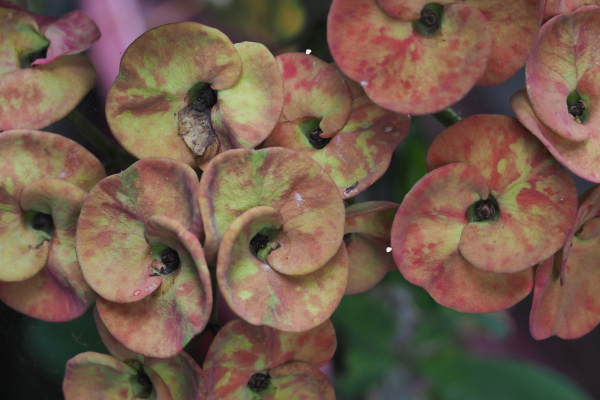
Echeveria is probably the genus most people picture when they hear the word “succulent” — those tidy, symmetrical rosettes that show up on every plant shop shelf and gardening Pinterest board. Which is exactly why it surprises people to learn that within this same common, beginner-friendly genus, there are varieties so rare that serious collectors will wait years for a single healthy specimen to become available. The gap between a five-dollar Echeveria elegans at a garden center and a genuinely rare cultivar can be enormous, and that gap comes down to a mix of genetics, breeding history, and, frankly, luck.
Why Some Echeverias Stay Rare While Others Flood the Market
Most common Echeverias are easy to propagate from leaf cuttings or offsets, grow relatively quickly, and breed true, meaning seedlings reliably resemble their parent plant. That combination is exactly what makes a variety commercially viable at scale, and it’s why you can find Echeveria elegans or Echeveria ‘Perle von Nürnberg’ at almost any nursery.
The varieties on this list break that pattern in one way or another. Some are hybrids created through deliberate, painstaking cross-pollination that took a breeder years to stabilize. Others carry variegation or crested mutations, which, as we discussed in Variegated Succulents Explained: Why They’re So Expensive, make propagation slow and unpredictable. And a few are simply the result of extremely limited original stock, where only a handful of specimens exist in cultivation at all, making every division or cutting a genuinely scarce commodity.
Echeveria ‘Doris Taylor’ (Woolly Rose)
Also sometimes sold under the name ‘Teddy Bear’, this hybrid is instantly recognizable by the fine, silvery hairs covering its entire rosette, giving it a soft, fuzzy appearance unlike almost any other Echeveria. That fuzzy coating actually serves a functional purpose in habitat-adjacent conditions, helping to reflect intense sunlight and reduce moisture loss, but it also makes the plant considerably more sensitive to overhead watering than smooth-leaved varieties, since water trapped in the hairs can lead to rot far more easily. Well-grown, densely fuzzed specimens with tight, compact rosettes are surprisingly hard to find, since achieving that ideal fuzzy density requires very specific light and humidity conditions that many growers struggle to replicate.
Echeveria ‘Blue Sky’
A hybrid known for its striking powder-blue coloration and unusually large, cupped leaves, ‘Blue Sky’ has become something of a holy grail for collectors chasing color rather than shape. The powdery coating responsible for its color, called farina, is delicate and easily damaged by handling, water spots, or even light physical contact, meaning a single careless touch can leave a permanent mark that never fully disappears. Because farina takes time to redevelop and can’t simply be reapplied, truly pristine specimens with an unmarked, even blue coating are genuinely uncommon, and photographs of “perfect” plants online often don’t reflect how difficult that condition is to maintain over time.
Echeveria Laui
Widely considered one of the most difficult Echeverias to grow well, Laui is prized for its exceptionally thick, chalky-white farina and its compact, almost sculptural rosette shape. Unlike many Echeverias that tolerate a range of conditions reasonably well, Laui is notoriously particular about light, humidity, and watering, and even experienced growers report losing specimens to rot or etiolation more often than they’d like to admit. Because it’s slow-growing and doesn’t offset as readily as most other Echeverias, propagation relies heavily on leaf cuttings, which for this species have a lower success rate than average — a challenge we go into in more depth in How to Propagate Rare Succulents Without Killing Them. The combination of slow growth, finicky care, and unreliable propagation keeps genuinely healthy, well-formed Laui specimens scarce and expensive.
Echeveria Chihuahuaensis ‘Variegata’
Variegated forms of already-uncommon species sit at a particularly steep intersection of rarity, and this is a good example. The base species, Echeveria chihuahuaensis, is already less common in general cultivation than mainstream Echeverias, and the variegated form adds the unpredictability and slow growth typical of any variegated succulent on top of that. Specimens with strong, stable cream-and-green variegation across multiple leaves, rather than just a faint streak on one or two leaves, are rare enough that they rarely appear in general retail settings at all, usually changing hands directly between specialized collectors instead.
Echeveria ‘Black Knight’
Despite the name suggesting something similar to Echeveria ‘Black Prince’, which we touched on in 10 Rare Succulent Varieties Every Collector Should Know, ‘Black Knight’ is a distinct hybrid with an even deeper, more saturated near-black coloration and a larger, more substantial rosette form. Achieving that intense dark pigmentation requires a fairly narrow combination of strong direct light and cooler temperatures, and plants grown outside that sweet spot often revert to a duller, greenish-brown shade that doesn’t showcase the variety’s real potential. Because the striking coloration depends so heavily on specific growing conditions, well-colored specimens photographed and sold at their peak coloration represent a relatively narrow window in the plant’s life, which adds to their desirability among collectors chasing that particular look.
Crested Echeveria Forms
As we discussed in more general terms regarding crested and monstrose growth in 10 Rare Succulent Varieties Every Collector Should Know, crested mutations can technically occur in almost any Echeveria species, but they happen rarely and unpredictably. A crested Echeveria develops a fan-shaped or wavy ridge of growth instead of a typical single-point rosette, and because this mutation isn’t reliably inheritable through seed, propagating a crested specimen requires careful vegetative propagation directly from the mutated growth point. Each crested Echeveria is functionally one-of-a-kind in its exact growth pattern, which is part of why these specimens, regardless of the base species involved, tend to command premium prices whenever they do appear for sale.
Echeveria Pulidonis
Native to a fairly limited region of Mexico, Pulidonis has a naturally compact, tidy rosette with distinctive red-edged leaves that intensify in color under strong light. While not as extreme in its care requirements as Laui, wild-type Pulidonis with strong, well-defined red leaf margins and a genuinely compact growth habit, rather than the looser, hybridized forms sometimes sold under the same name, has become harder to source as demand has increased and habitat pressures in its native range have grown. Distinguishing true species-type Pulidonis from Pulidonis hybrids is a common point of confusion in the trade, similar to the labeling issues we cover in How to Spot a Fake or Mislabeled Rare Succulent Online.
What Ties These Varieties Together
Looking at this list as a whole, a pattern emerges pretty clearly. Rarity in Echeveria almost never comes from a single cause — it’s usually some combination of slow growth, delicate farina or fuzzy coatings that are easily damaged, finicky care requirements that lead to a higher failure rate among growers, and propagation methods that simply can’t be scaled up the way seed propagation can for more common species.
None of that makes these varieties impossible to grow successfully at home, but it does mean going in with realistic expectations. A rare Echeveria purchased on impulse, without preparing the right light conditions and understanding its particular sensitivities beforehand, is unfortunately more likely to end up as a lesson than a long-term addition to your collection. Taking the time to research a specific variety’s particular quirks before bringing one home tends to make the difference between a rare plant that thrives for years and one that quietly declines within a few months of arriving.
