
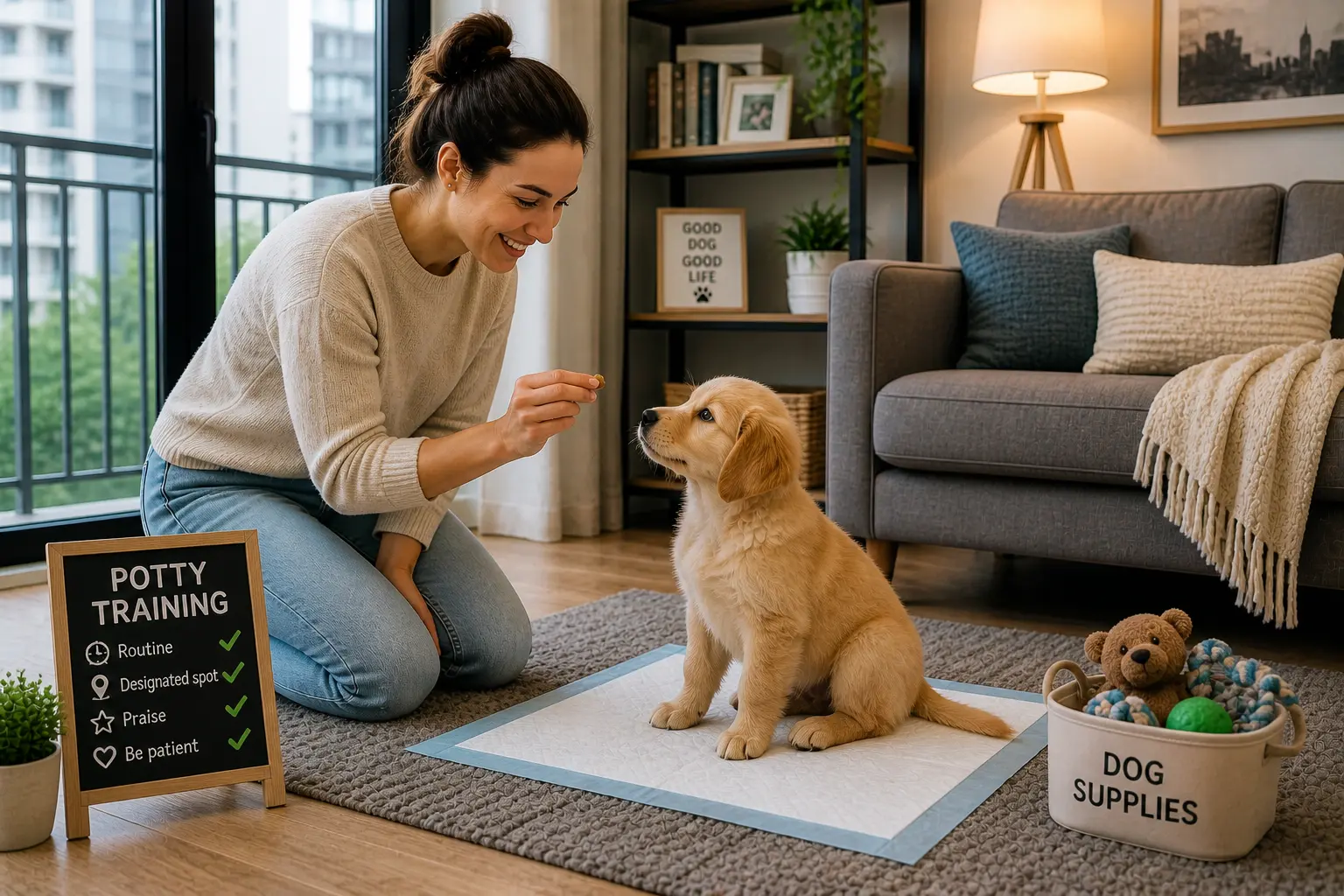
Potty training is one of the first and most important challenges for any dog owner, especially for those living in apartments. Unlike houses with backyards, apartments require a more structured and intentional approach since outdoor access is limited and accidents can quickly become a problem.
For first-time dog owners, this process can feel overwhelming. Accidents on the floor, inconsistent behavior, and confusion about where the dog should go are common issues. However, with the right strategy, patience, and consistency, potty training can be successfully achieved—even in a small apartment.
In this article, you will learn how to potty train your dog effectively in an apartment, understand common mistakes, and discover practical methods that work even in limited spaces.
Understanding How Dogs Learn Potty Habits
Before starting the training process, it is essential to understand how dogs develop bathroom habits. Dogs do not naturally know where they are supposed to go, so training is necessary to establish clear expectations.
Natural Instincts
Dogs instinctively avoid soiling the area where they sleep. This behavior can be used to your advantage during training. However, without guidance, they may not understand which areas of your apartment are appropriate.
Consistency Builds Habits
Dogs learn through repetition and consistency. If you provide clear routines and reinforce the same behavior daily, your dog will begin to understand where and when it is appropriate to go.
Timing Is Critical
Dogs usually need to relieve themselves after specific activities, such as eating, drinking, waking up, or playing. Recognizing these patterns is key to successful training.
Choosing the Right Potty Training Method
There are different methods for potty training in apartments, and choosing the right one depends on your routine and environment.
Outdoor Training
This method involves taking your dog outside at regular intervals. While it is effective, it requires discipline and availability to go out frequently.
It is ideal for owners who have easy access to outdoor areas and can maintain a consistent schedule.
Indoor Training Pads
Training pads are a practical solution for apartment living. They provide a designated indoor spot for your dog to use, which is especially useful during bad weather or busy schedules.
However, it is important to place the pad in a consistent location and gradually transition to outdoor training if desired.
Combination Approach
Many owners use a combination of indoor pads and outdoor training. This provides flexibility and helps the dog adapt to different situations.
Step-by-Step Potty Training Process
Training your dog requires a structured approach. Following a clear step-by-step process increases your chances of success.
Establish a Routine
Consistency is the foundation of potty training. Take your dog to the designated potty area at the same times every day, especially after meals, naps, and play sessions.
A predictable routine helps your dog understand when it is time to go.
Choose a Specific Spot
Whether indoors or outdoors, always use the same spot. Dogs associate location with behavior, so consistency reinforces learning.
If you are using pads, keep them in one place and avoid moving them frequently.
Use Positive Reinforcement
Reward your dog immediately after it uses the correct spot. Treats, praise, and affection help reinforce the behavior.
Dogs learn faster when they associate the correct action with a positive outcome.
Supervise Closely
During the training phase, keep a close eye on your dog. Watch for signs that it needs to go, such as sniffing, circling, or restlessness.
Quickly guiding your dog to the correct spot prevents accidents.
Limit Freedom Initially
Giving your dog too much space too soon can lead to mistakes. Start by limiting access to certain areas of your apartment until the dog is fully trained.
Gradually increase freedom as your dog becomes more consistent.
Managing Accidents the Right Way
Accidents are a normal part of the training process. How you handle them can make a big difference.
Stay Calm
Punishing your dog for accidents can create fear and confusion. Dogs do not associate punishment with past behavior, so it is ineffective.
Clean Thoroughly
Use proper cleaning products to remove odors completely. If the smell remains, your dog may return to the same spot.
Redirect Behavior
If you catch your dog in the act, gently interrupt and guide it to the correct location. Reward the behavior if it finishes in the right place.
Tips for Faster and More Effective Training
While potty training takes time, certain strategies can speed up the process.
Feed on a Schedule
Feeding your dog at consistent times helps regulate its bathroom schedule. This makes it easier to predict when your dog needs to go.
Use Crate Training
Crate training can be very effective because dogs avoid soiling their sleeping area. When used correctly, it helps build control and discipline.
Take Frequent Breaks
Young puppies need more frequent bathroom breaks. Taking your dog out regularly reduces the chance of accidents.
Be Patient
Every dog learns at a different pace. Consistency and patience are essential for long-term success.
Common Mistakes to Avoid
Many dog owners unintentionally slow down the training process by making avoidable mistakes.
Inconsistent Routine
Changing schedules frequently confuses your dog and makes it harder to learn.
Delayed Rewards
Rewards must be given immediately after the correct behavior. Delayed reinforcement weakens the association.
Too Much Freedom Too Soon
Allowing your dog to roam freely before it is fully trained increases the risk of accidents.
Punishment-Based Training
Negative reinforcement can create anxiety and hinder learning. Positive methods are far more effective.
How Long Does Potty Training Take?
The time required for potty training varies depending on the dog’s age, breed, and consistency of training.
Puppies may take several weeks to a few months to become fully trained. Adult dogs may learn faster, especially if they have previous training experience.
Consistency is the most important factor in determining how quickly your dog learns.
Adapting Potty Training to Apartment Life
Apartment living requires some adjustments to traditional potty training methods.
Plan Your Schedule
Since outdoor access may require elevators or stairs, planning is essential. Anticipate your dog’s needs and act quickly.
Use Tools When Necessary
Training pads, grass patches, or balcony solutions can make the process more practical.
Communicate with Neighbors
Being mindful of shared spaces helps maintain a positive relationship with neighbors.
Final Thoughts
Potty training a dog in a small apartment may seem challenging, but it is entirely achievable with the right approach. The key is consistency, patience, and understanding your dog’s behavior.
By establishing a routine, using positive reinforcement, and avoiding common mistakes, you can successfully train your dog to develop proper bathroom habits.
With time and dedication, your apartment can become a clean, comfortable, and stress-free environment for both you and your dog.
