
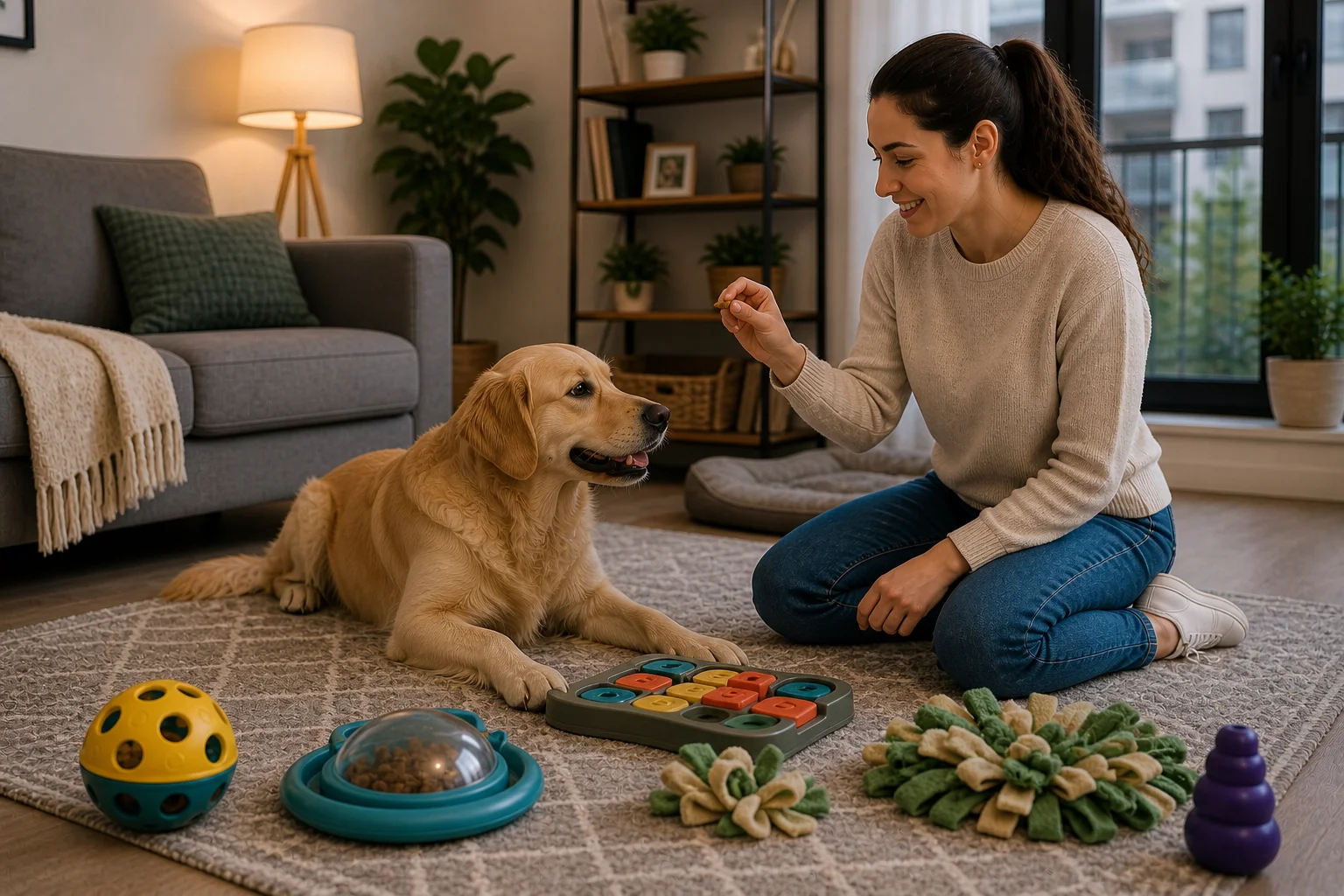
When living in an apartment, many dog owners focus primarily on physical exercise, such as walks and playtime. While these activities are essential, they are only part of what your dog needs to stay healthy and balanced. Mental stimulation is just as important—and often even more critical in indoor environments where space is limited.
Dogs are intelligent animals that require daily mental engagement to stay happy. Without proper stimulation, they can quickly become bored, anxious, and even develop behavioral problems such as excessive barking, chewing, digging, or restlessness. In apartments, where external stimuli are more limited, the responsibility for providing mental enrichment falls almost entirely on the owner.
The good news is that you don’t need a large space or expensive equipment to keep your dog mentally stimulated. With creativity, consistency, and the right activities, you can turn your apartment into a mentally engaging environment that supports your dog’s well-being.
In this article, you will learn why mental stimulation is essential, how to recognize when your dog needs it, and practical ways to keep your dog engaged indoors.
Why Mental Stimulation Is Essential for Dogs
Mental stimulation is a key part of your dog’s overall health and should be part of its daily routine.
Prevents Boredom
Dogs that lack mental engagement often become bored, which leads to unwanted behaviors. Mental activities give your dog something to focus on and reduce idle time.
Reduces Anxiety
A mentally engaged dog is less likely to develop anxiety-related behaviors. Activities that challenge the brain help create a sense of satisfaction and calmness.
Improves Behavior
Many behavioral issues are linked to a lack of stimulation. Providing mental challenges helps your dog stay balanced and focused.
Builds Confidence
Learning new tasks and solving problems boosts your dog’s confidence and independence.
Strengthens Your Bond
Interactive activities improve communication and strengthen the relationship between you and your dog.
Signs Your Dog Needs More Mental Stimulation
Understanding your dog’s behavior can help you identify whether it needs more mental engagement.
Excessive Barking
Barking without a clear reason can be a sign of boredom or frustration.
Destructive Behavior
Chewing furniture, scratching, or damaging objects often indicates a lack of stimulation.
Restlessness
Dogs that cannot settle or seem constantly agitated may need more mental activity.
Attention-Seeking Behavior
Constantly demanding attention can be a sign that your dog is not mentally satisfied.
Best Ways to Keep Your Dog Mentally Stimulated Indoors
There are many effective ways to engage your dog’s mind without needing a large space.
Interactive Toys and Puzzles
Puzzle Feeders
Puzzle feeders require your dog to solve a problem to access food. This slows down eating and stimulates the brain.
Treat-Dispensing Toys
These toys encourage movement and problem-solving as your dog works to release treats.
Rotating Toys
Switching toys regularly keeps them interesting and prevents boredom.
Scent-Based Activities
Dogs rely heavily on their sense of smell, making scent games highly effective.
Hide and Seek with Treats
Hide treats around your apartment and let your dog find them. This engages both the mind and the senses.
Scent Trails
Create a trail using treats or scent markers for your dog to follow.
Find the Toy
Hide your dog’s favorite toy and encourage it to search for it.
Training and Learning New Skills
Training is one of the best ways to provide mental stimulation.
Teach New Commands
Introducing new commands challenges your dog’s brain and improves discipline.
Trick Training
Teaching tricks such as spin, roll over, or paw adds variety and keeps your dog engaged.
Short Training Sessions
Frequent, short sessions are more effective than long ones.
Interactive Play with Purpose
Playtime can also be mentally stimulating when done correctly.
Structured Play
Games like tug-of-war or controlled fetch require focus and engagement.
Problem-Solving Games
Encourage your dog to figure out how to reach a toy or treat placed in a slightly challenging location.
Environmental Enrichment
Your dog’s environment plays a major role in mental stimulation.
Window Watching
Allow your dog to observe the outside world safely. This provides visual stimulation.
Changing Layout
Occasionally rearranging furniture or introducing new objects can create a new environment for exploration.
Background Sounds
Soft music or natural sounds can provide additional stimulation.
Combining Physical and Mental Exercise
The best results come from combining both types of activity.
Obstacle Courses
Create simple indoor obstacle courses that require both movement and problem-solving.
Interactive Walk Preparation
Use commands and training before walks to engage your dog mentally.
Balanced Routine
Include both physical and mental activities in your daily schedule.
Creating a Daily Mental Stimulation Routine
Consistency is key to maintaining your dog’s mental health.
Morning Stimulation
Start the day with a short training session or puzzle toy.
Midday Engagement
Provide toys or activities if your dog is alone.
Evening Activities
Use interactive play or scent games to end the day.
Common Mistakes to Avoid
Avoiding these mistakes can improve your dog’s experience.
Relying Only on Physical Exercise
Physical activity alone is not enough to keep your dog balanced.
Lack of Variety
Repeating the same activities can lead to boredom.
Overstimulation
Too much activity without rest can cause stress.
Ignoring Your Dog’s Preferences
Each dog is different. Pay attention to what your dog enjoys most.
Adapting Mental Stimulation to Apartment Living
Apartment living requires creativity and awareness.
Use Limited Space Efficiently
Focus on activities that do not require large areas.
Minimize Noise
Choose activities that do not disturb neighbors.
Keep It Structured
A structured routine helps your dog feel secure.
How Long Should Mental Stimulation Last?
Mental stimulation does not need to be long to be effective.
Even 15 to 30 minutes per day can make a significant difference.
Short, consistent sessions are more beneficial than occasional long ones.
Final Thoughts
Keeping your dog mentally stimulated indoors is essential for maintaining a healthy, balanced, and happy life—especially in an apartment environment. Mental engagement prevents boredom, reduces anxiety, and improves overall behavior.
By incorporating interactive toys, training, scent games, and environmental enrichment into your daily routine, you can create a stimulating environment that meets your dog’s needs.
The key is consistency, creativity, and understanding your dog’s unique personality. With the right approach, your apartment can become a space where your dog is not only physically active but also mentally fulfilled.
