
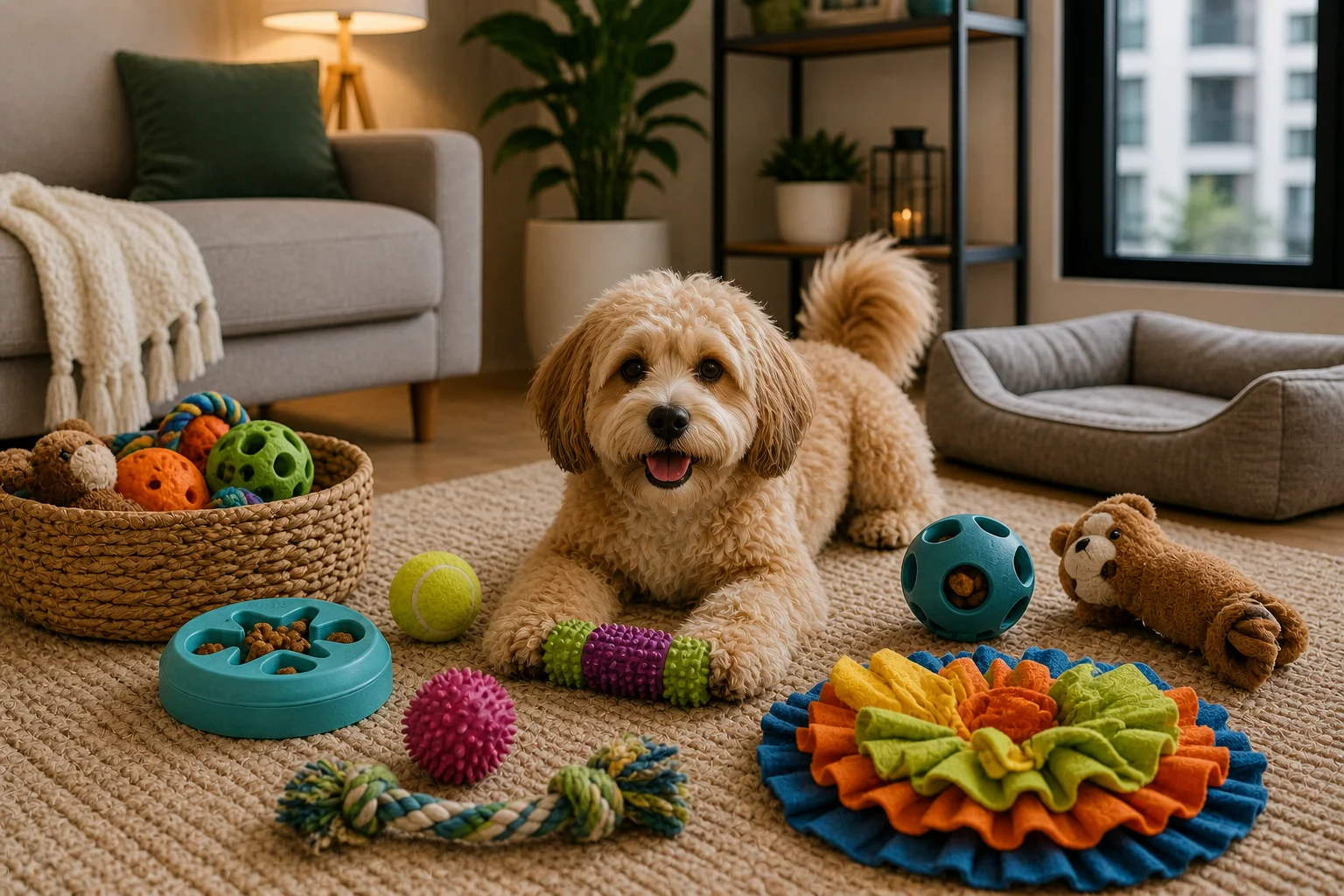
Living in a small apartment with a dog requires creativity, especially when it comes to keeping your pet entertained and mentally stimulated. Unlike larger homes where dogs may have access to yards or open spaces, apartment dogs rely heavily on indoor activities and tools to stay engaged.
One of the most effective ways to prevent boredom, reduce anxiety, and promote healthy behavior is through the use of the right toys. However, not all dog toys are suitable for apartment living. Some are too noisy, require too much space, or fail to provide meaningful stimulation.
Choosing the right toys can make a significant difference in your dog’s daily life. The best toys for apartment dogs are those that combine mental stimulation, controlled physical activity, and quiet interaction.
In this article, you will learn how to choose the best toys for dogs in small apartments, discover different types of toys that work well in limited spaces, and understand how to use them effectively.
Why Toys Are Essential for Apartment Dogs
Toys are not just for fun—they are a critical part of your dog’s well-being.
Prevent Boredom
Dogs that are not mentally stimulated can quickly become bored, leading to destructive behavior such as chewing furniture or excessive barking.
Reduce Anxiety
Interactive toys can help keep your dog calm when alone, reducing stress and separation anxiety.
Encourage Healthy Behavior
Toys provide an outlet for natural behaviors such as chewing, hunting, and problem-solving.
Support Mental Stimulation
Many toys challenge your dog’s brain, helping to improve focus and reduce restlessness.
What Makes a Toy Apartment-Friendly?
Not all toys are suitable for small spaces. When choosing toys for apartment living, consider the following factors.
Noise Level
Avoid toys that produce loud or repetitive sounds, as they may disturb neighbors.
Size and Space
Choose toys that can be used in small areas without requiring large movements.
Safety
Ensure toys are durable and do not contain small parts that can be swallowed.
Engagement Level
The best toys keep your dog engaged for longer periods, reducing boredom.
Best Types of Toys for Small Apartments
Different types of toys serve different purposes. A balanced selection is ideal.
Interactive Puzzle Toys
Why They Work
Puzzle toys challenge your dog’s mind by requiring it to solve problems to access treats.
Benefits
They provide mental stimulation, reduce boredom, and keep your dog occupied for extended periods.
Ideal Use
Perfect for times when your dog is alone or when you are busy.
Treat-Dispensing Toys
How They Help
These toys release treats gradually, encouraging your dog to stay engaged.
Advantages
They combine mental and physical activity while promoting slower eating habits.
Best Situations
Useful during work hours or when you need your dog to stay occupied.
Chew Toys
Importance of Chewing
Chewing is a natural behavior that helps reduce stress and maintain dental health.
Choosing the Right Chew Toy
Select durable materials that are safe and appropriate for your dog’s size and strength.
Benefits
Chew toys prevent destructive behavior by providing a safe outlet.
Soft Toys for Indoor Play
Why They Are Suitable
Soft toys are ideal for indoor environments because they are quiet and safe for small spaces.
Interactive Play
They can be used for games like gentle fetch or tug-of-war.
Safety Tip
Ensure they are durable enough to prevent tearing and ingestion.
Tug Toys
Controlled Play
Tug toys allow interactive play without requiring much space.
Benefits
They help build strength and improve your bond with your dog.
Rules for Use
Always establish clear rules to prevent overexcitement.
Snuffle Mats and Scent Toys
Mental Engagement
These toys encourage your dog to use its sense of smell to find hidden treats.
Advantages
They provide excellent mental stimulation and can keep your dog busy for long periods.
Ideal for Apartments
Quiet and space-efficient, making them perfect for small environments.
Rotating Toys to Maintain Interest
Dogs can quickly lose interest in toys if they are always available.
Rotation Strategy
Keep some toys hidden and rotate them every few days to maintain novelty.
Benefits
This keeps your dog engaged and prevents boredom.
How to Use Toys Effectively
Simply providing toys is not enough—how you use them matters.
Schedule Playtime
Incorporate toy-based activities into your daily routine.
Combine with Training
Use toys as rewards during training sessions.
Encourage Independent Play
Teach your dog to use toys independently, especially when you are busy.
Avoiding Common Toy Mistakes
Choosing the wrong toys can reduce effectiveness.
Too Many Toys at Once
This can overwhelm your dog and reduce interest.
Lack of Supervision
Some toys require supervision to ensure safety.
Ignoring Wear and Tear
Damaged toys should be replaced to prevent hazards.
Choosing Inappropriate Toys
Avoid toys that are too large, too small, or not suitable for your dog’s behavior.
Adapting Toys to Your Dog’s Personality
Every dog is different, and preferences vary.
High-Energy Dogs
Choose toys that provide both physical and mental stimulation.
Calm Dogs
Focus on puzzle toys and low-impact activities.
Puppies
Use softer toys and introduce variety gradually.
Senior Dogs
Select gentle toys that are easy to use and comfortable.
Creating a Balanced Toy Routine
A balanced routine ensures your dog stays engaged.
Morning
Use toys for short play sessions or mental stimulation.
Midday
Provide independent toys to keep your dog occupied.
Evening
Engage in interactive play to strengthen your bond.
Signs Your Dog Needs New Toys
Your dog’s behavior can indicate when it needs more stimulation.
Loss of Interest
Ignoring toys may indicate boredom.
Destructive Behavior
Chewing furniture can signal a need for better alternatives.
Excessive Energy
Restlessness may mean your dog needs more engaging toys.
Benefits of the Right Toys in Apartment Living
Using the right toys can transform your dog’s behavior and overall well-being.
Reduced Stress
Engaged dogs are less likely to experience anxiety.
Improved Behavior
Mental stimulation leads to better discipline and calmness.
Better Use of Space
Appropriate toys allow your dog to stay active without needing large areas.
Final Thoughts
Choosing the best toys for dogs in small apartments is not about quantity—it is about quality and purpose. The right toys provide mental stimulation, encourage healthy behavior, and help your dog stay active even in limited spaces.
By selecting apartment-friendly toys, rotating them regularly, and incorporating them into your daily routine, you can create a stimulating environment that keeps your dog happy and balanced.
With the right approach, toys become more than just entertainment—they become essential tools for improving your dog’s quality of life and making apartment living more enjoyable for both of you.
