
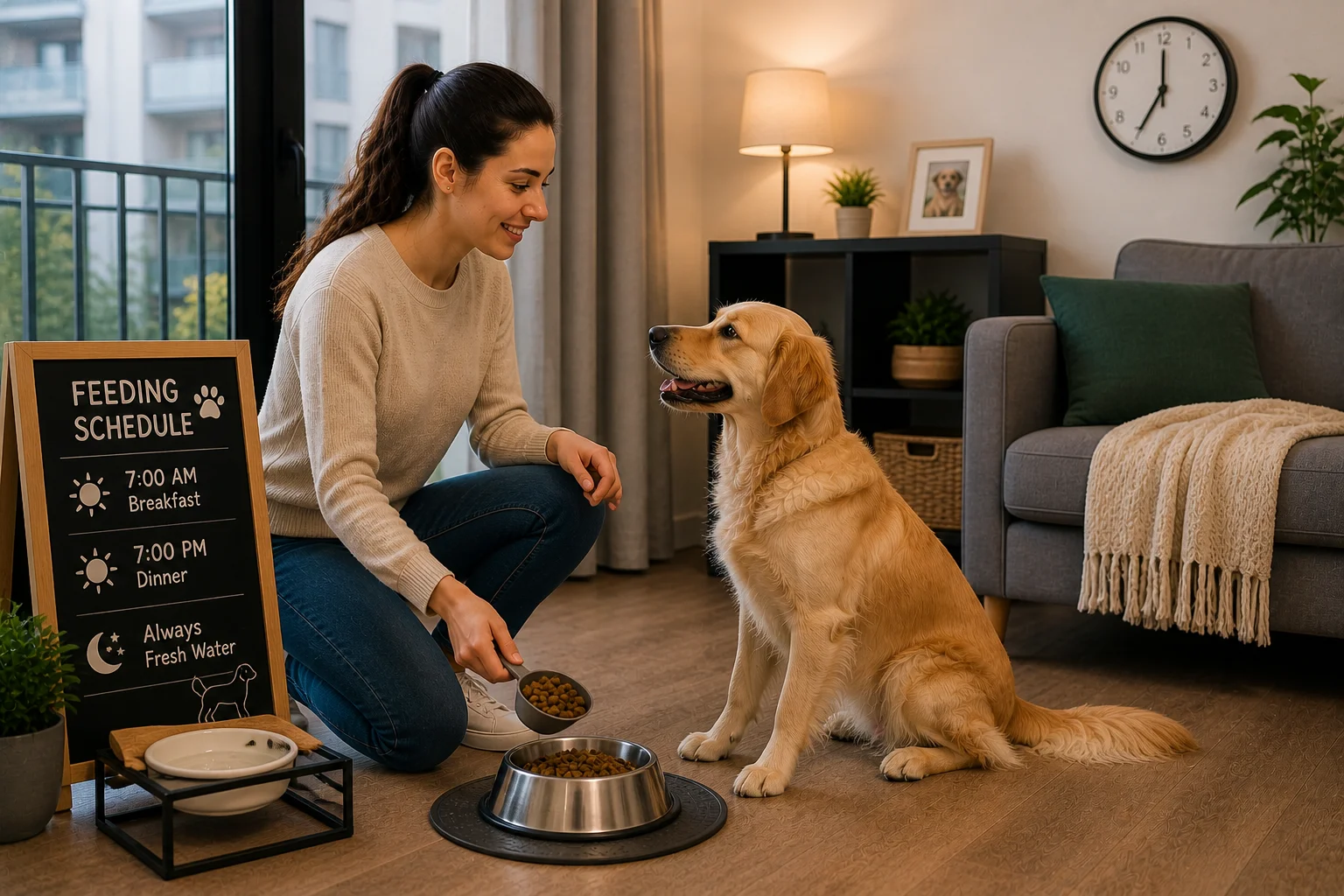
Feeding your dog may seem like a simple task, but in reality, it plays a crucial role in your dog’s overall health, behavior, and daily balance—especially when living in an apartment. Unlike dogs with access to outdoor spaces, apartment dogs depend entirely on structured routines to regulate their eating habits, digestion, and energy levels.
An inconsistent feeding schedule can lead to a variety of problems, including digestive issues, obesity, anxiety, and even behavioral problems such as excessive barking or restlessness. On the other hand, a well-planned feeding routine helps your dog feel secure, improves digestion, and supports a balanced lifestyle.
In this article, you will learn how to create the ideal feeding schedule for dogs in apartments, understand how feeding impacts behavior, and discover practical tips to maintain consistency and health.
Why a Feeding Schedule Is Important
A consistent feeding schedule is more than just routine—it is essential for your dog’s well-being.
Regulates Digestion
Dogs thrive on predictable meal times. Feeding at the same time each day helps regulate digestion and prevents stomach issues.
Supports Potty Training
A consistent feeding schedule leads to predictable bathroom habits, which is especially important in apartments where outdoor access may be limited.
Prevents Overeating
Structured feeding helps control portion sizes and reduces the risk of obesity.
Reduces Anxiety
Dogs feel more secure when they know when to expect food. This reduces stress and food-related anxiety.
Improves Behavior
A well-fed dog with stable energy levels is less likely to exhibit hyperactivity or destructive behavior.
How Often Should You Feed Your Dog?
The number of meals per day depends on your dog’s age, size, and activity level.
Puppies
Puppies require more frequent meals due to their high energy needs and smaller stomachs.
They should typically be fed three to four times per day.
Adult Dogs
Most adult dogs do well with two meals per day—one in the morning and one in the evening.
This schedule helps maintain stable energy levels and supports digestion.
Senior Dogs
Older dogs may benefit from smaller, more frequent meals, depending on their health and metabolism.
Ideal Feeding Times for Apartment Dogs
Establishing consistent feeding times is key to creating a balanced routine.
Morning Feeding
Feeding your dog in the morning provides energy for the day and helps establish a structured start.
It is best to feed your dog after a short walk or activity.
Evening Feeding
The evening meal should be scheduled at a consistent time to support digestion and prepare your dog for rest.
Avoid feeding too late at night, as this may disrupt sleep or cause nighttime bathroom needs.
Consistency Is Key
Feeding your dog at the same times every day helps reinforce routine and stability.
Portion Control and Nutrition
Feeding schedules are not just about timing—they also involve proper portioning.
Avoid Free Feeding
Leaving food available all day can lead to overeating and lack of structure.
Scheduled feeding is more effective for maintaining health and discipline.
Follow Recommended Portions
Use guidelines based on your dog’s weight, age, and activity level.
Consult your veterinarian for personalized recommendations.
Balance Diet Quality
High-quality food supports overall health and reduces the risk of nutritional deficiencies.
How Feeding Impacts Behavior
Feeding routines have a direct effect on your dog’s behavior.
Energy Levels
Proper feeding helps maintain balanced energy levels, preventing hyperactivity or lethargy.
Food Motivation
A structured schedule increases motivation during training, as your dog values food rewards more.
Reduced Aggression
Predictable feeding reduces competition and stress related to food.
Improved Focus
Dogs with stable feeding routines are more focused and easier to train.
Coordinating Feeding with Daily Routine
Feeding should be integrated into your dog’s overall daily schedule.
Feeding and Walks
It is generally recommended to walk your dog before feeding or wait at least 30 minutes after eating before engaging in physical activity.
Feeding and Training
Training sessions can be more effective before meals, when your dog is more motivated by food rewards.
Feeding and Rest
Allow your dog to rest after eating to support digestion.
Common Feeding Mistakes to Avoid
Avoiding these mistakes can improve your dog’s health and routine.
Inconsistent Feeding Times
Irregular schedules can cause confusion and digestive issues.
Overfeeding
Giving too much food leads to weight gain and health problems.
Feeding Table Scraps
Human food can disrupt your dog’s diet and lead to unhealthy habits.
Ignoring Water Intake
Always ensure your dog has access to fresh water.
Adjusting Feeding for Apartment Living
Apartment environments require some adjustments.
Limited Activity Levels
Dogs with less physical activity may require fewer calories.
Smaller Space Considerations
Structured feeding helps prevent mess and maintains cleanliness.
Noise and Distractions
Feed your dog in a calm environment to reduce stress.
Signs Your Dog’s Feeding Schedule Needs Adjustment
Your dog’s behavior and health can indicate whether changes are needed.
Weight Changes
Unexplained weight gain or loss may require adjustments.
Digestive Issues
Irregular bowel movements can signal feeding problems.
Low Energy
Lack of energy may indicate insufficient nutrition.
Excess Hunger
Constant begging may suggest portion or timing issues.
Creating a Feeding Routine That Works
A successful feeding schedule should be consistent, balanced, and adaptable.
Start with Two Meals per Day
For most adult dogs, morning and evening meals are sufficient.
Adjust Based on Needs
Monitor your dog’s behavior and health to make necessary changes.
Stay Consistent
Consistency is the foundation of a successful routine.
Final Thoughts
A well-structured feeding schedule is essential for maintaining your dog’s health, behavior, and overall quality of life in an apartment. It provides stability, supports digestion, and helps prevent many common problems.
By understanding your dog’s needs and maintaining a consistent routine, you can create a balanced environment where your dog feels secure and well cared for.
Feeding is more than just providing food—it is a key part of building a healthy and happy life for your dog.
