
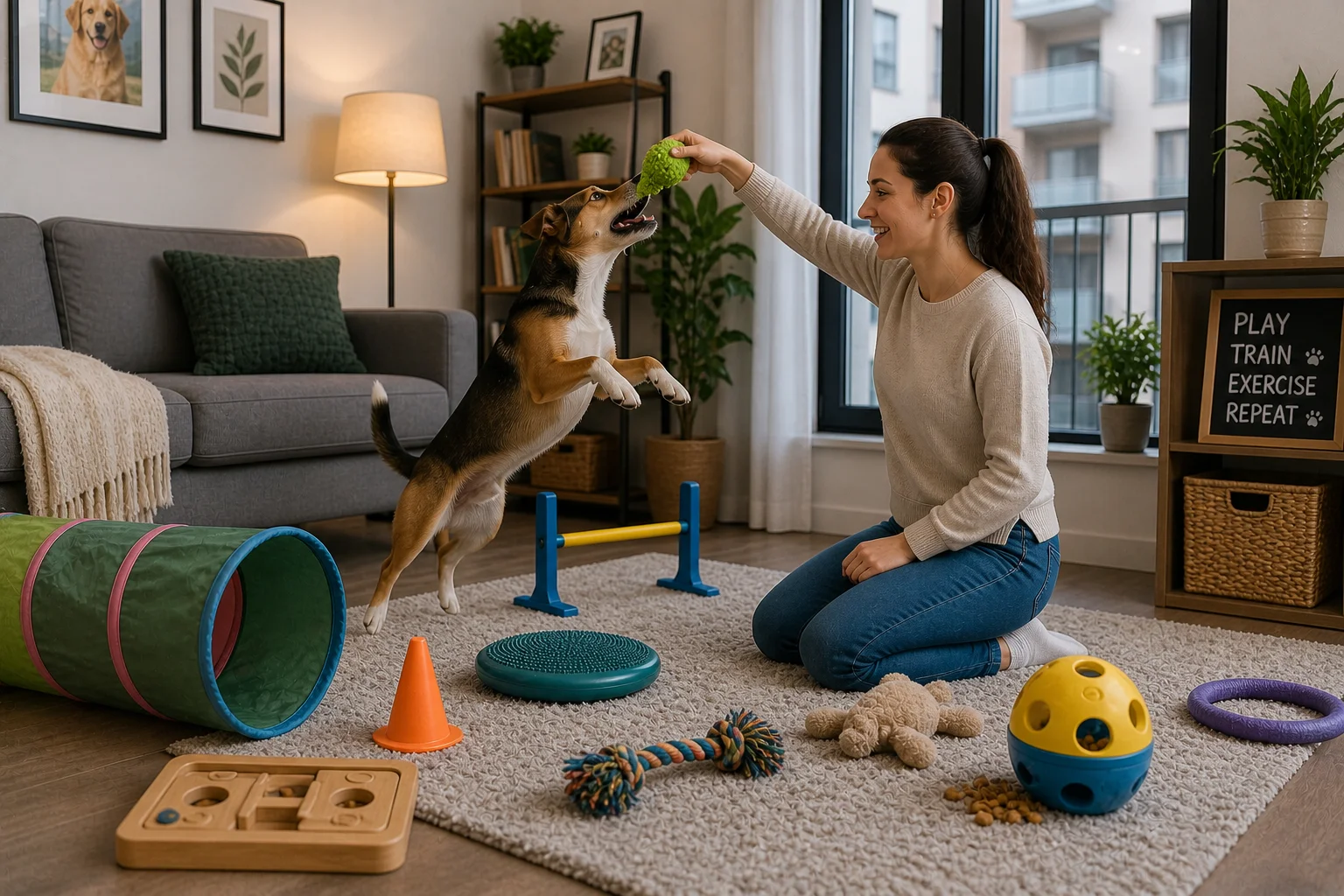
Living in an apartment with a dog comes with unique challenges, especially when it comes to providing enough physical activity. Unlike dogs that have access to large outdoor spaces, apartment dogs rely heavily on their owners to meet their exercise needs. While daily walks are essential, they are not always enough—especially during bad weather, busy schedules, or limited outdoor access.
Without proper exercise, dogs can quickly develop behavioral problems such as excessive barking, restlessness, anxiety, and destructive habits. This is why indoor exercise becomes a crucial part of maintaining your dog’s physical and mental health.
The good news is that you don’t need a large space to keep your dog active. With the right activities, even a small apartment can become an engaging environment that promotes movement, stimulation, and fun.
In this article, you will discover effective indoor exercise ideas for apartment dogs, learn how to keep your dog active in limited spaces, and understand how to create a balanced routine that supports your dog’s overall well-being.
Why Indoor Exercise Is Important
Indoor exercise is not just a backup plan—it is an essential part of a dog’s daily routine, especially for apartment living.
Prevents Behavioral Problems
Dogs with excess energy often express it through unwanted behaviors such as chewing furniture, barking excessively, or running around the apartment. Regular indoor exercise helps release this energy in a positive way.
Supports Physical Health
Even in small spaces, movement is important for maintaining muscle strength, joint health, and overall fitness.
Provides Mental Stimulation
Many indoor activities challenge your dog’s mind as well as its body, which helps reduce boredom and anxiety.
Improves Bonding
Interactive exercises strengthen the relationship between you and your dog, creating trust and engagement.
Understanding Your Dog’s Exercise Needs
Before choosing activities, it is important to understand your dog’s specific needs.
Energy Level
High-energy dogs require more intense and frequent activities, while low-energy dogs may be satisfied with lighter exercises.
Age
Puppies often need short bursts of activity, while adult dogs can handle more structured sessions. Senior dogs may require gentle and low-impact exercises.
Breed Characteristics
Some breeds are naturally more active and require more stimulation, while others are more relaxed.
Best Indoor Exercise Ideas for Apartment Dogs
There are many ways to keep your dog active indoors without needing a large space.
Interactive Play
Tug-of-War
Tug-of-war is a simple and effective way to engage your dog physically. It requires minimal space and helps build strength.
To keep it safe, use a proper toy and establish rules, such as stopping the game on command.
Fetch (Indoor Version)
While traditional fetch may require more space, you can adapt it for indoor use by using soft toys and shorter distances.
Hallways or open areas can work well for this activity.
Hide and Seek
Hide somewhere in your apartment and call your dog. This game encourages movement and mental engagement.
It also reinforces recall training.
Mental and Physical Combined Activities
Puzzle Toys
Puzzle toys challenge your dog to solve problems while staying active. They are especially useful for keeping dogs engaged when space is limited.
Treat Hunts
Hide small treats around your apartment and let your dog find them. This stimulates both movement and the sense of smell.
Obstacle Course
Create a simple obstacle course using furniture, cushions, or boxes. Guide your dog through the course to encourage movement and coordination.
Training-Based Exercise
Training is an excellent way to combine mental and physical stimulation.
Basic Commands Practice
Practicing commands such as sit, stay, and come keeps your dog engaged and reinforces discipline.
Trick Training
Teaching new tricks like roll over, spin, or shake adds variety and keeps your dog mentally active.
Stair Exercises
If your apartment has stairs, supervised stair climbing can be a great form of exercise. However, it should be done carefully to avoid injury.
Low-Impact Activities for Small Spaces
Not all exercise needs to be intense. Low-impact activities can also be effective.
Controlled Movement Games
Encourage your dog to move around the apartment using toys or gentle guidance.
Balance Exercises
Using cushions or soft surfaces can help improve balance and coordination.
Calm Play Sessions
Short, controlled play sessions help release energy without overstimulation.
How to Create an Indoor Exercise Routine
Consistency is key to making indoor exercise effective.
Schedule Daily Sessions
Plan at least one or two indoor exercise sessions each day, especially if outdoor walks are limited.
Mix Different Activities
Variety keeps your dog interested and prevents boredom.
Adjust Based on Energy Levels
Pay attention to your dog’s behavior and adjust the intensity accordingly.
Signs Your Dog Needs More Indoor Exercise
Your dog’s behavior can indicate whether it is getting enough activity.
Hyperactivity
Excessive running or jumping indoors may signal a lack of exercise.
Destructive Behavior
Chewing or damaging objects often indicates boredom.
Restlessness
Difficulty settling down can be a sign that your dog needs more stimulation.
Common Mistakes to Avoid
Avoiding these mistakes can improve your dog’s indoor exercise routine.
Relying Only on Walks
Walks are important, but they may not provide enough stimulation on their own.
Lack of Variety
Repeating the same activity can lead to boredom.
Overexertion
Too much intense activity can cause fatigue or injury.
Ignoring Mental Stimulation
Physical exercise alone is not enough. Mental engagement is equally important.
Safety Tips for Indoor Exercise
Keeping your dog safe during indoor activities is essential.
Use Safe Toys
Avoid objects that can break or cause injury.
Clear the Space
Remove obstacles that could lead to accidents.
Monitor Activity
Always supervise your dog during exercise sessions.
Avoid Slippery Surfaces
Ensure your dog has proper footing to prevent injuries.
Adapting Indoor Exercise to Apartment Living
Apartment living requires creative solutions.
Use Available Space Efficiently
Even small areas can be used effectively with the right activities.
Be Considerate of Neighbors
Choose activities that minimize noise, especially in shared buildings.
Maintain a Calm Environment
Balance active play with calm periods to avoid overstimulation.
Final Thoughts
Indoor exercise is an essential part of keeping your dog healthy, happy, and well-behaved in an apartment. With the right approach, even small spaces can provide enough activity and stimulation to meet your dog’s needs.
By combining physical exercise with mental engagement and maintaining a consistent routine, you can prevent behavioral problems and create a balanced lifestyle for your dog.
The key is creativity, consistency, and understanding your dog’s unique needs. With these elements in place, your apartment can become a space where your dog not only lives—but thrives.
