
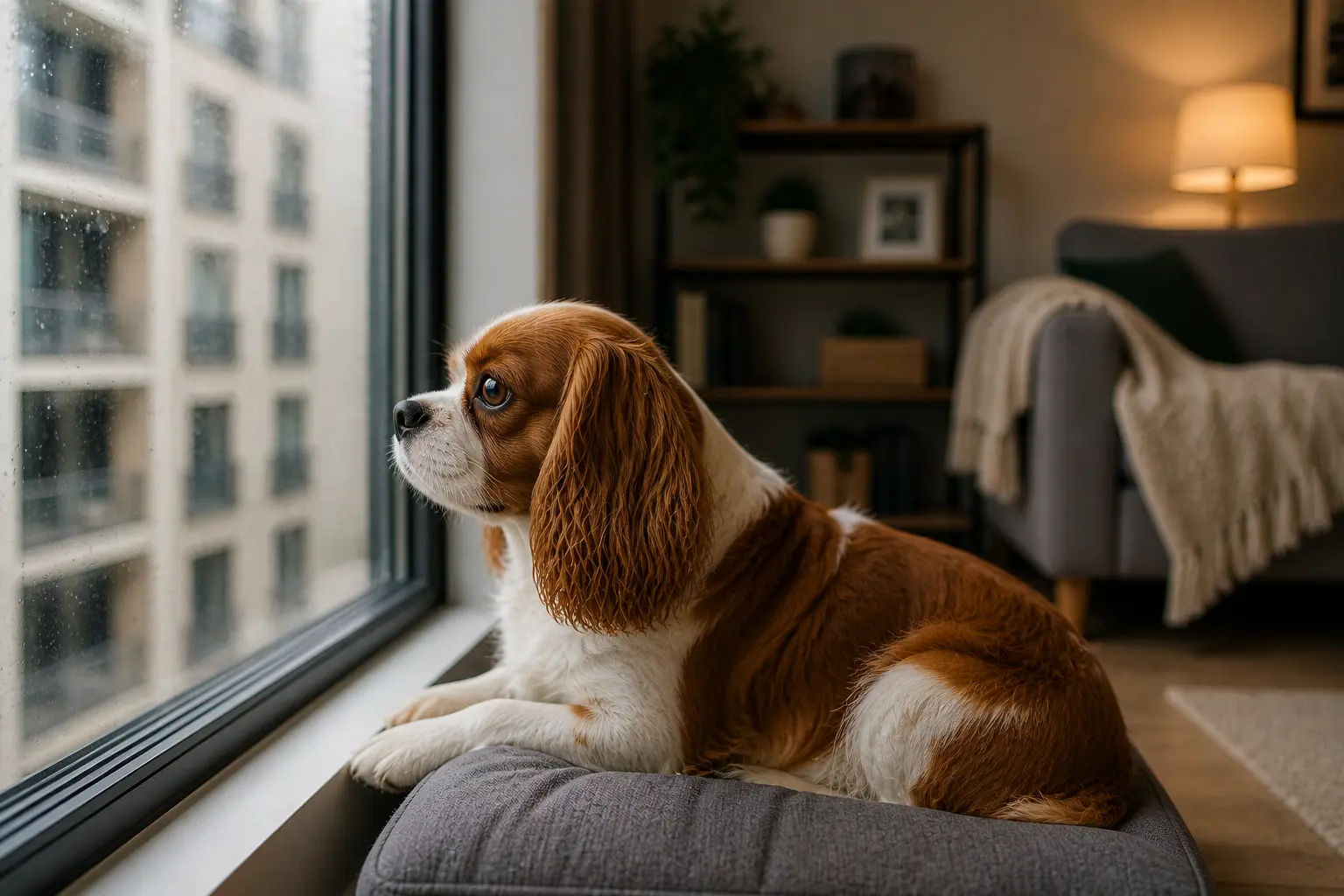
Separation anxiety is one of the most common behavioral problems among dogs that live in apartments. Unlike houses where dogs may have more space and outdoor access, apartment dogs are often more dependent on their owners for stimulation, comfort, and routine. This makes them more vulnerable to anxiety when left alone.
Many owners only realize the problem when it becomes severe. Signs such as excessive barking, whining, scratching doors, or destroying furniture can quickly turn into daily stress—for both the dog and the owner. In apartments, this issue becomes even more serious due to noise complaints and limited space.
The good news is that separation anxiety can be prevented or significantly reduced with the right approach. In this article, you will learn why dogs develop separation anxiety, how to recognize early signs, and practical strategies to prevent it effectively.
What Is Separation Anxiety?
Separation anxiety occurs when a dog becomes distressed due to being left alone or separated from its owner. It is not simply boredom or misbehavior—it is an emotional response that can affect the dog’s well-being.
Emotional Dependence
Dogs are social animals and naturally form strong bonds with their owners. However, when this bond becomes excessive, the dog may struggle to function independently.
Lack of Coping Skills
Dogs that are not trained to be alone gradually may panic when left alone. Without coping mechanisms, they express anxiety through behavior.
Apartment Environment Factors
In apartments, limited space and fewer distractions can intensify the dog’s focus on the owner, making separation more difficult.
Signs of Separation Anxiety
Recognizing the early signs is essential to prevent the problem from worsening.
Excessive Barking or Howling
Dogs with separation anxiety often vocalize when left alone. This is one of the most common signs and can quickly lead to complaints in apartment settings.
Destructive Behavior
Chewing furniture, scratching doors, or damaging objects can be a result of stress rather than disobedience.
Attempts to Escape
Some dogs try to escape when left alone, which can lead to injury or damage to doors and windows.
Restlessness and Pacing
An anxious dog may walk in circles, pace back and forth, or show signs of agitation.
Loss of Appetite
Dogs experiencing anxiety may refuse to eat when left alone.
Why Apartment Dogs Are More Prone to Anxiety
Apartment living creates specific conditions that can increase the likelihood of separation anxiety.
Constant Proximity to the Owner
In small spaces, dogs are often always close to their owners. This can increase dependency and make separation more difficult.
Limited Environmental Stimulation
Apartments may lack the variety of stimuli found in larger spaces, making the dog rely more on the owner for entertainment.
Noise Sensitivity
External noises such as footsteps, elevators, or neighbors can trigger stress, especially when the dog is alone.
How to Prevent Separation Anxiety
Preventing separation anxiety is much easier than trying to fix it later. The key is to teach your dog independence from the beginning.
Start with Short Absences
Begin by leaving your dog alone for short periods, even if you are at home. Gradually increase the time to help your dog build confidence.
This teaches your dog that being alone is normal and temporary.
Avoid Over-Attachment
While it is natural to show affection, avoid creating excessive dependence. Encourage your dog to spend time alone in a comfortable space.
This helps develop independence and reduces anxiety.
Create a Safe Space
Provide a designated area where your dog feels secure. This could be a bed, crate, or quiet corner of the apartment.
A familiar space helps reduce stress when you are not around.
Keep Departures and Arrivals Calm
Avoid emotional goodbyes or overly excited greetings. Keeping these moments neutral prevents your dog from associating your departure with stress.
Use Mental Stimulation
Leave toys, puzzles, or activities that keep your dog engaged while you are away. Mental stimulation helps distract your dog and reduce anxiety.
Training Techniques to Build Independence
Training plays a major role in preventing anxiety. Teaching your dog to feel comfortable alone is essential.
Crate Training
When used correctly, a crate can become a safe and comforting space. It helps your dog feel secure and reduces destructive behavior.
“Stay” and “Place” Commands
Teaching your dog to stay in a specific area helps build discipline and independence.
These commands reinforce calm behavior even when you are not actively interacting.
Desensitization to Departure Cues
Dogs often become anxious when they notice signs that you are about to leave, such as picking up keys or putting on shoes.
Practice these actions without leaving to reduce their emotional impact.
Daily Routine and Its Impact
A consistent routine helps your dog feel secure and reduces uncertainty.
Regular Exercise
Physical activity helps release energy and reduces stress. A well-exercised dog is more likely to relax when alone.
Predictable Schedule
Feeding, walking, and playtime should happen at consistent times. Predictability creates a sense of stability.
Balanced Interaction
Spend quality time with your dog, but also allow moments of independence.
Common Mistakes That Increase Anxiety
Many owners unintentionally contribute to separation anxiety through certain behaviors.
Leaving the Dog Alone for Too Long
Long periods without interaction can increase stress and make the dog feel abandoned.
Lack of Training
Without proper training, dogs do not learn how to cope with being alone.
Overcompensating with Attention
Giving excessive attention when at home can make separation more difficult.
Punishing Anxiety Behavior
Punishment increases fear and does not address the root cause of anxiety.
What to Do If Anxiety Has Already Started
If your dog is already showing signs of separation anxiety, it is important to act quickly.
Gradual Training
Start with very short absences and gradually increase the duration.
Increase Stimulation
Provide more physical and mental activities to reduce stress.
Seek Professional Help
In severe cases, a professional trainer or behaviorist may be necessary.
Creating a Balanced Apartment Environment
Your environment plays a key role in your dog’s emotional well-being.
Reduce External Stress
Minimize exposure to loud noises or sudden changes.
Provide Comfort Items
Items with your scent can help your dog feel more secure.
Maintain Clean and Organized Spaces
A structured environment helps your dog feel more at ease.
Final Thoughts
Separation anxiety can be a serious issue for apartment dogs, but it is also one of the most preventable behavioral problems. The key is to build independence, maintain a consistent routine, and provide the right balance of attention and stimulation.
By understanding your dog’s emotional needs and taking proactive steps, you can create a calm and secure environment where your dog feels comfortable—even when you are not at home.
With patience and consistency, you can prevent separation anxiety and ensure a peaceful apartment life for both you and your dog.
