
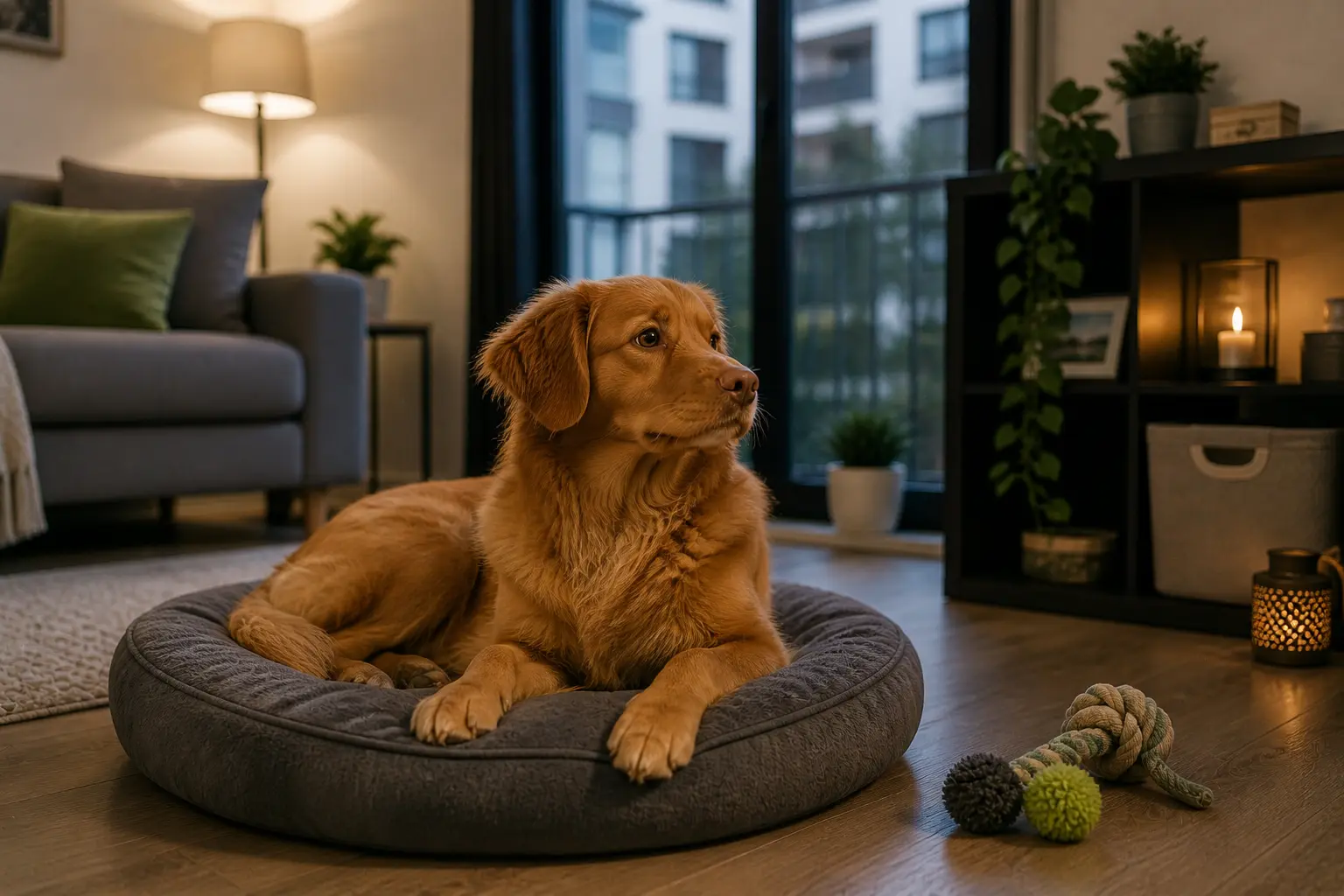
Living in an apartment requires a dog that can remain calm indoors. Unlike homes with large yards, apartments offer limited space for movement, which means that your dog must learn how to behave appropriately inside. A restless or hyperactive dog in a small space can quickly become a source of stress, leading to barking, destructive behavior, and discomfort for both the owner and neighbors.
Many dog owners struggle with this issue because they assume that dogs will naturally adapt to indoor living. However, calm behavior inside the home is not automatic—it must be taught and reinforced through consistent training and proper routines.
In this article, you will learn how to train your dog to stay calm indoors, understand the causes of hyperactivity, and discover practical strategies to create a peaceful and balanced home environment.
Why Some Dogs Struggle to Stay Calm Indoors
Before addressing the problem, it is important to understand why some dogs have difficulty staying calm inside.
Excess Energy
One of the most common reasons for indoor hyperactivity is excess energy. Dogs that do not receive enough physical exercise often release their energy indoors through jumping, running, or destructive behavior.
Lack of Mental Stimulation
Dogs need mental challenges to stay balanced. Without stimulation, they may become bored and restless, which leads to unwanted behavior.
Inconsistent Routine
Dogs rely on routine to feel secure. When their schedule is unpredictable, they may become anxious and unable to relax.
Overexcitement
Some dogs become overly excited by small stimuli, such as sounds, movement, or attention from their owners. This can make it difficult for them to settle down.
Lack of Training
Calm behavior is not instinctive for all dogs. Without proper guidance, they may not understand how to behave indoors.
The Importance of Teaching Calm Behavior
Training your dog to stay calm indoors is essential for apartment living.
Better Quality of Life
A calm dog experiences less stress and anxiety, leading to a healthier and happier life.
Improved Relationship with Your Dog
When your dog behaves calmly, daily interactions become more enjoyable and less stressful.
Fewer Complaints from Neighbors
Reducing noise and hyperactivity helps maintain a peaceful environment in shared living spaces.
Prevention of Destructive Behavior
Calm dogs are less likely to damage furniture, chew objects, or create messes.
Step-by-Step Training to Encourage Calm Behavior
Teaching calmness requires consistency and patience. Following a structured approach will help your dog learn faster.
Provide Adequate Exercise First
Before expecting your dog to stay calm, you must meet its physical needs. Daily walks and play sessions help release excess energy.
A dog that has not exercised will struggle to relax indoors.
Create a Designated Rest Area
Your dog should have a specific place to relax, such as a bed or a quiet corner. This space becomes associated with calm behavior.
Encourage your dog to use this area regularly.
Reward Calm Behavior
Positive reinforcement is one of the most effective training methods. Whenever your dog is calm, reward it with treats, praise, or affection.
This reinforces the idea that calmness is desirable.
Teach the “Settle” Command
The “settle” command helps your dog understand when it is time to relax.
Start by guiding your dog to its resting area and rewarding it for staying calm. Gradually increase the duration.
Limit Overstimulation
Too much excitement can make it difficult for your dog to calm down. Avoid overly intense play sessions indoors and encourage slower, controlled activities.
Use Structured Playtime
Playtime should have a beginning and an end. This helps your dog understand when it is time to be active and when it is time to relax.
Mental Stimulation as a Key Factor
Mental stimulation plays a crucial role in maintaining calm behavior.
Interactive Toys
Puzzle toys and treat-dispensing games keep your dog engaged and reduce boredom.
Training Sessions
Short training sessions provide mental challenges and reinforce discipline.
Scent Games
Allowing your dog to use its sense of smell can be very calming and mentally stimulating.
Building a Consistent Routine
Routine is one of the most powerful tools for managing your dog’s behavior.
Fixed Feeding Times
Feeding your dog at the same time each day helps regulate its energy levels.
Scheduled Walks
Regular walks create a predictable structure and help your dog release energy.
Defined Rest Periods
Encourage your dog to rest at specific times, especially after exercise or meals.
Managing Excitement Triggers
Identifying and controlling triggers can help reduce hyperactivity.
Doorbell and Noise Reactions
Train your dog to remain calm when it hears noises by gradually exposing it to these sounds in a controlled way.
Visitors
Teach your dog to stay calm when guests arrive by reinforcing calm behavior and avoiding excessive excitement.
Owner Interaction
Avoid encouraging hyperactive behavior during play or attention. Reward calm interactions instead.
Common Mistakes to Avoid
Many owners unintentionally reinforce hyperactivity.
Rewarding Excitement
Giving attention to a hyperactive dog can reinforce the behavior. Wait for calmness before interacting.
Inconsistent Rules
Changing rules frequently confuses your dog and makes training less effective.
Lack of Exercise
Skipping physical activity is one of the main causes of indoor hyperactivity.
Overstimulating the Dog
Too much excitement without proper structure can make it harder for your dog to relax.
How Long Does It Take to Train Calm Behavior?
The time required varies depending on the dog’s age, breed, and personality.
Some dogs learn quickly, while others may take weeks or months to fully adapt. Consistency and patience are essential for success.
Creating a Calm Apartment Environment
Your environment plays a major role in your dog’s behavior.
Keep the Space Organized
A clutter-free environment reduces stress and allows your dog to move comfortably.
Use Soft Lighting and Calm Atmosphere
A peaceful environment encourages relaxation.
Provide Comfortable Resting Areas
A good-quality bed helps your dog feel secure and relaxed.
Final Thoughts
Training your dog to stay calm indoors is essential for a peaceful apartment lifestyle. It requires a combination of exercise, mental stimulation, routine, and consistent training.
By understanding your dog’s needs and reinforcing calm behavior, you can create a balanced environment where your dog feels comfortable and secure.
With patience and dedication, your dog can learn to relax indoors, making apartment living enjoyable for both of you.
