
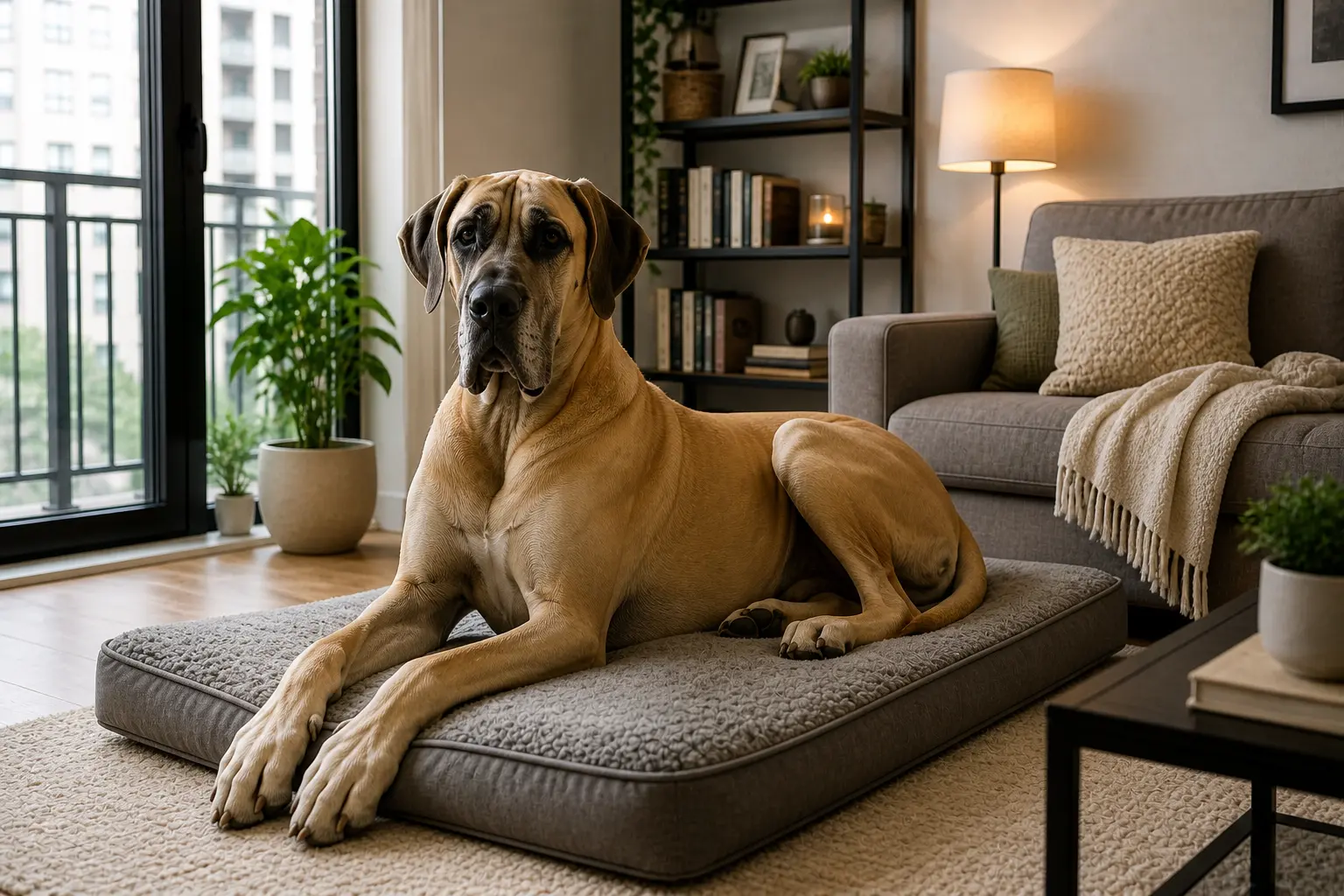
One of the most common questions among apartment dwellers is whether large dogs can truly live comfortably in small spaces. At first glance, it may seem impractical or even unfair to keep a big dog in a compact apartment. However, this assumption is often based on misconceptions rather than real understanding of canine behavior.
In reality, many large dog breeds adapt extremely well to apartment living. The key factor is not size, but rather the dog’s temperament, energy level, and daily routine. Some large dogs are calm, quiet, and spend most of their time resting, making them surprisingly suitable for smaller environments.
In this article, you will learn whether large dogs can live in small apartments, which breeds are most suitable, and how to create a comfortable environment that supports their well-being.
Understanding the Myth About Large Dogs
The idea that large dogs need large spaces comes from a logical but incomplete assumption. While space is important, it is not the only factor that determines a dog’s quality of life.
Size vs Energy Level
Many people assume that bigger dogs require more space simply because of their size. However, energy level is often more important. Some small dogs are extremely energetic and need constant activity, while many large dogs are calm and relaxed indoors.
For example, certain large breeds are known for being “low-energy,” meaning they are content with short walks and long periods of rest. These dogs may actually adapt better to apartments than high-energy small breeds.
Indoor Behavior Matters
What truly matters is how a dog behaves inside the home. Dogs that are calm, quiet, and well-trained are far more suitable for apartments than those that are hyperactive or vocal, regardless of size.
Benefits of Having a Large Dog in an Apartment
While it may seem challenging, having a large dog in an apartment can offer several advantages when done correctly.
Calm and Relaxed Nature
Many large dogs have a naturally calm temperament. They are less likely to run around constantly or become overly excited indoors. Instead, they tend to rest for long periods, which makes them ideal for smaller living spaces.
Lower Tendency to Bark
Large dogs are often less reactive to minor noises compared to smaller breeds. This means they are less likely to bark excessively at everyday sounds like footsteps in the hallway or distant voices.
Strong Emotional Bond
Large dogs are known for their loyalty and companionship. They often form strong emotional connections with their owners, providing comfort and a sense of security.
Predictable Behavior
Many large breeds are emotionally stable and less prone to sudden behavioral changes. This makes them easier to manage in a controlled environment like an apartment.
Challenges of Raising a Large Dog in a Small Apartment
Despite the advantages, there are challenges that must be considered before deciding to bring a large dog into a small space.
Limited Physical Space
Even calm dogs need room to move, stretch, and lie down comfortably. A very small or cluttered apartment can make this difficult if not properly organized.
Higher Maintenance Costs
Large dogs require more food, larger accessories, and often more expensive veterinary care. This can significantly increase the cost of ownership.
Exercise Requirements
Although many large dogs are calm indoors, they still need daily exercise. Skipping walks can lead to boredom, weight gain, and behavioral issues.
Physical Strength
Handling a large dog requires strength, especially during walks. If the dog is not properly trained, it can be difficult to control in certain situations.
Best Large Dog Breeds for Apartments
Not all large dogs are suitable for apartment living. However, some breeds are particularly well-known for their adaptability and calm nature.
Greyhound
Greyhounds are one of the best large breeds for apartments. Despite their athletic background, they are incredibly relaxed indoors and spend most of their time sleeping.
Great Dane
Great Danes are often referred to as “gentle giants.” They are calm, affectionate, and surprisingly adaptable to smaller spaces as long as they have a comfortable place to rest.
Mastiff
Mastiffs are large but very low-energy dogs. They are quiet, loyal, and tend to stay calm indoors, making them suitable for apartment living.
Saint Bernard
Saint Bernards are known for their gentle and patient nature. While they require space to lie down comfortably, they are not overly active and can adapt to apartment life with proper care.
How to Make a Small Apartment Suitable for a Large Dog
Creating the right environment is essential for ensuring your dog’s comfort and well-being.
Organize Your Space
A clutter-free apartment allows your dog to move more easily. Rearranging furniture to create open areas can make a significant difference.
Provide a Comfortable Resting Area
Large dogs need a proper place to rest. A good-quality bed that supports their size is essential for their health and comfort.
Ensure Daily Exercise
Regular walks are non-negotiable. Even low-energy dogs need consistent physical activity to stay healthy and balanced.
Use Mental Stimulation
Interactive toys and training exercises help keep your dog mentally engaged, reducing boredom and unwanted behavior.
Maintain a Routine
Consistency in feeding, walking, and playtime helps create stability and reduces anxiety.
Common Mistakes to Avoid
Many owners make mistakes when raising large dogs in apartments, often due to lack of preparation.
Choosing the Wrong Breed
Not all large dogs are suitable for small spaces. High-energy breeds can struggle without enough room and activity.
Skipping Exercise
Assuming that a calm dog doesn’t need exercise is a common mistake. Physical activity is essential for all dogs.
Ignoring Training
Training is crucial for managing a large dog in a limited space. Basic commands and leash training are especially important.
Overcrowding the Space
Too much furniture or clutter can make the apartment uncomfortable for a large dog. Keeping the space organized is key.
Is It Fair to Keep a Large Dog in an Apartment?
This is a common concern among responsible pet owners. The answer depends on how well the dog’s needs are met.
A large dog can live a happy and healthy life in an apartment if it receives proper care, attention, exercise, and mental stimulation. On the other hand, even a large house would not be suitable if the dog’s needs are neglected.
The focus should always be on quality of life rather than the size of the living space.
Final Thoughts
Large dogs can absolutely live in small apartments when the right conditions are met. The key is to choose a suitable breed, understand its needs, and create an environment that supports its physical and emotional well-being.
By focusing on temperament, routine, and proper care, you can successfully raise a large dog in an apartment and enjoy a rewarding companionship.
With the right approach, size becomes just a detail—and your dog can thrive no matter where you live.
