
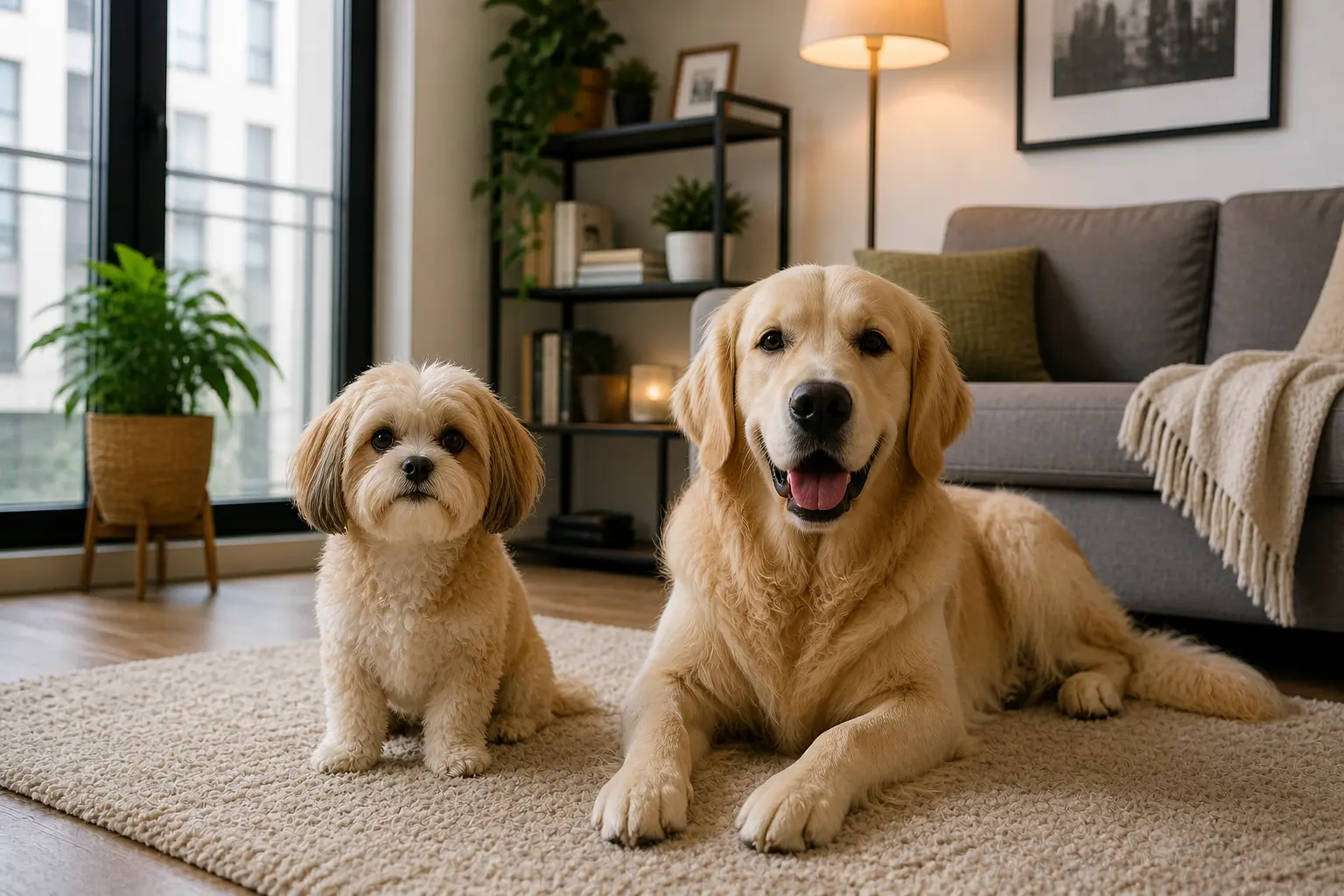
Choosing between a small dog and a large dog is one of the most common dilemmas for people who live in apartments. Many assume that small dogs are always the best option due to limited space, while large dogs are often seen as unsuitable for compact environments. However, this belief is not entirely accurate.
The truth is that size alone does not determine whether a dog can live comfortably in an apartment. Factors such as energy level, temperament, behavior, and daily routine play a much more important role. In fact, some large dogs adapt better to apartment living than certain small breeds.
In this article, you will learn the real differences between small and large dogs in apartment settings, understand their advantages and challenges, and discover how to choose the best option for your lifestyle.
Understanding the Needs of Apartment Dogs
Before comparing small and large dogs, it is important to understand what any dog needs to live well in an apartment. Regardless of size, dogs require proper care, attention, and stimulation to stay healthy and happy.
Space Is Not the Only Factor
Many people believe that apartment living is all about physical space, but that’s only part of the equation. A dog’s comfort depends more on how its needs are met than on the size of the home.
A well-exercised dog that receives mental stimulation can be perfectly content in a small apartment. On the other hand, a dog with excess energy and no routine may struggle even in a larger space.
Routine and Structure
Dogs thrive on routine. Feeding, walking, and playtime should happen consistently. A structured daily schedule helps reduce anxiety, prevent destructive behavior, and create a sense of stability.
Mental and Physical Stimulation
In apartments, dogs rely heavily on their owners for stimulation. Walks, toys, and interaction are essential to keep them engaged and prevent boredom.
Advantages of Small Dogs in Apartments
Small dogs are often the first choice for apartment dwellers, and for good reason. They offer several practical benefits that make them easier to manage in smaller spaces.
Easier Space Management
Small dogs require less physical space to move around comfortably. They can adapt to tight environments without feeling restricted, making them ideal for compact apartments.
Their size also makes it easier to create designated areas for sleeping, eating, and playing without overcrowding your living space.
Lower Food and Maintenance Costs
Smaller dogs generally eat less, which reduces food expenses. They also require smaller accessories such as beds, crates, and toys, making overall maintenance more affordable.
This can be an important factor for people looking to manage costs while owning a pet.
Convenience in Daily Life
Handling a small dog is typically easier. Carrying them, grooming them, and transporting them to veterinary appointments or travel locations is more convenient compared to larger breeds.
Suitable for First-Time Owners
Small dogs are often recommended for beginners because they are easier to control and require less physical strength to manage.
Challenges of Small Dogs in Apartments
Despite their advantages, small dogs are not always the perfect solution. They come with their own set of challenges that should not be overlooked.
Higher Energy in Some Breeds
Not all small dogs are calm. Some breeds have high energy levels and require frequent activity. Without proper exercise, they may become restless and develop behavioral issues.
Tendency to Bark More
Many small breeds are naturally more vocal. They may bark at noises, strangers, or even minor changes in their environment. In an apartment setting, this can quickly become a problem.
Fragility
Small dogs are more physically delicate and may require extra care to avoid injuries, especially in busy households or homes with children.
Advantages of Large Dogs in Apartments
While often overlooked, large dogs can actually be excellent companions in apartment environments when chosen carefully.
Calm Temperament
Many large dog breeds are surprisingly calm and relaxed indoors. They tend to sleep more and are less likely to exhibit hyperactive behavior.
Breeds like Greyhounds and Great Danes are known for their low-energy nature, making them well-suited for apartment living.
Less Barking in Some Cases
Large dogs are often less reactive to small noises and may bark less frequently than smaller breeds. This can be a significant advantage in shared living spaces.
Emotional Stability
Large dogs often have stable and predictable temperaments. They are less prone to anxiety-related behaviors when properly cared for, which contributes to a peaceful home environment.
Challenges of Large Dogs in Apartments
Despite their advantages, large dogs also present unique challenges that must be considered before making a decision.
Space Limitations
Even calm large dogs need enough room to lie down, stretch, and move comfortably. A very small apartment may feel restrictive if not properly organized.
Higher Costs
Large dogs consume more food and require bigger accessories, which increases expenses. Veterinary care can also be more costly compared to smaller breeds.
Physical Strength
Handling a large dog requires more strength and control, especially during walks. This can be challenging for some owners, particularly beginners.
Exercise Requirements
Although many large dogs are calm indoors, they still need regular outdoor exercise. Skipping walks can lead to health and behavioral issues.
Key Factors to Consider When Choosing
Choosing between a small and large dog should be based on your lifestyle rather than assumptions about size.
Your Daily Routine
If you have a busy schedule, a low-energy dog—regardless of size—may be the best option. Dogs that require constant activity may struggle if left alone for long periods.
Apartment Size and Layout
While size isn’t everything, it still matters. Consider whether your apartment can comfortably accommodate the dog’s basic needs.
Noise Tolerance
If noise is a concern, focus on breeds known for being quieter rather than simply choosing a smaller dog.
Activity Level
Your own lifestyle should match your dog’s energy level. Active individuals may enjoy a more energetic dog, while those who prefer a calm routine should choose a low-energy breed.
Which Is Better: Small or Large Dogs?
There is no universal answer to this question. Both small and large dogs can thrive in apartments when their needs are properly met.
Small dogs are generally easier to manage, more affordable, and better suited for very compact spaces. However, they may require more attention when it comes to barking and energy management.
Large dogs, on the other hand, can be surprisingly well-suited for apartments due to their calm nature. They offer emotional stability and often adapt well to indoor living, but they require more space, resources, and physical handling.
The best choice depends on your lifestyle, experience, and ability to meet the dog’s needs.
Tips for Making Either Choice Work
Regardless of the size of your dog, there are several steps you can take to ensure a successful apartment living experience.
Create a Comfortable Environment
Provide a dedicated space where your dog can rest and feel secure. This helps establish boundaries and reduces stress.
Maintain a Consistent Routine
Consistency is key to preventing behavioral problems. Regular feeding, walking, and playtime create a balanced lifestyle.
Invest in Training
Training is essential for both small and large dogs. Teaching basic commands and proper behavior will make apartment living much easier.
Provide Regular Exercise
Daily walks and indoor activities are crucial for maintaining your dog’s physical and mental health.
Monitor Behavior
Pay attention to signs of stress, boredom, or anxiety. Addressing issues early prevents them from becoming long-term problems.
Final Thoughts
Choosing between a small dog and a large dog for apartment living is not about size—it’s about compatibility. Both options can work extremely well when the dog’s needs align with your lifestyle.
By focusing on temperament, energy level, and daily care, you can create a comfortable and happy environment regardless of your dog’s size. The key is to make informed decisions and commit to providing the attention and structure your dog needs.
With the right approach, apartment living can be just as fulfilling for a dog as any larger space.
