
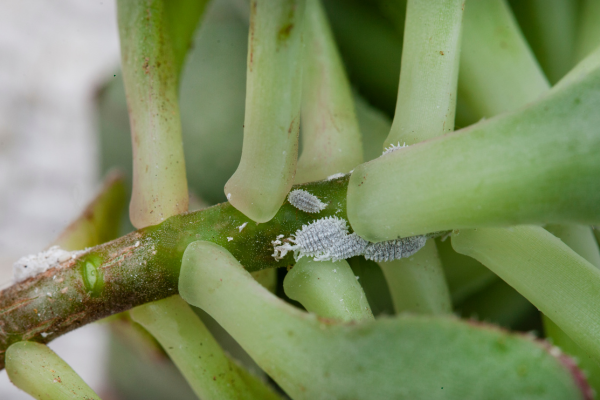
Somewhere along the way, after treating a particularly stubborn mealybug infestation with progressively stronger products that left one of my Echeverias looking worse than the pests themselves had, I started reconsidering my whole approach to pest management. Not every infestation needs an aggressive chemical response, and for a lot of the milder, earlier-stage problems that come up with a well-monitored collection, gentler, more natural methods often handle the job just as effectively while carrying considerably less risk to delicate, sensitive plant tissue.
Why Natural Methods Deserve Serious Consideration
Rare succulents, particularly farina-coated, fuzzy, or otherwise delicate varieties discussed throughout this series, tend to be more vulnerable to damage from harsh chemical treatments than common, hardier species. A treatment strong enough to reliably eliminate a pest infestation on a robust plant can sometimes cause discoloration, tissue damage, or lasting stress on a more sensitive specimen, which is part of why starting with gentler approaches, escalating only when genuinely necessary, tends to serve rare, valuable collections better than defaulting immediately to the strongest available treatment.
This doesn’t mean natural methods are always sufficient on their own, particularly for severe or well-established infestations, but for early detection and mild cases, and as an ongoing preventive practice, they offer a genuinely useful, lower-risk first line of response.
Rubbing Alcohol for Direct Contact Treatment
We touched on this approach in our mealybug article, and it’s worth expanding on here as one of the more broadly useful natural pest control tools available to succulent growers. Isopropyl alcohol, applied directly to visible pests using a cotton swab or a diluted spray, works by dissolving the waxy or protective coatings many succulent pests rely on, causing dehydration and death on contact, without leaving behind the kind of chemical residue or systemic exposure associated with stronger pesticide treatments.
This method works well against mealybugs specifically, and reasonably well against certain scale insects and aphids, though it requires direct contact to be effective, meaning thorough, careful application reaching into crevices and hidden spots matters considerably more than the specific concentration or product used. Testing on a small area first, particularly with fuzzy or farina-coated specimens where even mild treatments can sometimes cause visible marking, remains worth doing before broader application.
Neem Oil as a Broader Preventive Tool
Neem oil, derived from the neem tree and used for centuries in various pest management contexts, offers a somewhat different mode of action compared to direct-contact treatments like alcohol, working partly as a repellent and partly by disrupting the feeding and reproductive cycles of various pests over time rather than causing immediate death on contact. This makes it particularly useful as an ongoing, preventive treatment applied periodically across a collection, rather than purely as a reactive treatment for an infestation that’s already established.
For succulents specifically, neem oil needs to be diluted appropriately and applied carefully, since full-strength or improperly diluted applications can cause leaf burn, particularly under direct sunlight following application. Applying neem oil treatments in the evening or during cooler, less intensely lit periods of the day, then keeping the treated plant out of strong direct sun for a day or so afterward, reduces this risk considerably while still allowing the treatment to take effect.
Diatomaceous Earth for Soil-Dwelling Pests
For pests that live in or move through soil, including some of the fungus gnats and soil-dwelling insects that occasionally trouble succulent collections, food-grade diatomaceous earth, a fine powder made from fossilized diatoms, offers a natural, non-chemical option that works through physical rather than chemical action, causing microscopic damage to an insect’s exoskeleton that leads to fatal dehydration. Sprinkled lightly across the soil surface, it provides an ongoing deterrent without introducing any chemical residue into the growing medium itself.
This method works best as a preventive, ongoing practice rather than a fast solution for an active, severe infestation, and it needs reapplication after watering, since moisture reduces its effectiveness until the surface dries out again.
Beneficial Insects for Larger Collections
For growers managing a substantial collection, particularly in a dedicated growing space or greenhouse setup like the one discussed in Building a Succulent Nursery Setup at Home, introducing beneficial insects that naturally prey on common succulent pests offers a genuinely low-intervention, ongoing form of pest management. Ladybugs and their larvae feed readily on mealybugs and aphids, while certain predatory mites target spider mites specifically, providing a form of biological control that continues working without requiring repeated manual treatment.
This approach works considerably better in larger, more contained growing environments than in a typical home setting with a handful of plants scattered across various rooms, since beneficial insects need an adequate, sustained pest population to remain in the area and continue providing control, along with a stable environment that doesn’t quickly disperse them elsewhere.
Improving Airflow and Reducing Humidity Where Appropriate
Beyond direct treatment methods, adjusting growing conditions to make your space generally less hospitable to common pests serves as an important, often underappreciated form of natural pest control. Many succulent pests, spider mites in particular, tend to thrive in dry, stagnant air, while others, including certain fungal-adjacent pest issues, favor overly humid, poorly ventilated conditions. Striking the humidity and airflow balance discussed in Humidity Control for Succulents in Dry Climates serves double duty, supporting healthy plant growth while also making your growing space somewhat less favorable to the pests that most commonly trouble succulent collections.
Quarantine as Ongoing Natural Prevention
Perhaps the most effective natural pest control method of all doesn’t involve any direct treatment whatsoever: consistently quarantining new arrivals before introducing them to your established collection, discussed in detail in How to Quarantine a New Succulent Before Adding to Your Collection. Preventing an infestation from ever reaching your broader collection in the first place avoids the entire need for more involved treatment down the line, and it remains one of the simplest, lowest-effort practices available to any grower serious about protecting a valuable, hard-to-replace rare succulent collection.
When Natural Methods Aren’t Enough
It’s worth being realistic that natural pest control methods, while genuinely effective for mild, early-stage problems and valuable as ongoing prevention, sometimes aren’t sufficient for severe, well-established infestations, particularly those involving root mealybugs or other pests that have had time to spread extensively before detection. In these more serious cases, escalating to the stronger systemic treatments discussed in our dedicated mealybug article becomes a reasonable, sometimes necessary step, rather than persisting indefinitely with gentler methods that clearly aren’t resolving an infestation that’s continuing to spread or worsen.
Recognizing when that escalation is genuinely warranted, rather than either giving up on natural methods too quickly or persisting with them well past the point where they’re proving effective, comes down to honestly monitoring how a treated plant responds over a reasonable trial period, typically a couple of weeks, before deciding whether to continue the current approach or move toward something stronger. This balanced, responsive approach, starting gentle and escalating only as genuinely necessary, tends to protect delicate rare specimens from unnecessary chemical stress while still ensuring that a persistent, serious infestation gets the more assertive treatment it eventually requires.
