
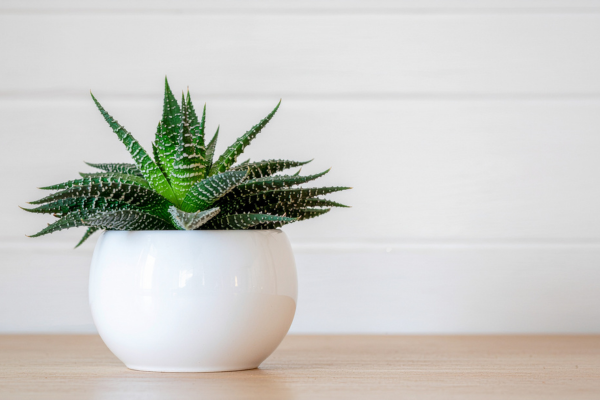
I get some version of the same question fairly often from people just getting into Haworthias: “I bought this online and the listing said Cooperi, but someone in a plant group told me it’s actually Obtusa — how do I know who’s right?” Honestly, it’s one of the most common points of confusion in the entire succulent hobby, and it’s not really beginners’ fault. These two species are genuinely, frustratingly similar at a glance, and even experienced growers sometimes disagree on borderline specimens. But there are real differences once you know where to look, and understanding them will save you a lot of guessing when you’re trying to figure out exactly what’s sitting on your windowsill.
Why the Confusion Exists in the First Place
Both Haworthia cooperi and Haworthia obtusa belong to a group of succulents often called “window” Haworthias, named for the translucent or semi-translucent tips on their leaves that allow sunlight to filter down into the plant body. In their native South African habitat, both species grow mostly buried in soil or nestled among rocks, with just those translucent leaf tips exposed above ground — a strategy that lets them photosynthesize while staying protected from intense sun and grazing animals.
Because both species evolved this same basic strategy, their overall body shape, growth habit, and even their offsetting behavior look remarkably alike, especially in younger plants or in specimens that haven’t been given ideal light conditions. Add to that the fact that both species have numerous named varieties and cultivars, some of which blur the line between the two even further, and you end up with a plant market where mislabeling happens constantly, sometimes accidentally and sometimes not.
Leaf Shape Is Your First Clue
The most reliable starting point for telling these two apart is leaf shape, specifically how the leaf tapers toward its translucent tip. Haworthia cooperi typically has leaves that taper to a soft, rounded, almost bulbous point, with the translucent window occupying a relatively small area right at the very tip. The overall leaf shape tends to look plump and slightly inflated, almost like a small green balloon.
Haworthia obtusa, on the other hand, tends to have leaves that are more uniformly rounded along their entire length, without as much of a distinct taper. The translucent window on Obtusa often extends further down the leaf rather than staying confined to just the tip, giving the whole leaf a more evenly “glassy” appearance rather than one with a clearly defined window at the very end.
It’s a subtle distinction, and it becomes much easier to see once you have both species in front of you to compare directly rather than trying to judge from memory or from a single photo.
Surface Texture and Leaf Arrangement
Look closely at the surface of the leaves themselves, and you’ll often notice a difference in texture. Cooperi frequently displays faint hair-like projections or a slightly fuzzy texture on the leaf surface, particularly on certain popular varieties, whereas Obtusa tends to have a smoother, glossier surface with little to no surface texture at all.
Leaf arrangement offers another hint, though it’s less definitive than shape or texture. Cooperi rosettes often appear a bit looser and more open, with leaves radiating outward in a way that leaves small gaps between them. Obtusa rosettes tend to be more tightly packed, with leaves overlapping closely enough that the individual leaf boundaries can be harder to distinguish at first glance, especially in a well-grown, compact specimen.
Offsetting and Growth Habit
Both species produce offsets readily, which is part of why they’re relatively popular and accessible compared to some of the rarer Haworthia types we mentioned in 10 Rare Succulent Varieties Every Collector Should Know. That said, there are some general tendencies worth knowing.
Cooperi tends to offset somewhat more aggressively, often producing new rosettes from underground stolons that can pop up a short distance away from the parent plant, sometimes surprising growers who find a new little rosette appearing seemingly out of nowhere in the pot. Obtusa also offsets, but often stays a bit more clustered close to the base of the parent rosette, forming denser mounds over time rather than spreading outward.
Neither tendency is an absolute rule — growing conditions, pot size, and the specific variety within each species all influence offsetting behavior — but it’s a useful pattern to keep in mind when you’re trying to make an educated guess about which species you’re looking at.
Color and Light Response
Both species can shift in color depending on light exposure, which unfortunately adds another layer of complexity to identification, since a Cooperi grown in bright light might look quite different from the same variety grown in shade. Generally speaking, Obtusa tends to hold a more consistent green or olive tone across a wider range of light conditions, while Cooperi varieties often show more dramatic color shifts, sometimes taking on reddish or coppery tones under strong light that can make the plant look almost like an entirely different species compared to its shaded appearance.
This is worth keeping in mind if you’re trying to identify a plant based on a photo taken by someone else, since lighting conditions at the time the photo was taken can significantly affect how reliable that photo is for identification purposes.
When Even Experts Disagree
It’s worth being honest here: there are named varieties and hybrids that sit right at the boundary between these two species, and even knowledgeable, experienced growers sometimes have genuine disagreements about specific plants. Haworthia taxonomy in general has undergone significant revision over the years, with some botanists splitting species into narrower classifications and others lumping similar-looking plants together under broader names. This ongoing scientific debate trickles down into the hobby, which is part of why you’ll sometimes see the same plant labeled differently by different sellers, without either one necessarily being wrong according to the classification system they’re using.
If precise identification matters to you, particularly if you’re trying to build a collection organized by species for breeding or trading purposes, it’s worth photographing your plants clearly from multiple angles and comparing them against verified reference photos from established succulent societies rather than relying solely on nursery tags, which are unfortunately not always accurate. We talk more generally about navigating unreliable labeling in the rare succulent market in How to Spot a Fake or Mislabeled Rare Succulent Online.
Does It Actually Matter Which One You Have?
From a pure care standpoint, honestly, not that much. Both Cooperi and Obtusa want similar conditions: bright, indirect light rather than harsh direct sun, well-draining soil, and a watering approach that lets the soil dry out substantially between waterings. Overwater either one and you’ll run into the same rot issues; underwater either one and you’ll see similar wrinkling and dulling of the leaves. If you’re mainly growing these plants for enjoyment rather than for precise species collecting, the differences we’ve covered here are more of a fun identification exercise than a critical care consideration.
Where it does matter more is if you’re planning to breed, trade, or sell plants under a specific name, since misrepresenting a hybrid or an Obtusa as a pure Cooperi (or vice versa) can understandably frustrate other collectors who are relying on accurate labeling to build their own collections thoughtfully. Taking the time to learn these distinctions, even imperfectly, is part of being a considerate participant in a hobby that depends a lot on trust between growers and buyers who often can’t inspect a plant in person before purchasing it.
