
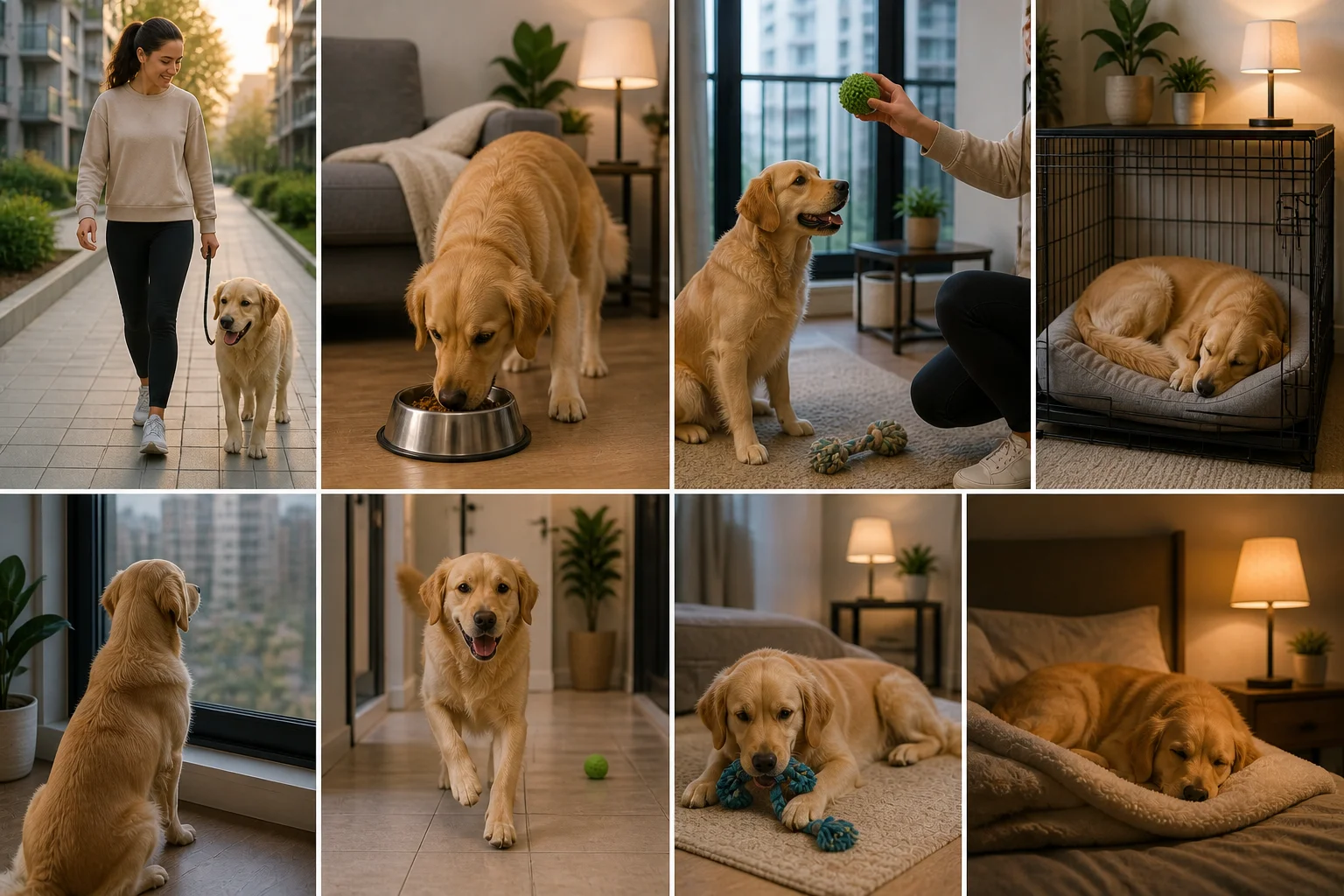
Creating a consistent daily routine is one of the most important factors for maintaining a healthy, balanced, and well-behaved dog—especially in an apartment environment. Unlike dogs that live in houses with yards, apartment dogs rely heavily on their owners for structure, stimulation, and activity.
Without a proper routine, dogs can become anxious, bored, or even develop behavioral issues such as excessive barking, destructive behavior, or hyperactivity. A well-planned daily schedule helps your dog understand what to expect, reduces stress, and promotes a calm and stable lifestyle.
In this article, you will learn how to create the ideal daily routine for a dog living in an apartment, understand why structure is essential, and discover practical tips to ensure your dog stays happy and healthy.
Why Routine Is Essential for Apartment Dogs
Dogs thrive on consistency. A predictable routine provides a sense of security and helps regulate both physical and emotional well-being.
Reduces Anxiety and Stress
When dogs know what to expect, they feel more in control of their environment. This reduces uncertainty and helps prevent anxiety-related behaviors.
Improves Behavior
A structured routine minimizes unwanted behaviors by keeping your dog mentally and physically engaged throughout the day.
Supports Physical Health
Regular feeding, exercise, and rest contribute to overall health and prevent issues such as obesity or digestive problems.
Strengthens the Bond Between You and Your Dog
Spending consistent time together through walks, play, and training strengthens your relationship and builds trust.
The Ideal Daily Schedule for Apartment Dogs
While every dog is different, a balanced routine should include specific elements throughout the day.
Morning Routine
The morning sets the tone for the entire day.
Wake-Up and First Potty Break
As soon as your dog wakes up, take it outside for a bathroom break. This helps establish good potty habits and prevents accidents.
Morning Walk
A morning walk is essential for releasing energy and providing mental stimulation. Even a short walk can make a big difference in your dog’s behavior throughout the day.
Feeding Time
Feed your dog at the same time every morning. Consistent feeding schedules help regulate digestion and create predictability.
Short Play or Training Session
Engage your dog with a brief play session or basic training. This helps stimulate the mind and reinforce good behavior.
Midday Routine
For many apartment dogs, midday is the most challenging part of the day, especially if the owner is away.
Potty Break or Walk
If possible, arrange for a midday walk or bathroom break. This prevents discomfort and reduces the risk of accidents.
Mental Stimulation
Leave toys, puzzles, or interactive games to keep your dog occupied while you are away.
Rest Period
Dogs spend a significant portion of the day resting. Ensuring a comfortable and quiet environment helps your dog relax.
Evening Routine
The evening is an important time for bonding and activity.
Evening Walk
A longer walk in the evening helps release accumulated energy and provides additional stimulation.
Playtime
Interactive play strengthens your bond and keeps your dog physically active.
Dinner Time
Feed your dog at a consistent time in the evening. This helps maintain a balanced routine.
Relaxation Time
After activity, allow your dog to relax. This transition helps your dog wind down for the night.
Night Routine
A calm night routine ensures your dog gets proper rest.
Final Potty Break
Take your dog out one last time before bedtime.
Quiet Environment
Create a calm atmosphere with minimal noise and distractions.
Consistent Bedtime
Putting your dog to sleep at the same time each night reinforces routine and improves sleep quality.
Balancing Physical and Mental Stimulation
A good routine includes both physical and mental activities.
Physical Exercise
Daily walks and play sessions are essential for maintaining health and preventing excess energy.
Mental Enrichment
Puzzle toys, training exercises, and interactive games help keep your dog mentally engaged.
Variety in Activities
Changing activities occasionally prevents boredom and keeps your dog interested.
Adapting the Routine to Your Lifestyle
Every owner has a different schedule, and your dog’s routine should fit your lifestyle.
Working Professionals
If you work long hours, consider hiring a dog walker or using daycare services.
Flexible Schedules
If you have more flexibility, you can incorporate additional walks and activities throughout the day.
Weekends vs Weekdays
Try to maintain consistency even on weekends to avoid disrupting your dog’s routine.
Signs That Your Dog Needs a Better Routine
If your dog’s routine is not well-balanced, certain behaviors may appear.
Excessive Barking
Often a sign of boredom or lack of stimulation.
Destructive Behavior
Chewing or damaging objects can indicate excess energy or anxiety.
Restlessness
A dog that cannot settle may need more structure or activity.
Changes in Appetite or Sleep
Irregular habits can affect eating and sleeping patterns.
Common Mistakes to Avoid
Avoiding these mistakes can improve your dog’s routine significantly.
Inconsistent Schedule
Changing feeding or walking times frequently can confuse your dog.
Lack of Exercise
Skipping walks leads to excess energy and behavioral problems.
Ignoring Mental Stimulation
Physical exercise alone is not enough. Mental engagement is equally important.
Overstimulation
Too much activity without rest can lead to stress.
How Long Does It Take to Establish a Routine?
Dogs typically adapt to a routine within a few weeks. Consistency is the key factor in helping your dog adjust.
Creating a Routine That Works Long-Term
A sustainable routine should be realistic and adaptable.
Start Simple
Begin with basic elements such as feeding and walking times.
Adjust Gradually
Make small changes as needed to fit your dog’s needs.
Monitor Behavior
Observe how your dog responds and adjust accordingly.
Final Thoughts
A well-structured daily routine is essential for dogs living in apartments. It provides stability, reduces stress, and promotes healthy behavior.
By balancing exercise, mental stimulation, and rest, you can create an environment where your dog feels secure and happy. The key is consistency, patience, and understanding your dog’s needs.
With the right routine, apartment living becomes not only manageable but enjoyable for both you and your dog.
