
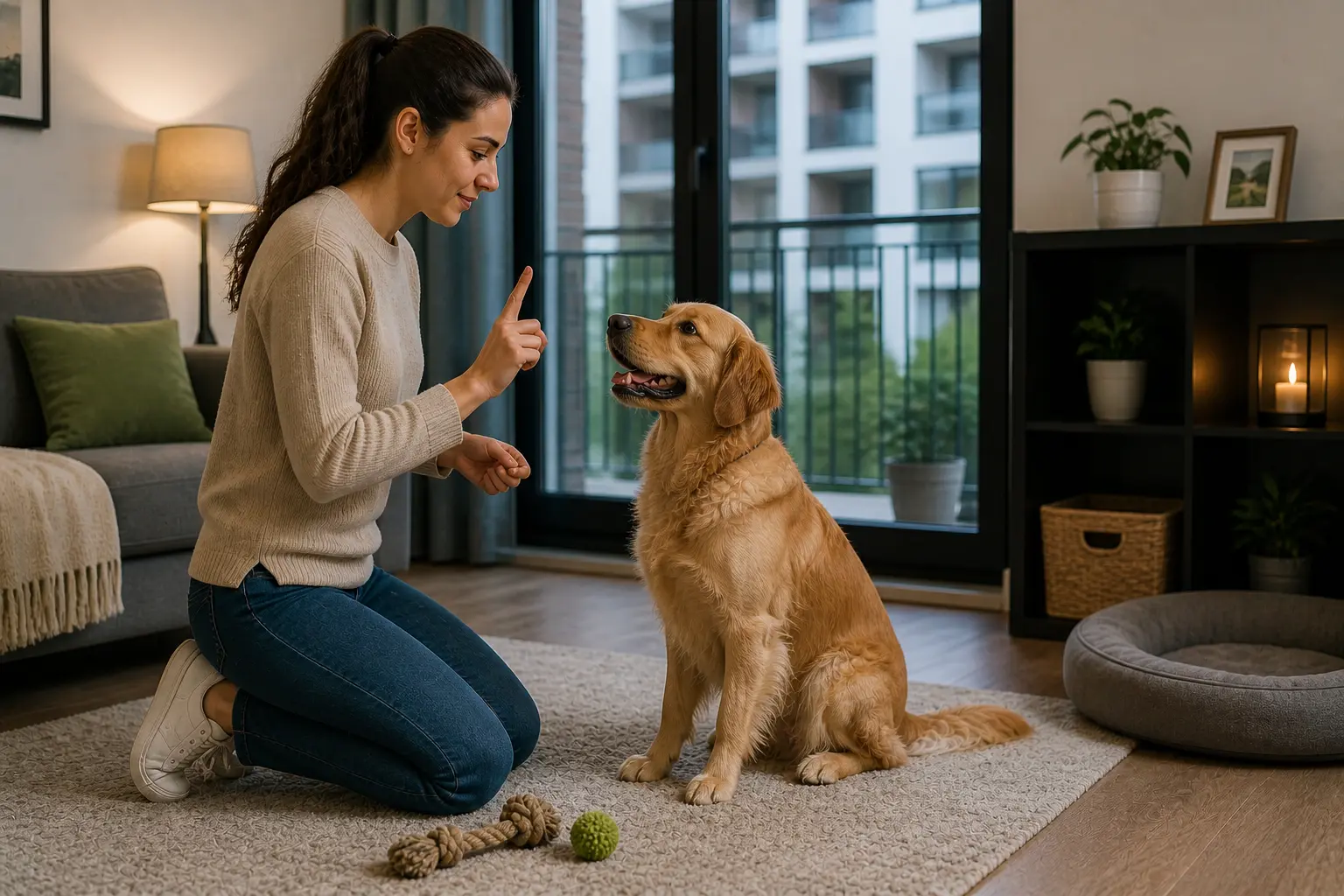
Living in an apartment requires a higher level of control and discipline when it comes to your dog’s behavior. Unlike houses with larger spaces and fewer close neighbors, apartments demand that dogs behave calmly, respond quickly to commands, and adapt to a structured environment. This makes basic obedience training not just important—but essential.
Many behavioral problems in apartments, such as excessive barking, jumping on guests, pulling on the leash, or reacting to noises, can be significantly reduced with proper command training. Teaching your dog basic commands is one of the most effective ways to create a peaceful and manageable living environment.
In this article, you will learn the most important commands every apartment dog should know, how to teach them effectively, and how they contribute to a balanced and stress-free lifestyle.
Why Basic Commands Are Essential in Apartments
Basic commands are not just about obedience—they are about communication. They allow you to guide your dog’s behavior and prevent problems before they happen.
Improves Safety
Commands like “stay” and “come” can prevent dangerous situations, especially in shared spaces like hallways or elevators.
Reduces Stress
A well-trained dog feels more secure because it understands what is expected. This reduces confusion and anxiety.
Enhances Daily Routine
Commands make everyday activities such as feeding, walking, and interacting with others much easier.
Prevents Behavioral Issues
Training helps eliminate unwanted behaviors like jumping, barking, or aggression.
The Most Important Commands for Apartment Dogs
There are several essential commands that every apartment dog should learn. These commands create a foundation for good behavior.
Sit
“Sit” is one of the first commands every dog should learn.
Why It’s Important
It helps control your dog in situations such as greeting guests or waiting calmly.
How to Teach It
Hold a treat above your dog’s head and slowly move it back. As your dog follows the treat, it will naturally sit. Reward immediately.
Stay
“Stay” teaches your dog to remain in one place until released.
Why It’s Important
This command is essential for preventing your dog from running toward doors, people, or other dogs.
How to Teach It
Ask your dog to sit, then take a step back. Reward your dog for staying in position. Gradually increase distance and duration.
Come
“Come” is a critical command for safety and control.
Why It’s Important
It ensures your dog returns to you when called, which is essential in shared spaces.
How to Teach It
Call your dog in a positive tone and reward it when it comes to you. Practice regularly in different environments.
Down
“Down” teaches your dog to lie down calmly.
Why It’s Important
This command is useful for calming your dog and reducing excitement.
How to Teach It
From a sitting position, guide your dog down with a treat and reward it once it lies down.
Leave It
“Leave it” teaches your dog to ignore something.
Why It’s Important
This is essential for preventing your dog from picking up harmful objects or reacting to distractions.
How to Teach It
Place a treat in your hand and close it. When your dog stops trying to get it, reward with a different treat.
Quiet
“Quiet” helps control barking.
Why It’s Important
Excessive barking is one of the biggest problems in apartments.
How to Teach It
Allow your dog to bark, then gently interrupt and reward silence.
Heel
“Heel” teaches your dog to walk calmly beside you.
Why It’s Important
This is essential for walks in shared spaces such as hallways and elevators.
How to Teach It
Use a leash and reward your dog for walking calmly beside you.
How to Train Commands Effectively
Training requires consistency and the right approach.
Use Positive Reinforcement
Reward-based training is the most effective method. Treats, praise, and affection reinforce good behavior.
Keep Sessions Short
Short training sessions are more effective than long ones. Aim for 5 to 10 minutes per session.
Be Consistent
Use the same commands and rewards every time. Consistency helps your dog learn faster.
Practice Daily
Regular practice reinforces learning and improves behavior over time.
Adapting Training to Apartment Living
Training in an apartment requires some adjustments.
Use Limited Space Efficiently
Even small spaces can be used effectively for training. Focus on control and repetition.
Practice in Real Situations
Train your dog in situations it will encounter, such as near doors or in hallways.
Manage Distractions
Gradually introduce distractions to help your dog stay focused in different environments.
Common Mistakes to Avoid
Avoiding mistakes can speed up the training process.
Inconsistency
Changing commands or rules confuses your dog.
Lack of Patience
Training takes time. Expecting immediate results can lead to frustration.
Overusing Commands
Repeating commands too often without reinforcement reduces their effectiveness.
Ignoring Good Behavior
Always reward positive behavior to reinforce learning.
How Long Does It Take to Train Basic Commands?
The time required depends on the dog’s age, breed, and consistency of training.
Some dogs learn quickly, while others may need more time. The key is to remain consistent and patient.
Building a Strong Bond Through Training
Training is not just about discipline—it is also about strengthening your relationship with your dog.
Trust and Communication
Training builds trust and improves communication between you and your dog.
Confidence Building
A trained dog feels more confident and secure.
Better Quality of Life
Both you and your dog benefit from a structured and harmonious environment.
Final Thoughts
Teaching basic commands is one of the most important steps in raising a well-behaved apartment dog. These commands provide structure, improve communication, and prevent many common behavioral issues.
By focusing on consistency, positive reinforcement, and daily practice, you can create a calm and controlled environment that makes apartment living enjoyable for both you and your dog.
With time and dedication, your dog will not only learn these commands but also become a well-adjusted and reliable companion.
