
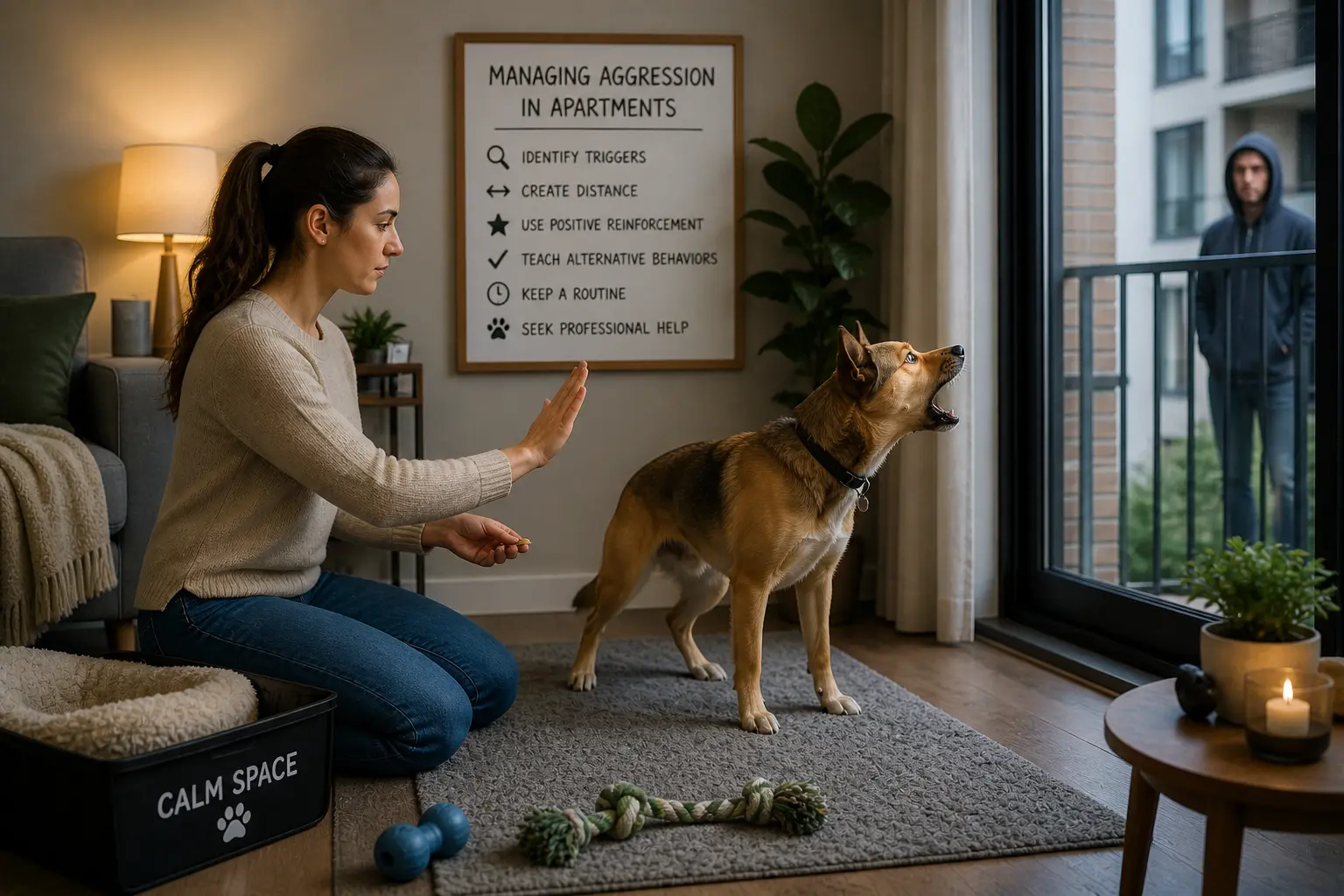
Aggressive behavior in dogs is one of the most concerning issues for any pet owner, and it becomes even more critical in apartment living. Unlike houses with more space and distance from others, apartments place dogs in close proximity to neighbors, visitors, and unfamiliar sounds. This increases the chances of stressful situations and makes aggressive behavior more noticeable and problematic.
Many dog owners feel overwhelmed when they notice signs of aggression, such as growling, barking aggressively, lunging, or even attempting to bite. However, it is important to understand that aggression is not simply bad behavior—it is a form of communication. Dogs use aggression to express fear, discomfort, frustration, or territorial instincts.
In this article, you will learn what causes aggressive behavior in apartment dogs, how to identify early warning signs, and practical strategies to manage and reduce aggression effectively.
Understanding Aggressive Behavior in Dogs
Before trying to correct aggression, it is essential to understand why it happens.
Aggression Is a Response, Not a Personality
Aggression is usually a reaction to a perceived threat or stress. Dogs are not naturally aggressive without reason. There is always an underlying cause that needs to be addressed.
Types of Aggression
Different types of aggression require different approaches.
Fear-Based Aggression
This occurs when a dog feels threatened or insecure. It is often accompanied by defensive body language such as crouching or backing away.
Territorial Aggression
Dogs may become aggressive when they feel their space is being invaded. This is common in apartments where sounds and movement are frequent.
Resource Guarding
Some dogs become aggressive when protecting food, toys, or sleeping areas.
Frustration-Based Aggression
Lack of exercise or mental stimulation can lead to frustration, which may manifest as aggressive behavior.
Why Aggression Is a Bigger Issue in Apartments
Apartment environments can intensify aggressive behavior if not managed properly.
Close Proximity to Others
Neighbors, visitors, and shared spaces increase exposure to potential triggers.
Limited Space
Dogs may feel confined, which can increase stress and territorial behavior.
Frequent Noise
Sounds from hallways, elevators, or nearby apartments can trigger reactive behavior.
Early Warning Signs of Aggression
Recognizing early signs can help prevent escalation.
Growling
Growling is a warning sign that should never be ignored. It indicates that the dog is uncomfortable.
Stiff Body Language
A tense body, raised ears, or fixed gaze can signal potential aggression.
Barking with Intensity
Aggressive barking is often louder and more persistent than normal barking.
Showing Teeth
This is a clear sign that the dog feels threatened and may escalate if not handled properly.
How to Manage Aggressive Behavior
Managing aggression requires patience, consistency, and understanding.
Identify Triggers
Observe what causes your dog to become aggressive. It could be specific sounds, people, or situations.
Understanding triggers allows you to address the root cause.
Create Distance from Triggers
When possible, reduce your dog’s exposure to triggers. This helps prevent immediate reactions and allows for gradual training.
Use Positive Reinforcement
Reward calm behavior when your dog is exposed to a trigger at a safe distance. This helps create positive associations.
Avoid Punishment
Punishing aggressive behavior can increase fear and worsen the problem. It does not address the underlying cause.
Teach Alternative Behaviors
Train your dog to respond to commands such as “sit,” “stay,” or “leave it” when faced with triggers.
This gives your dog a clear alternative to aggression.
Training Techniques to Reduce Aggression
Consistent training is essential for long-term improvement.
Desensitization
Gradually expose your dog to triggers at a low intensity and increase exposure over time.
This helps your dog become less reactive.
Counterconditioning
Pair the presence of a trigger with something positive, such as treats or praise.
Over time, your dog learns to associate the trigger with a positive experience.
Controlled Socialization
Introduce your dog to new situations in a controlled and calm environment.
Avoid overwhelming your dog.
Managing Aggression Toward Neighbors and Visitors
Apartment living often involves interaction with other people.
Set Boundaries
Teach your dog to stay in a designated area when visitors arrive.
Use Leash Control
Keeping your dog on a leash during introductions can help maintain control.
Encourage Calm Behavior
Reward your dog for staying calm when people are nearby.
Preventing Aggression Through Daily Routine
A structured routine helps reduce stress and prevent aggressive behavior.
Provide Regular Exercise
Physical activity helps release energy and reduce frustration.
Offer Mental Stimulation
Interactive toys and training sessions keep your dog engaged and balanced.
Maintain Consistency
A predictable routine helps your dog feel secure.
Common Mistakes to Avoid
Many owners unintentionally reinforce aggressive behavior.
Ignoring Early Signs
Waiting until aggression becomes severe makes it harder to manage.
Forcing Interaction
Pushing your dog into uncomfortable situations can increase fear.
Lack of Training
Without proper training, dogs do not learn how to handle stress.
Inconsistent Rules
Changing rules frequently confuses your dog.
When to Seek Professional Help
Some cases require professional intervention.
Severe Aggression
If your dog shows signs of biting or uncontrollable aggression, seek help immediately.
Lack of Progress
If training methods are not effective, a professional trainer can provide guidance.
Safety Concerns
If you feel unsafe, do not attempt to handle the situation alone.
Creating a Calm Apartment Environment
Your environment plays a key role in your dog’s behavior.
Reduce Noise Exposure
Use background sounds or calming techniques to minimize noise sensitivity.
Provide Safe Spaces
Give your dog a place where it can retreat and feel secure.
Keep the Environment Organized
A structured environment helps reduce stress.
Final Thoughts
Aggressive behavior in apartment dogs can be challenging, but it is manageable with the right approach. Understanding the root cause, identifying triggers, and using positive training methods are essential steps toward improvement.
By creating a structured routine, providing proper stimulation, and reinforcing calm behavior, you can help your dog feel more secure and less reactive.
With patience, consistency, and the right strategies, you can transform aggressive behavior into calm and controlled responses, making apartment living safer and more enjoyable for everyone involved.
