
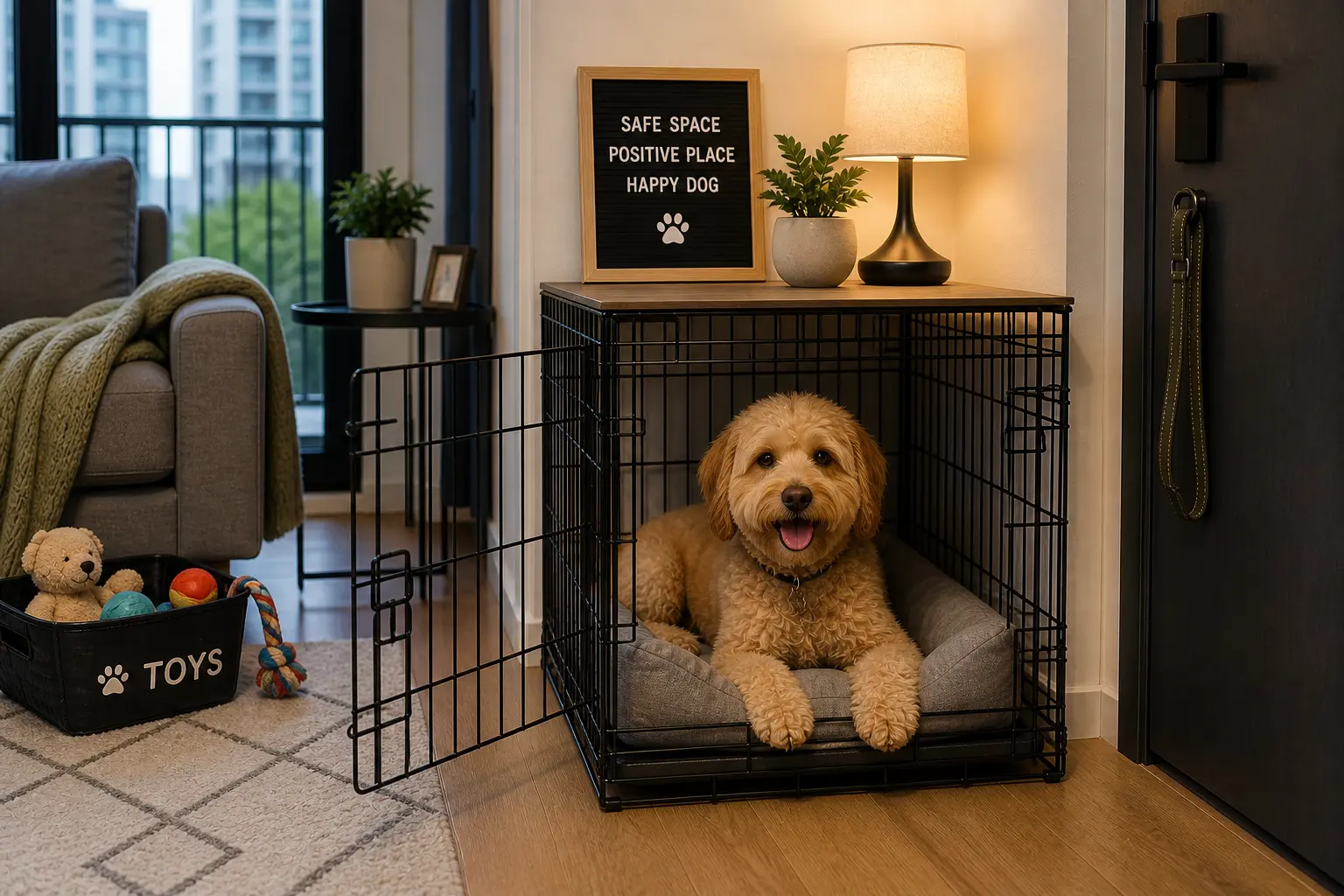
Crate training is one of the most effective methods for teaching discipline, creating a safe environment, and improving your dog’s behavior—especially in apartments. However, many dog owners living in small spaces hesitate to use a crate because they worry about space limitations or feel that it might be uncomfortable for their dog.
The truth is that when done correctly, crate training is not only beneficial but also highly practical for apartment living. A crate provides your dog with a personal space where it can feel secure, relax, and develop healthy habits. It also helps prevent destructive behavior, supports potty training, and makes daily routines easier to manage.
In this article, you will learn how to use crate training effectively in small apartments, how to choose the right setup, and how to avoid common mistakes that can make the process ineffective.
What Is Crate Training and Why It Works
Crate training involves teaching your dog to see the crate as a safe and comfortable space rather than a form of confinement.
Natural Den Instinct
Dogs naturally seek out small, enclosed spaces where they can feel protected. A crate mimics this instinct, providing a sense of security.
When introduced properly, the crate becomes a place where your dog chooses to rest rather than something it tries to escape.
Helps Build Routine
Crate training helps establish structure in your dog’s daily routine. It reinforces consistent sleeping, resting, and potty habits.
Prevents Destructive Behavior
When your dog is unsupervised, the crate prevents chewing, scratching, or damaging objects in your apartment.
This is especially important in small spaces where everything is within reach.
Choosing the Right Crate for Small Apartments
Selecting the right crate is essential when space is limited.
Size Matters
The crate should be large enough for your dog to stand, turn around, and lie down comfortably. However, it should not be too large, as this can reduce its effectiveness for training.
Space-Saving Designs
In apartments, choosing a compact or foldable crate can make a big difference. Some crates also double as furniture, such as side tables, which helps optimize space.
Location of the Crate
Place the crate in a quiet but not isolated area. Your dog should feel part of the environment without being overwhelmed by noise or activity.
Step-by-Step Guide to Crate Training
Crate training should be introduced gradually to ensure your dog feels comfortable and secure.
Step 1: Introduce the Crate Positively
Start by allowing your dog to explore the crate on its own. Leave the door open and place treats, toys, or bedding inside to encourage curiosity.
The goal is to create a positive association with the crate.
Step 2: Feed Meals Inside the Crate
Feeding your dog inside the crate helps reinforce the idea that it is a safe and enjoyable place.
Over time, your dog will begin to enter the crate willingly.
Step 3: Start with Short Periods
Once your dog is comfortable, begin closing the crate door for short periods while you are nearby.
Gradually increase the duration as your dog becomes more relaxed.
Step 4: Practice Leaving the Room
After your dog is comfortable in the crate, start leaving the room for short periods. This helps your dog learn to stay calm even when you are not present.
Step 5: Build Up to Longer Durations
Gradually increase the time your dog spends in the crate. Avoid rushing the process, as this can create anxiety.
Making the Crate Comfortable
Comfort is key to successful crate training.
Use Soft Bedding
A comfortable bed or blanket helps your dog relax and enjoy the crate.
Add Familiar Items
Toys or items with your scent can make the crate feel more secure.
Maintain Proper Ventilation
Ensure the crate is well-ventilated and not placed in direct sunlight or cold drafts.
Common Mistakes to Avoid
Many dog owners struggle with crate training because of avoidable mistakes.
Using the Crate as Punishment
The crate should never be associated with punishment. This creates fear and resistance.
Leaving the Dog Too Long
Dogs should not be confined for excessive periods. This can lead to frustration and anxiety.
Rushing the Process
Introducing the crate too quickly can overwhelm your dog and create negative associations.
Ignoring Signs of Stress
If your dog shows signs of distress, such as excessive whining or attempts to escape, slow down the training process.
How Crate Training Helps Apartment Living
Crate training offers several benefits specifically for apartment environments.
Reduces Noise
A calm dog in a crate is less likely to bark excessively, which helps avoid complaints from neighbors.
Supports Potty Training
Crates help dogs learn to control their bladder, making potty training more effective.
Creates Structure
A structured routine reduces anxiety and promotes better behavior.
Provides a Safe Space
In a small apartment, having a designated space for your dog helps create balance.
When to Use the Crate
Understanding when to use the crate is just as important as how to use it.
During Sleep
Many dogs feel more comfortable sleeping in a crate, especially at night.
When You Are Away
The crate can prevent destructive behavior when you are not home.
During Rest Periods
Encouraging your dog to rest in the crate helps reinforce calm behavior.
Is Crate Training Right for Every Dog?
While crate training is highly effective, it may not be suitable for every dog.
Some dogs may require more time to adapt, while others may prefer alternative methods. The key is to observe your dog’s behavior and adjust your approach accordingly.
Final Thoughts
Crate training is one of the most valuable tools for managing a dog in a small apartment. When used correctly, it provides structure, safety, and comfort while preventing many common behavioral issues.
By introducing the crate gradually, creating a positive environment, and avoiding common mistakes, you can help your dog see the crate as a safe and relaxing space.
With patience and consistency, crate training becomes a powerful solution for apartment living, making life easier for both you and your dog.
