
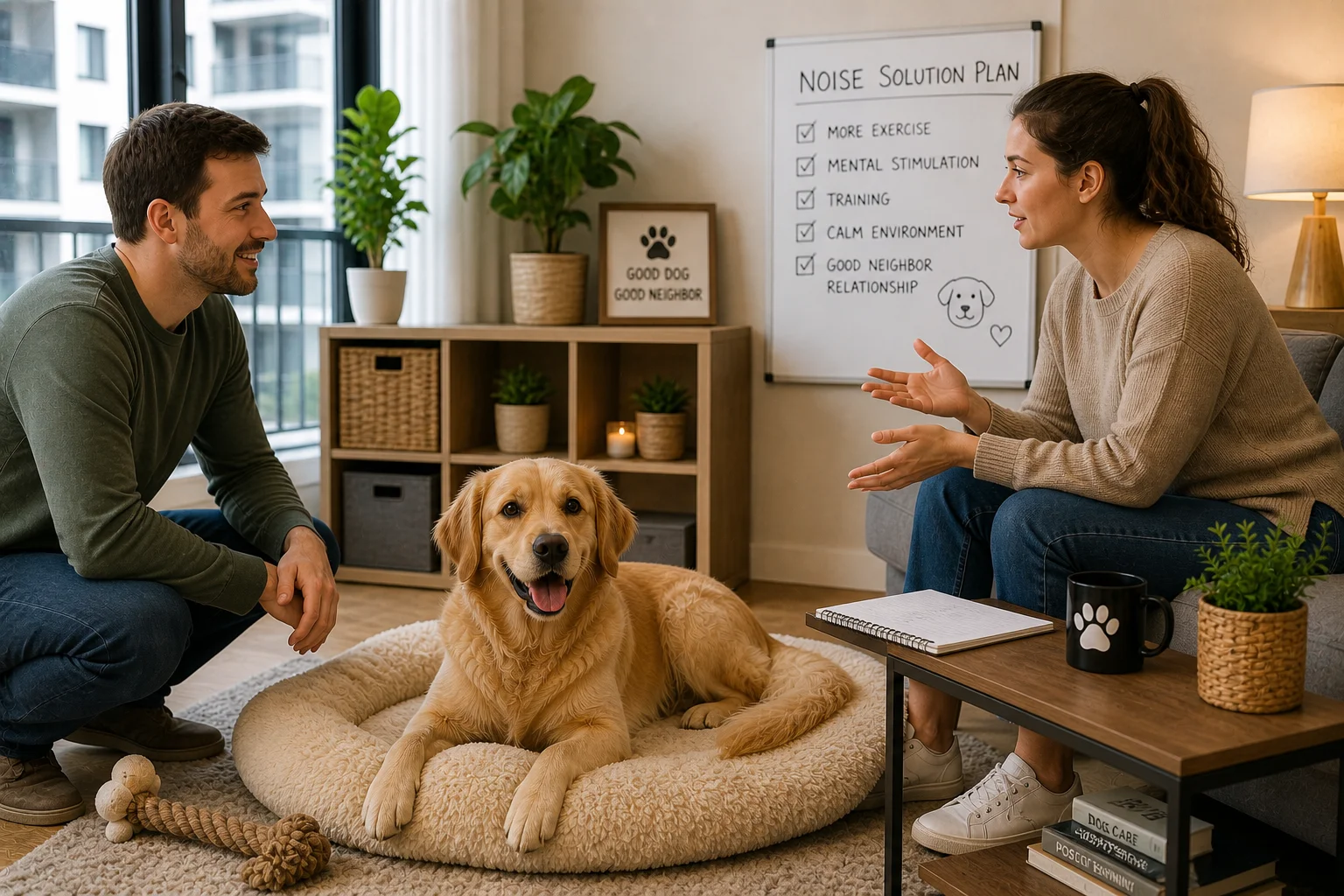
Living with a dog in an apartment comes with many responsibilities, and one of the most common challenges is managing noise. Barking, whining, or even playful activity can sometimes disturb neighbors, especially in buildings where walls are thin and shared spaces are close together.
Receiving a noise complaint can be stressful and uncomfortable, but it is also an opportunity to improve your dog’s behavior and strengthen your relationship with those around you. The key is to approach the situation calmly, understand the root cause of the noise, and implement practical solutions that benefit everyone.
Noise issues are rarely just about the dog—they often reflect unmet needs such as lack of exercise, anxiety, boredom, or insufficient training. By addressing these underlying factors, you can significantly reduce noise and create a more peaceful living environment.
In this article, you will learn how to handle noise complaints from neighbors, identify the causes of barking and noise, and apply effective strategies to resolve the problem long-term.
Understanding Why Dogs Make Noise
Before solving the issue, it is important to understand why your dog is making noise.
Communication
Dogs use barking and vocalization as a way to communicate. It can signal excitement, alertness, or a need for attention.
Boredom
A lack of stimulation often leads to excessive barking or whining.
Separation Anxiety
Dogs left alone for long periods may become anxious and vocal.
Territorial Behavior
Dogs may react to sounds in hallways or nearby apartments.
Excess Energy
Without enough exercise, dogs may release energy through noise.
Types of Noise Problems in Apartments
Different types of noise require different approaches.
Excessive Barking
Frequent or prolonged barking is the most common complaint.
Whining or Howling
Often linked to anxiety or loneliness.
Play Noise
Running, jumping, and playing can create disturbances, especially on hard floors.
Reaction to External Stimuli
Dogs may bark at noises such as footsteps, doors, or other animals.
First Steps After Receiving a Complaint
How you respond initially can make a big difference.
Stay Calm
Avoid reacting defensively. Approach the situation with understanding.
Listen to Feedback
Try to understand when and why the noise is occurring.
Communicate with Neighbors
A respectful conversation can help build cooperation and reduce tension.
Acknowledge the Issue
Showing that you are willing to address the problem builds trust.
Identifying the Root Cause
Solving noise issues requires understanding the underlying cause.
Observe Your Dog
Pay attention to when the noise occurs and what triggers it.
Use Cameras if Necessary
If you are away during the day, a camera can help you monitor your dog’s behavior.
Look for Patterns
Identify consistent triggers such as specific times or sounds.
Reducing Excessive Barking
Barking can be managed with proper training and routine.
Provide More Exercise
A tired dog is less likely to bark excessively.
Increase Mental Stimulation
Puzzle toys and training sessions keep your dog engaged.
Teach Quiet Commands
Train your dog to respond to commands that encourage silence.
Avoid Reinforcing Barking
Do not reward barking with attention.
Managing Separation Anxiety
Separation anxiety is a common cause of noise complaints.
Gradual Desensitization
Train your dog to be comfortable alone by increasing separation time gradually.
Create a Safe Space
Provide a comfortable area where your dog feels secure.
Use Comfort Items
Items with your scent can help reduce anxiety.
Keep Departures Calm
Avoid making a big deal out of leaving or returning home.
Minimizing Noise from Play and Movement
Physical noise can also be an issue.
Use Rugs and Mats
Soft surfaces absorb sound and reduce impact noise.
Schedule Playtime
Engage in active play during appropriate hours.
Encourage Calm Indoor Behavior
Train your dog to be relaxed inside the apartment.
Managing External Triggers
External noises can provoke barking.
Block Visual Stimuli
Use curtains or window films to reduce visual triggers.
Desensitize Your Dog
Gradually expose your dog to common sounds and reward calm behavior.
Use Background Noise
Soft music or white noise can mask external sounds.
Training Techniques for Noise Control
Training is essential for long-term results.
Positive Reinforcement
Reward calm and quiet behavior consistently.
Consistency
Use the same commands and rules every day.
Short Training Sessions
Frequent, short sessions are more effective than long ones.
Patience
Behavioral change takes time and persistence.
Building a Good Relationship with Neighbors
Maintaining positive relationships can ease tension.
Be Proactive
Inform neighbors that you are working on the issue.
Show Consideration
Make efforts to minimize noise during sensitive hours.
Stay Respectful
Good communication can prevent conflicts.
When to Seek Professional Help
Some situations may require expert guidance.
Persistent Noise Issues
If the problem continues despite your efforts.
Severe Anxiety
Dogs with intense anxiety may need professional support.
Safety Concerns
If behavior becomes aggressive or uncontrollable.
Common Mistakes to Avoid
Avoiding these mistakes can improve results.
Ignoring Complaints
Delaying action can worsen the situation.
Punishing the Dog
Punishment can increase fear and anxiety.
Inconsistent Training
Lack of consistency slows progress.
Overlooking the Cause
Treating symptoms without addressing the root issue is ineffective.
Signs Your Efforts Are Working
You can measure progress through your dog’s behavior.
Reduced Barking
Less frequent and shorter barking episodes.
Calmer Behavior
Your dog appears more relaxed indoors.
Positive Feedback
Neighbors notice improvement.
Better Routine
Your dog adapts to a structured daily schedule.
Creating a Long-Term Noise Management Plan
Sustainable solutions ensure lasting results.
Maintain Routine
Consistency helps prevent future issues.
Continue Training
Reinforce good behavior regularly.
Monitor Changes
Adjust your approach as needed.
Final Thoughts
Handling noise complaints from neighbors is a common challenge for apartment dog owners, but it is entirely manageable with the right approach. By understanding the root cause of the noise, implementing effective training techniques, and maintaining open communication with neighbors, you can create a peaceful environment for everyone.
A quiet and well-behaved dog is not just about avoiding complaints—it reflects a balanced, healthy lifestyle. With patience, consistency, and the right strategies, you can ensure that both your dog and your neighbors enjoy a comfortable and harmonious living experience.
