
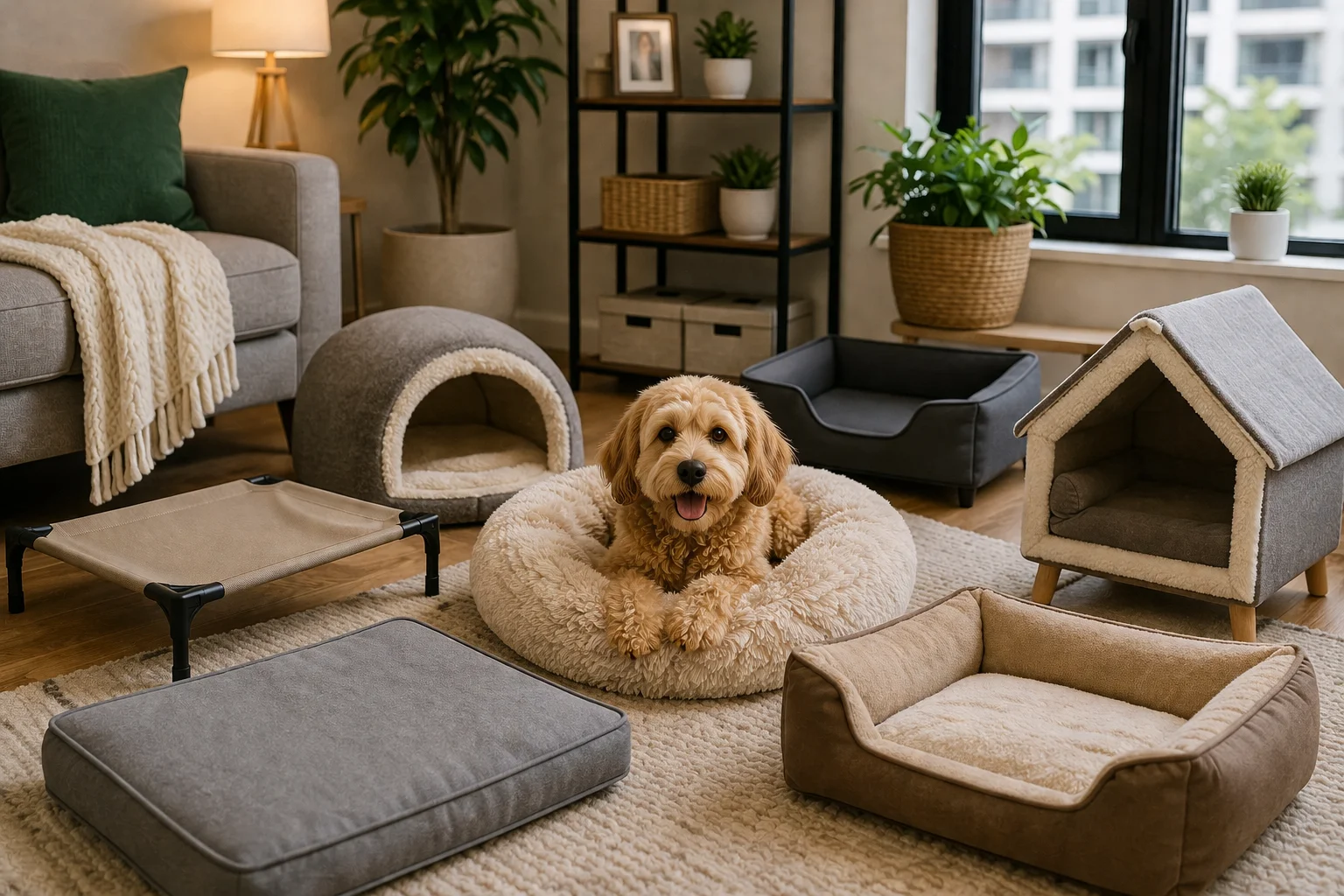
Choosing the right dog bed is an essential part of creating a comfortable and functional living environment—especially in a small apartment. Unlike larger homes where space is not a major concern, apartment living requires thoughtful decisions about furniture and layout, including where and how your dog sleeps.
A dog bed is more than just a place to rest. It provides comfort, supports your dog’s physical health, and creates a sense of security. In small spaces, the right bed must also be practical, space-efficient, and easy to maintain.
Many dog owners make the mistake of choosing beds based only on appearance or price, without considering size, functionality, and how it fits into the apartment layout. This can lead to clutter, discomfort, and even behavioral issues if the dog does not feel secure.
In this article, you will learn how to choose the best dog beds for small spaces, understand the different types available, and discover practical tips to maximize comfort without compromising your apartment’s organization.
Why Choosing the Right Dog Bed Matters
A well-chosen dog bed impacts both your dog’s well-being and your living space.
Provides Comfort and Support
A proper bed supports your dog’s joints, muscles, and overall posture.
Creates a Safe Space
Dogs need a designated place where they feel secure and relaxed.
Improves Sleep Quality
A comfortable bed helps your dog rest better, which affects behavior and health.
Keeps Your Apartment Organized
A designated sleeping area prevents your dog from using furniture or other spaces.
Key Features to Look for in Small-Space Dog Beds
When choosing a bed for an apartment, certain features are essential.
Compact Size
The bed should fit comfortably within your available space without blocking movement.
Easy to Clean
Removable and washable covers make maintenance easier.
Durability
High-quality materials ensure the bed lasts longer.
Non-Slip Base
Prevents the bed from moving on smooth floors.
Multi-Functionality
Beds that serve more than one purpose help save space.
Best Types of Dog Beds for Small Apartments
Different types of beds offer different advantages.
Orthopedic Beds
Benefits
These beds provide excellent support for joints and are ideal for older dogs or those with health issues.
Apartment Advantage
Many orthopedic beds are designed to be compact and low-profile.
Donut or Round Beds
Why They Work
These beds are cozy and provide a sense of security.
Ideal Use
Perfect for dogs that like to curl up while sleeping.
Space Efficiency
Their compact shape fits well in corners.
Flat or Mat Beds
Minimal Design
Flat beds take up very little space and are easy to move.
Versatility
They can be placed anywhere or even stored when not in use.
Best For
Dogs that prefer to stretch out.
Raised Beds
Airflow Benefits
Raised beds allow air circulation, keeping your dog cool.
Cleanliness
They are easier to clean underneath.
Apartment Use
Some models are foldable, making them ideal for small spaces.
Multi-Functional Beds
Dual Purpose
Some beds double as storage units or furniture.
Space Saving
Combining functions helps reduce clutter.
Ideal for Small Apartments
These beds maximize efficiency without sacrificing comfort.
Corner Beds
Smart Placement
Designed to fit into corners, making use of otherwise unused space.
Space Optimization
Keeps the central area of your apartment clear.
Foldable and Portable Beds
Flexibility
These beds can be folded and stored when not in use.
Ideal for Small Spaces
Perfect for apartments with limited room.
Choosing the Right Size for Your Dog
Size is one of the most important factors.
Measure Your Dog
Ensure the bed is large enough for your dog to lie comfortably.
Avoid Oversized Beds
Large beds can take up unnecessary space.
Consider Growth
For puppies, choose a size that accommodates growth.
Placement Tips for Small Apartments
Where you place the bed matters as much as the bed itself.
Quiet Corners
Choose a calm area away from heavy foot traffic.
Near Your Living Space
Dogs often prefer to be close to their owners.
Avoid Drafts
Ensure the bed is not placed in cold or windy areas.
Maintain Accessibility
Your dog should be able to access the bed easily at all times.
Maintaining Cleanliness and Hygiene
Keeping the bed clean is essential.
Wash Covers Regularly
Clean covers at least once a week.
Vacuum the Bed
Remove hair and dirt frequently.
Check for Wear and Tear
Replace the bed if it becomes damaged.
Matching the Bed with Your Apartment Design
Functionality does not mean sacrificing style.
Neutral Colors
Choose colors that match your apartment decor.
Compact Designs
Minimalist designs blend better with small spaces.
Coordinated Layout
Integrate the bed into your overall layout for a cohesive look.
Common Mistakes to Avoid
Avoiding these mistakes can improve your choice.
Choosing Style Over Function
Aesthetic appeal should not compromise comfort.
Ignoring Size
Beds that are too large or too small can cause problems.
Low-Quality Materials
Cheap materials may not provide adequate support.
Poor Placement
Even the best bed can be ineffective if placed incorrectly.
Signs Your Dog Loves Its Bed
Your dog’s behavior will indicate if the bed is suitable.
Frequent Use
Your dog chooses the bed over other resting spots.
Relaxed Behavior
A comfortable dog appears calm and at ease.
Good Sleep Patterns
Improved sleep indicates proper support.
Creating a Comfortable Sleeping Routine
Consistency helps your dog adapt to its bed.
Encourage Use
Guide your dog to its bed regularly.
Use Positive Reinforcement
Reward your dog for using the bed.
Maintain Routine
Consistent sleeping habits improve comfort.
Final Thoughts
Choosing the best dog bed for small spaces is about balancing comfort, functionality, and efficiency. In an apartment, every piece of furniture matters, and your dog’s bed should contribute to both your pet’s well-being and your home’s organization.
By selecting the right type of bed, placing it strategically, and maintaining it properly, you can create a comfortable and practical sleeping area that fits perfectly into your apartment.
With the right approach, your dog’s bed becomes more than just a resting place—it becomes a safe, cozy space that enhances your dog’s quality of life while keeping your home organized and harmonious.
